
Just two hours by train from Jeddah lies Medina (known locally as Madinah), the second-holiest city in Islam and the Prophet Muhammad’s home for ten years after his Hijrah from Mecca between 622 CE and 632 CE. It was in Medina that the Prophet built the mosque that would become Al Masjid an-Nawabi, ‘the Prophet’s Mosque’, as a hub for the Muslim community he founded.
It was also from Medina that Muhammad fought the battles of Badr (624 CE) and Uhud (625 CE), drafted a constitution for the city and made peace with the tribes of Medina. Although he went back to Mecca, the Prophet ultimately returned to Medina, where he died in 632 CE. His burial site is beneath the mosque, the site of the house of his wife, Aisha.
Given the importance of the city in Islam, Medina has always been a destination for Muslim pilgrims, with many including a trip to Medina when performing the Hajj or Umrah pilgrimages. But while non-Muslim tourists cannot visit the Prophet’s Mosque itself, they can view its spectacular form from outside the sacred area of the city.
1. Al Masjid an-Nabawi (The Prophet’s Mosque)
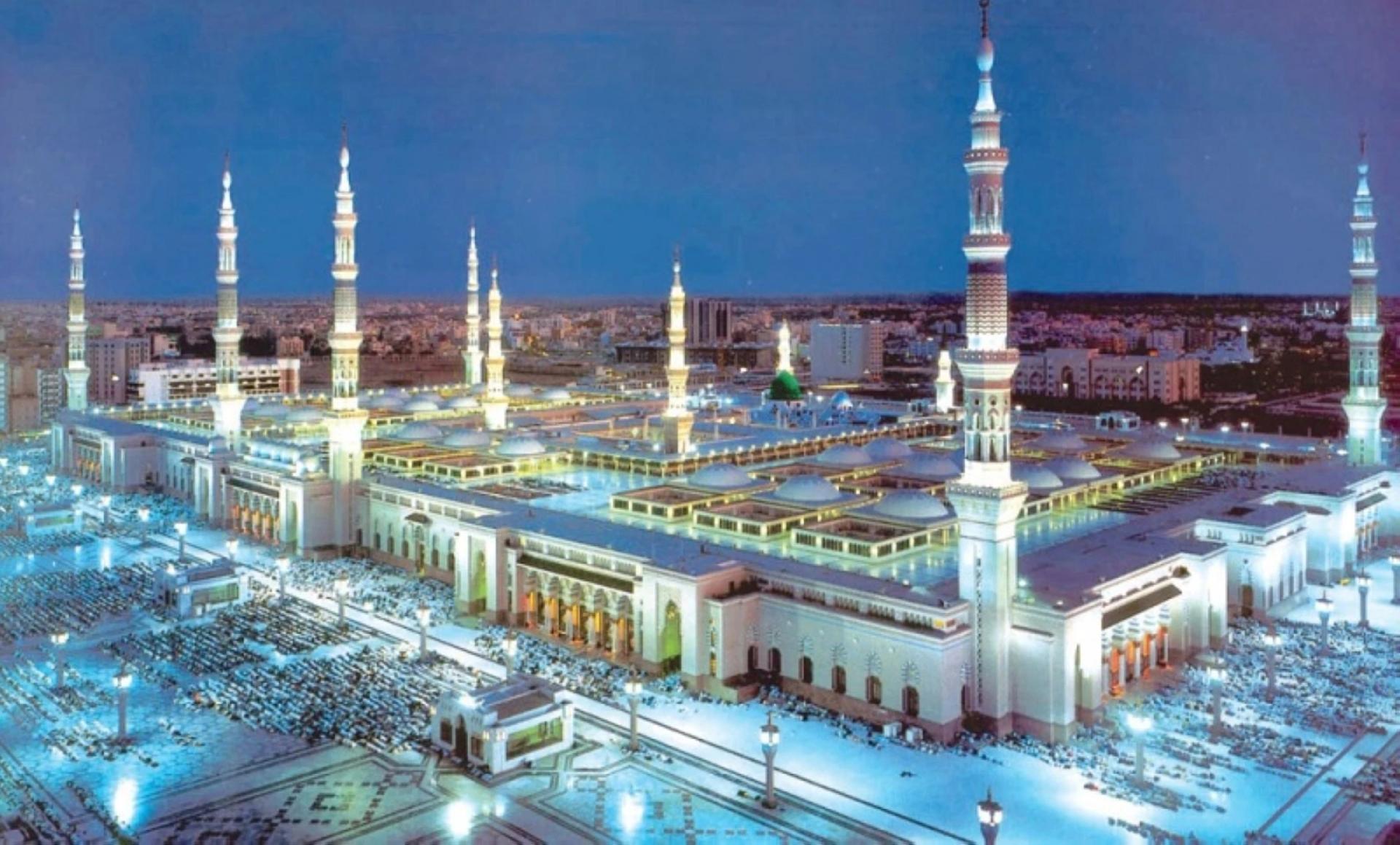
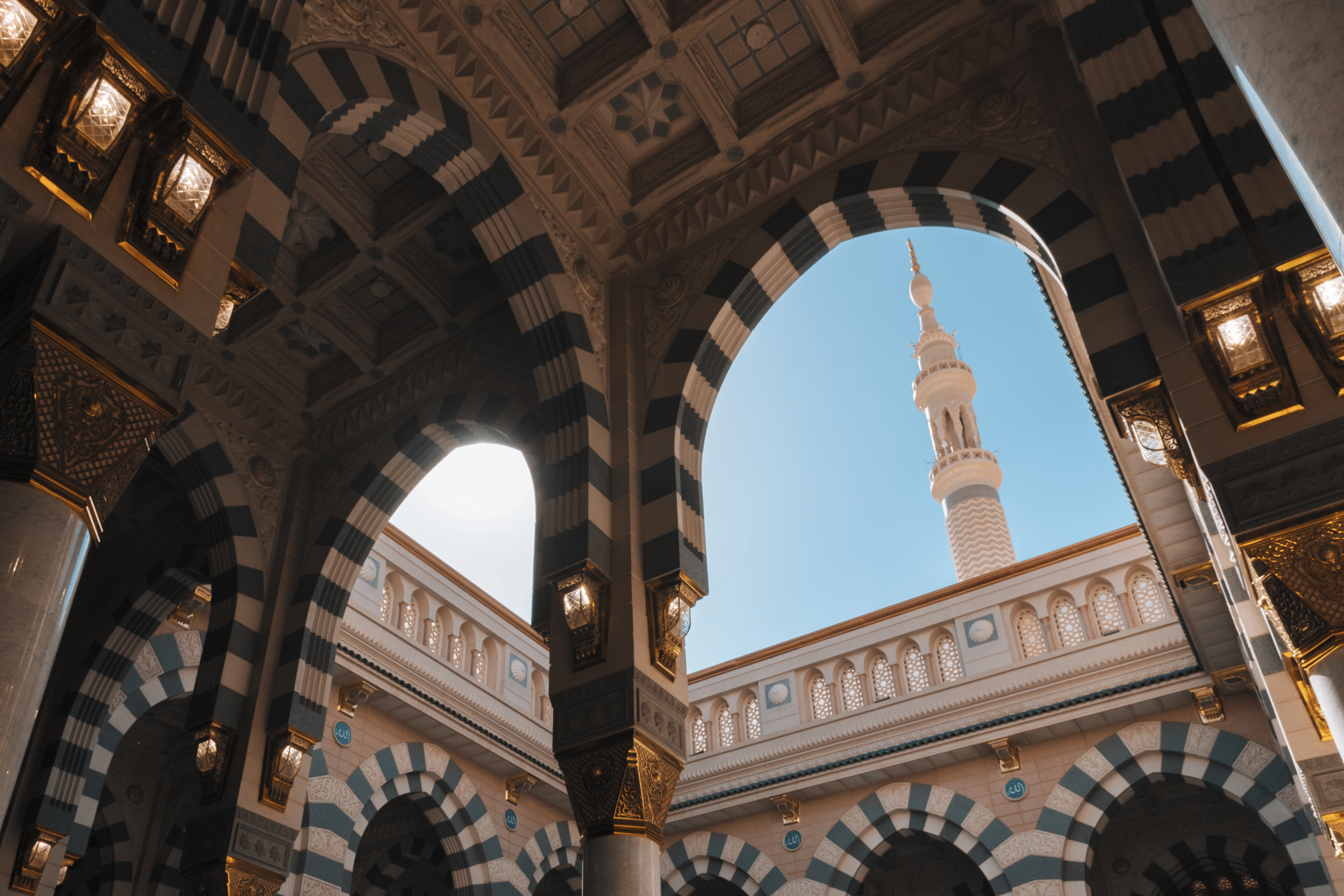
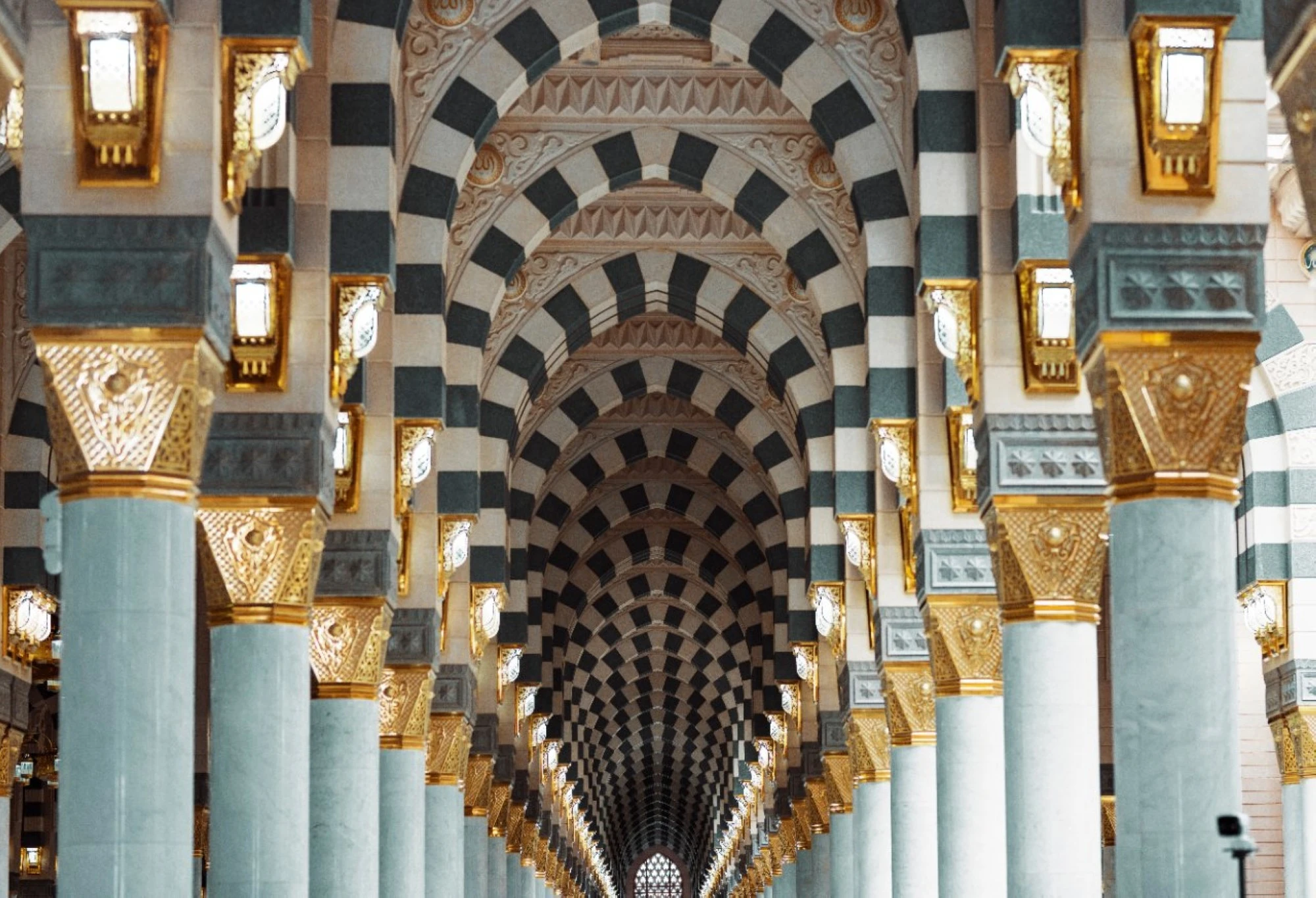
Constructed under the direct guidance of the Prophet Muhammad himself, Al Masjid an-Nabawi is the second-most important religious structure in the Islamic world. An architectural marvel whose iconic green dome is instantly recognisable to Muslims and non-Muslims alike, it is known for its huge courtyards and symmetrical design so typical of Islamic architecture.
The mosque covers a large area of central Medina, with multiple entrances and towering minarets. Its open courtyards are surrounded by arcaded pathways with geometric patterns. Its green dome is the focal point, visible from a distance and surrounded by other smaller domes. During evening prayers, the mosque’s exterior is illuminated, making for quite a sight.
Although restricted to Muslims, non-Muslims can view the mosque’s exterior from outside the sacred zone through a white mashrabiya featuring symmetrical designs. It is open 24 hours.
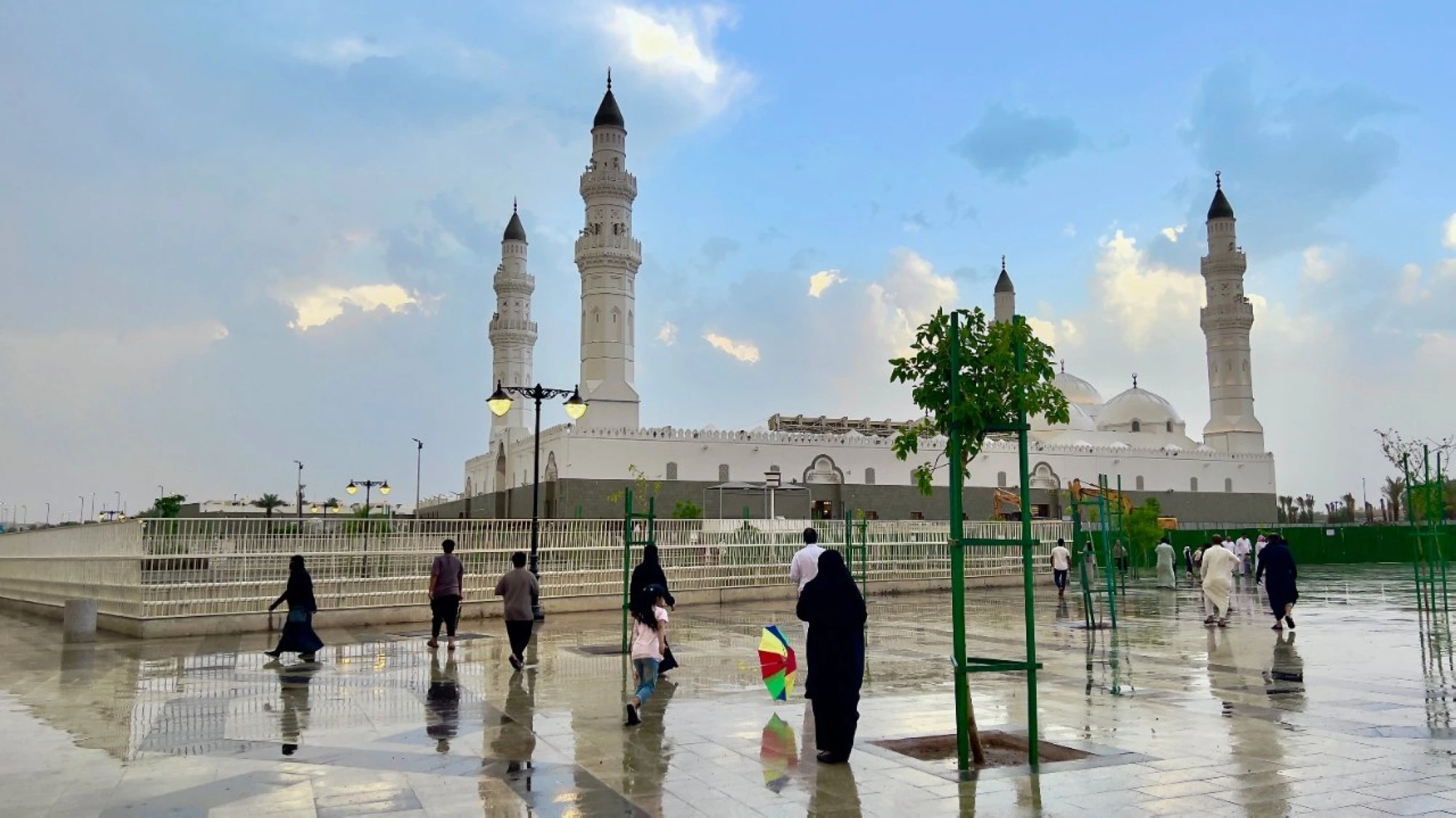
2. Quba Mosque
The Prophet’s Mosque may be the most spectacular and best-known in Medina, but it wasn’t the first: that accolade goes to the Quba Mosque, reportedly established on the first day of Muhammad’s journey to Medina. Indeed, the very first stone of the building is believed to have been laid by Muhammad, with the rest built by his companions over the coming years.
Back then, Quba was a village on the outskirts of Medina – known as Yathrib in the Quran – and where Muhammad stopped for between three days and three weeks on his way from Mecca. Inside its whitewashed exterior is a domed central prayer hall, courtyards and smaller domes. There are also some shops and rest areas. It is around 6km from the Prophet’s Mosque and easily reachable by taxi.
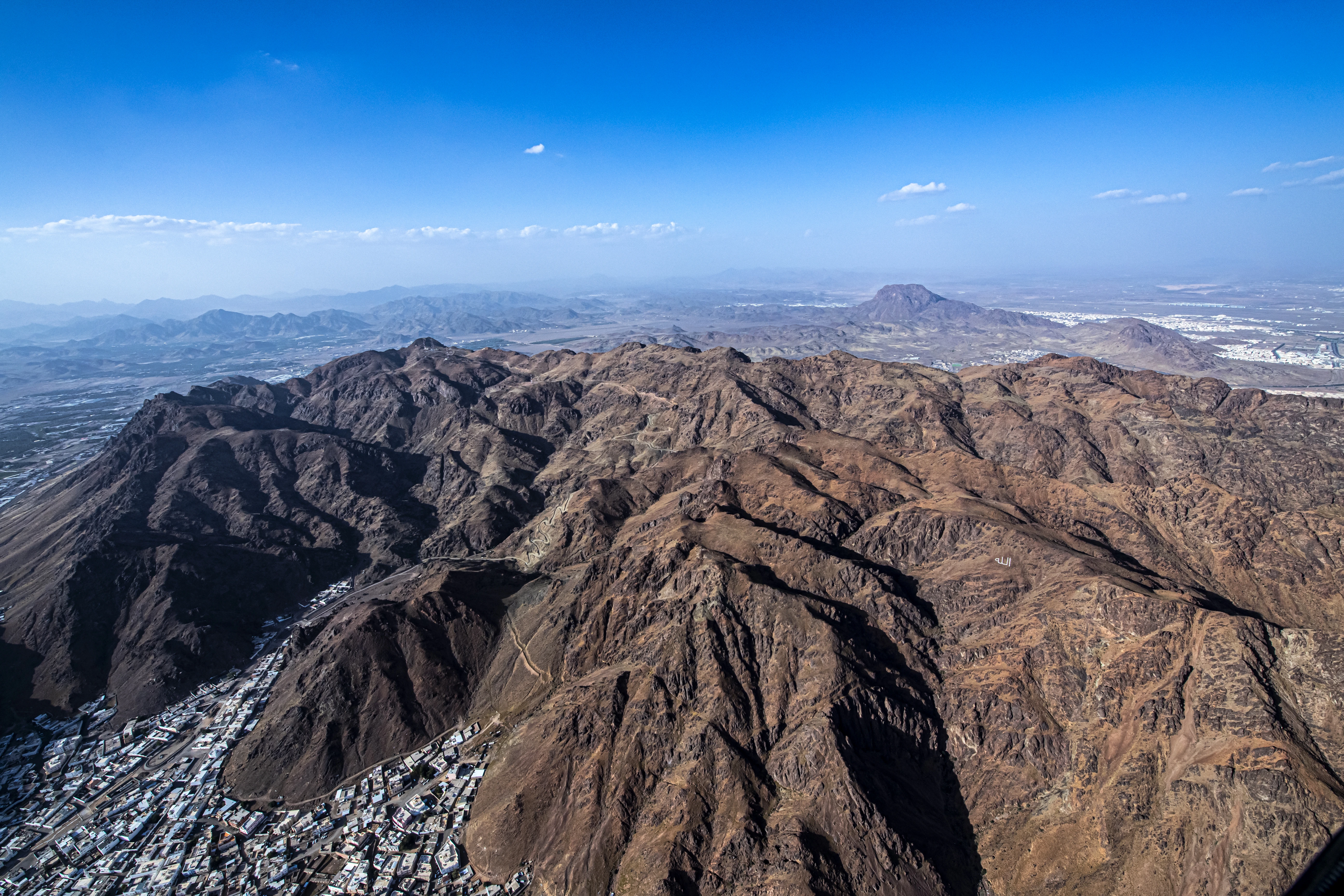
3. Mount Uhud
The site of the Battle of Uhud (625 CE), Mount Uhud is both a natural and historical landmark, with its reddish-brown hue and arid peaks visible from downtown Medina. Uhud was one of two battles Muhammad fought with his rivals, the Quraysh, the first being the Battle of Badr. It was fought on a Saturday, 23 March, and was an attempt by the head of the Quraysh, Abu Sufyan Ibn Harb, to avenge the defeat of his army by Muhammad’s army at Badr a year earlier.
The Muslim army took major casualties, including the Prophet’s uncle, Hamza, and the Quran cautions that God did not grant them a resounding victory, as at Badr, because a number of the Muslim army abandoned their post to loot enemy positions.
Mount Uhud is open to non-Muslims, and includes a number of interesting sites such as the Grave of the Martyrs, located at the base of the mountain and marked by a small walled enclosure. It contains plaques and markers explaining key events of the battle, while a nearby market offers refreshments, souvenirs, and shaded seating areas for visitors.
It is best to visit in the morning or late afternoons to avoid the heat and make the most of the site. Uhud is located around 5km north of Medina’s downtown and is easily reachable by taxi or private car.
4. Al-Baqi Cemetery
Al-Baqi Cemetery is the burial site of many prominent figures in Islamic history, including the Prophet Muhammad’s family and companions. Located in a vast walled space adjacent to Al Masjid an-Nabawi, it contains hundreds of simple and unmarked graves, in keeping with Islamic tradition, with pathways running through the area for visitors paying respects.
Like so many of Medina’s sites, Al-Baqi is believed to have been founded by Muhammad himself as a graveyard for early Muslim devotees. The first person to be buried at Al-Baqi was As’ad Ibn Zurarah, one of the Prophet’s companions. His daughter, Ruqayyah, was also buried here after she died in 624 CE. Some of the more notable graves – although simple – are marked and attract the interest of pilgrims.
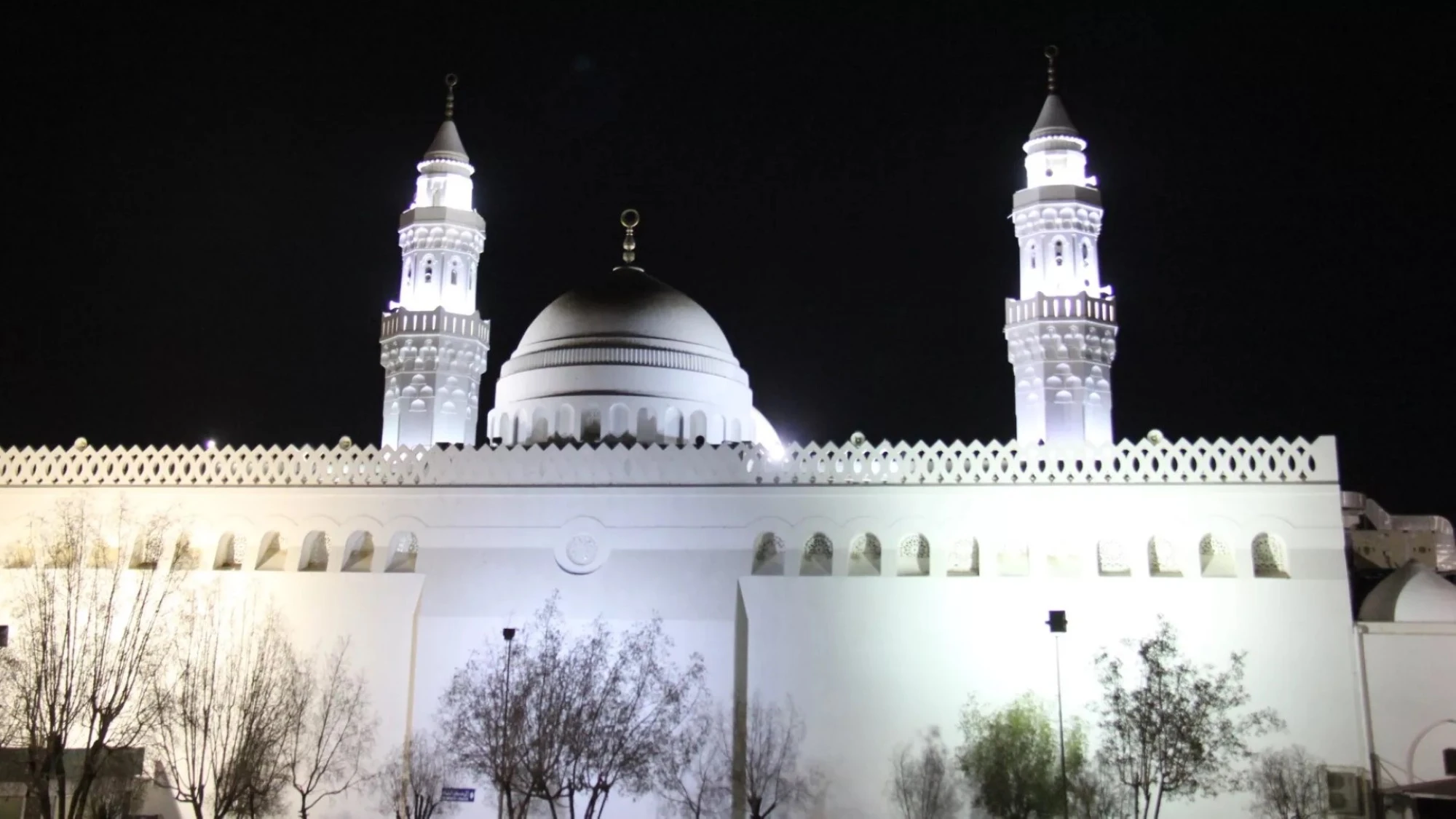
5. Masjid Al-Qiblatain (Mosque of the Two Qiblas)
Masjid Al-Qiblatain is called as such because it was the mosque where the direction of prayer was formally changed by the Prophet from Jerusalem to Mecca. Built in 623 CE, it was one of the only mosques in the world that has two qiblas – one facing Jerusalem and the other Mecca.
Like Quba Mosque, the original building was torn down in the 1980s and completely rebuilt, and the qibla facing Jerusalem was removed. The mosque has two prominent domes and two minarets, as well as a large interior prayer hall, while the architecture is in modern Islamic style.