
There is a quiet responsibility in preserving cultural and sartorial heritage, not as a static archive, but as a living, evolving narrative.
And in this recent curation by Hia Magazine, we see Saudi culture at its most powerful. This is heritage is reimagined through a contemporary lens, infused with creativity that breathes new life into tradition. When imagination finds form in visual expression, art becomes more than aesthetic, it becomes a vessel of memory, a dialogue between past and present, and a compass guiding the future of cultural identity.
Dr. Mohammed Al-Rasais: Folk Music Band
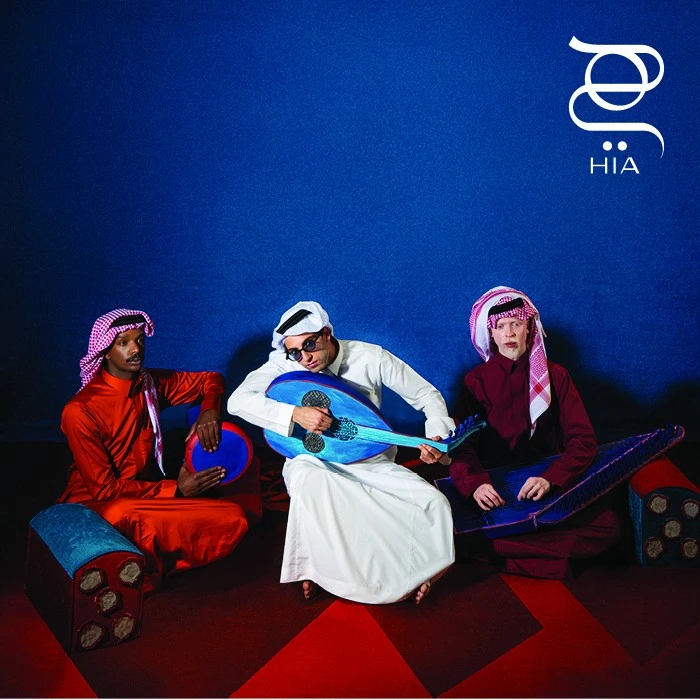
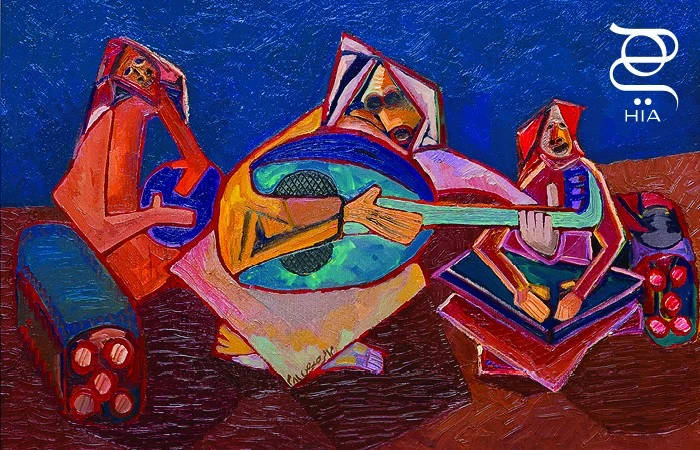
Speaking about the selection of his artwork for the the reimagining of art for the occasion of Saudi National Day, Dr. Mohammed Al-Rasais expressed his gratitude, saying, "For one of my works to be published, featured on the cover, and written about in the magazine, I can only express my gratitude and appreciation to the magazine for this gesture. I am delighted by it, as it came at the most appropriate occasion, the happiest for us, Saudi National Day." When asked about this work, he recalls the beginnings of his idea, noting: "When I began my master's studies at Ohio University, I was asked to submit a work for my graduation exhibition, and from there, the painting of the folk music band was born. I was inspired by nostalgia for my homeland and traditional life in Saudi Arabia. It was an attempt to document the visual rhythm of daily life."
Dr. Mohammed Al-Rasais believes that this shoot by Hia Magazine for Saudi National Day will introduce new generations to the foundations of respect for local art, culture and heritage, laid by his generation is a feeling that goes beyond pride to reassurance about the future of Saudi art. He concluded by warning against superficiality: "I want the new generation of artists to understand that art is not a ladder to fame. Some names shine and then disappear because they didn't build their presence on a cultural foundation. The new generation is required to research and read, not just watch."
Born from a sense of longing for home, the work of the "Folk Music Band" has finally found its place in the collection of Dr. Moajeb Al-Zahrani, Professor of Modern Literature and Aesthetics at King Saud University, continuing its presence as a bridge between thought and beauty.
Tagreed Al-Baqshi: Circles of Light and Dimensions of Freedom
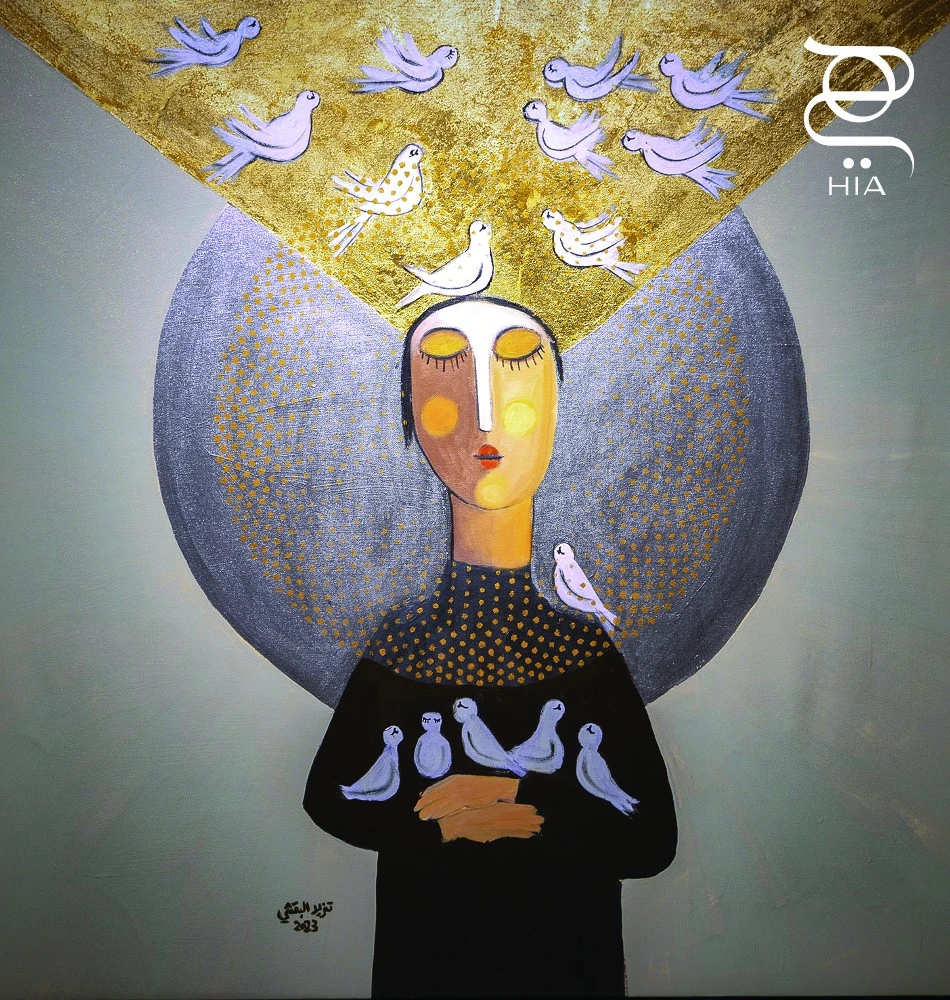
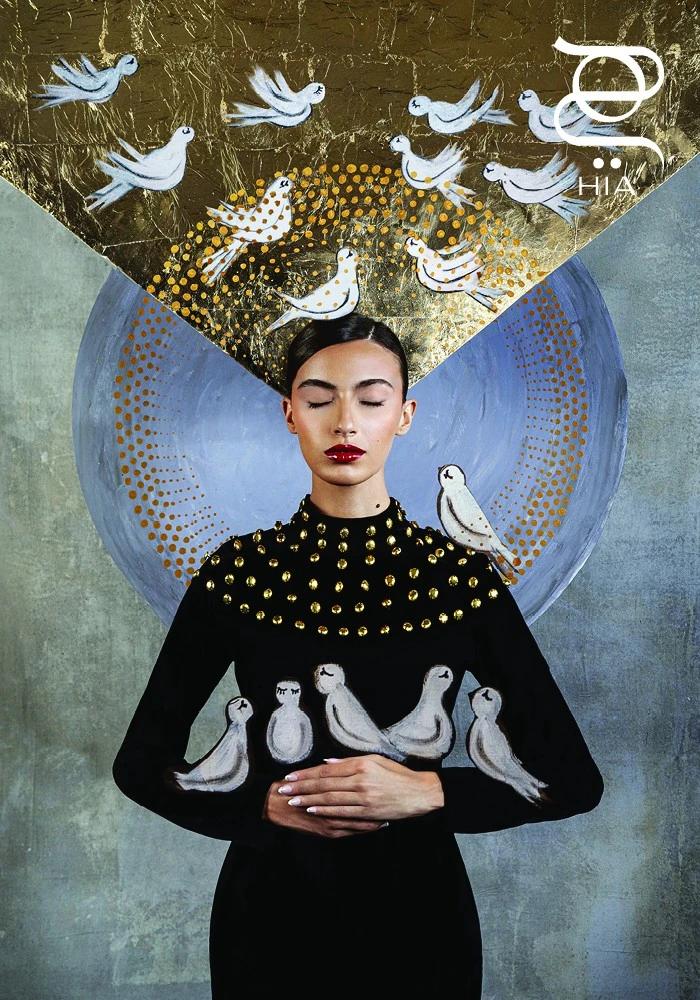
Saudi artist Taghreed Al-Baqshi's creativity transcends the boundaries of the canvas, appearing on the cover as a living space pulsating with beauty.
Two artworks are presented: "Circles of Light" and "Dimensions of Freedom," in an interactive sensory experience that evokes the depth of heritage and illuminates the features of the present. Al-Baqshi believes that transforming a work from a painting into a figurative form opens it up to a new life. She says, "When we transform a work of art from a painting into a figurative form or a public interactive display, it gives it another dimension: it becomes tangible, felt, and seen from different angles, entering people's daily lives. The feeling is a mixture of pride and awe: pride that my vision has become part of reality, and awe that it will be judged by collective taste."
In "Circles of Light," music is present as a visual language, where light transforms into notes and space into rhythmic silence. She explains, "I love connecting the arts, and music always inspires me: it is undulation, flow, reverberation, silence, and resonance.
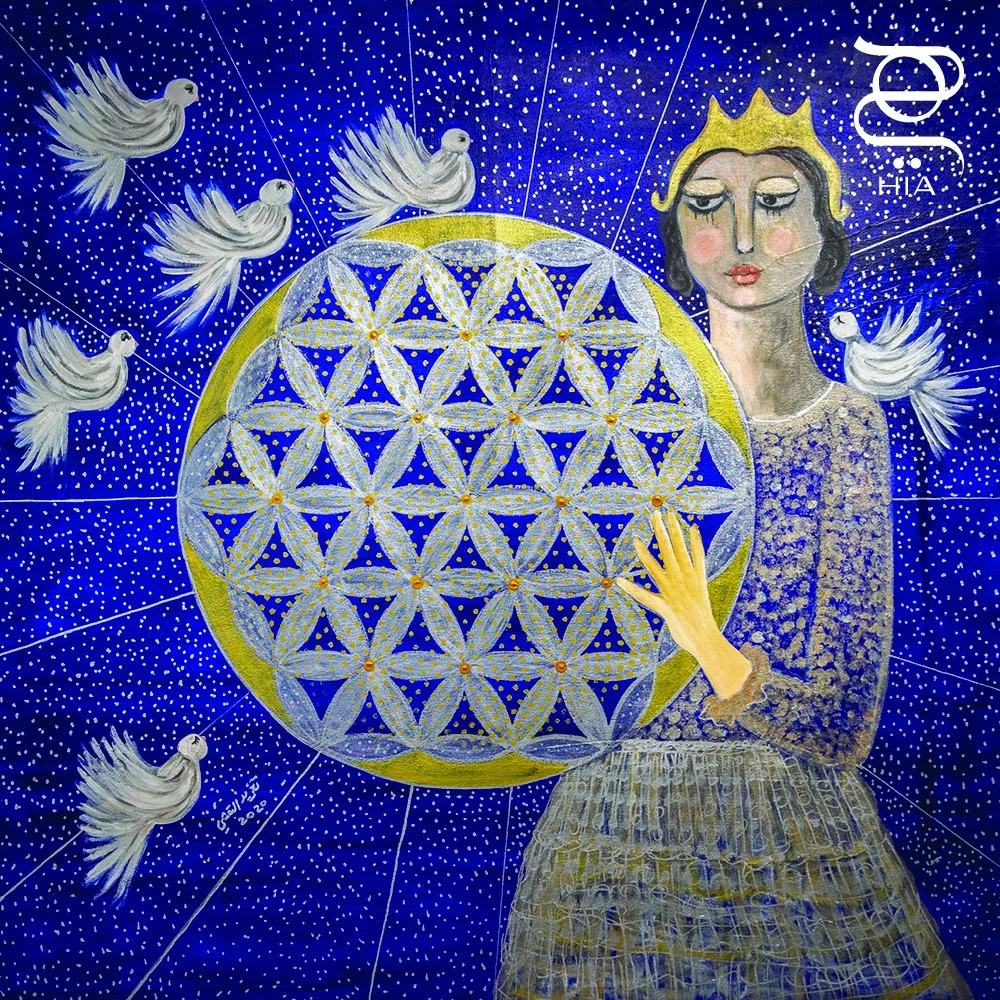
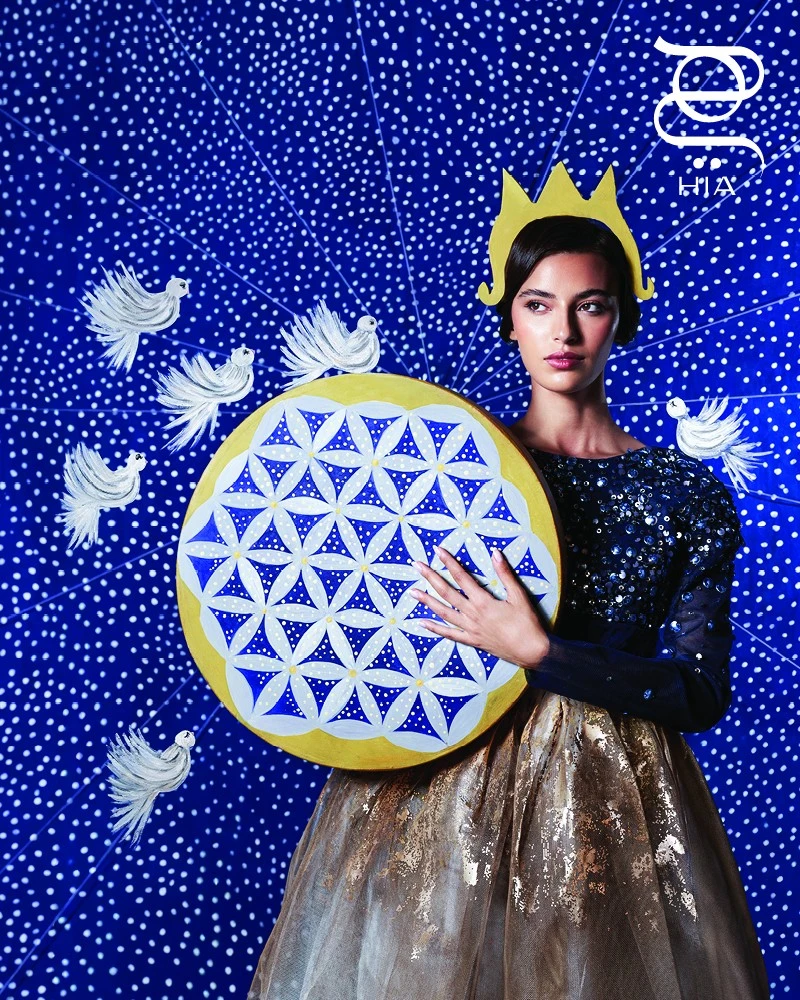
In "Dimensions of Freedom," she explains that the idea is that man feeds on an imagined freedom, breathing his existence with ideas that have grown on a shoulder that bears many images as a metaphor for a journey seeking liberation from the stereotypical formula, to move from a life that is created by others, so freedom becomes a wish that turns into a path.
Tagreed hopes that her art will be read decades from now as both part of Saudi art history and as a unique personal voice. She concludes, "I would like my work to be read as part of Saudi art history and as my own personal voice. I hope my style and how I created a distinctive artistic language will be studied, and that I will have an impact on future generations. If researchers can bring the two together, that would be a great honour."
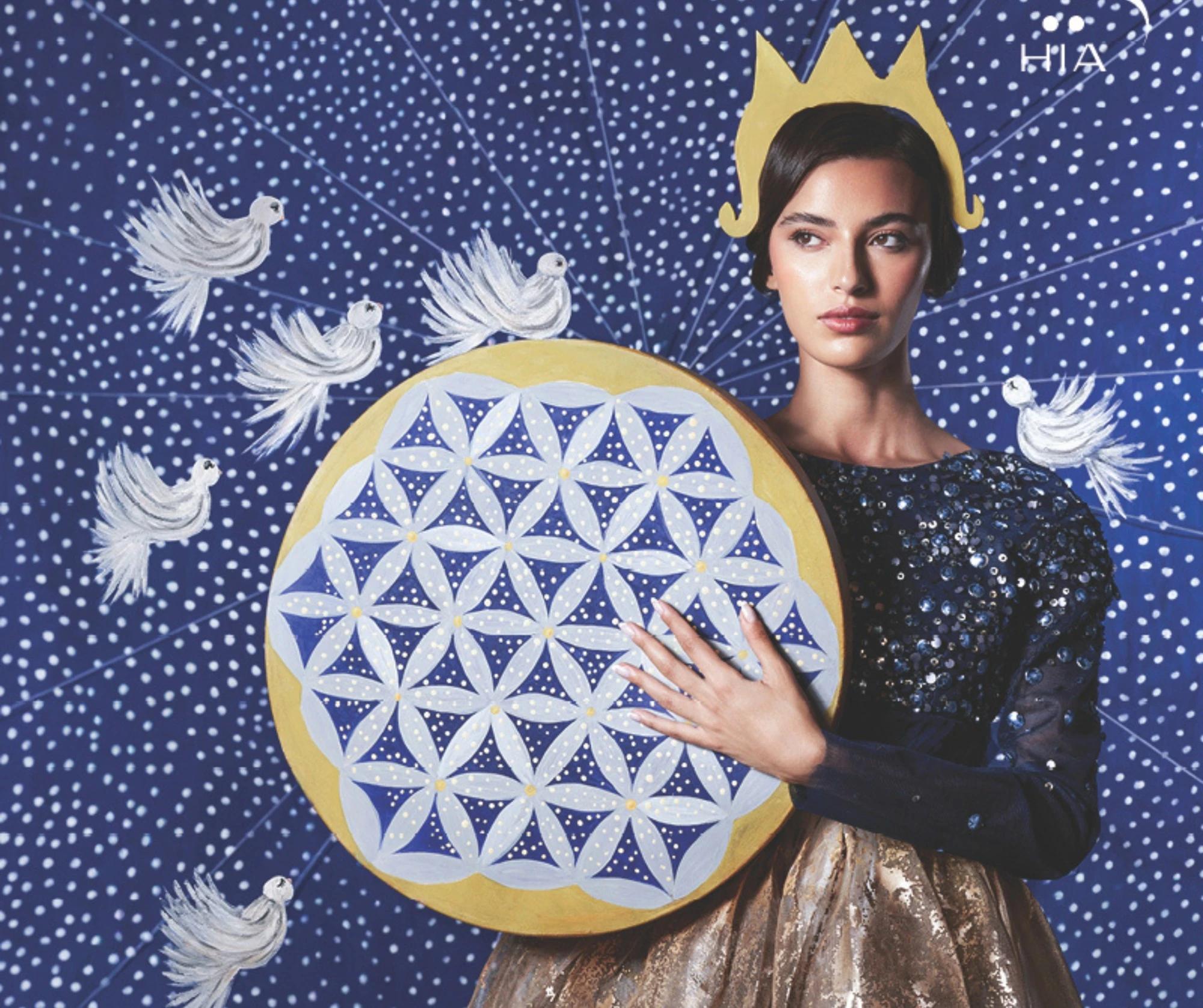
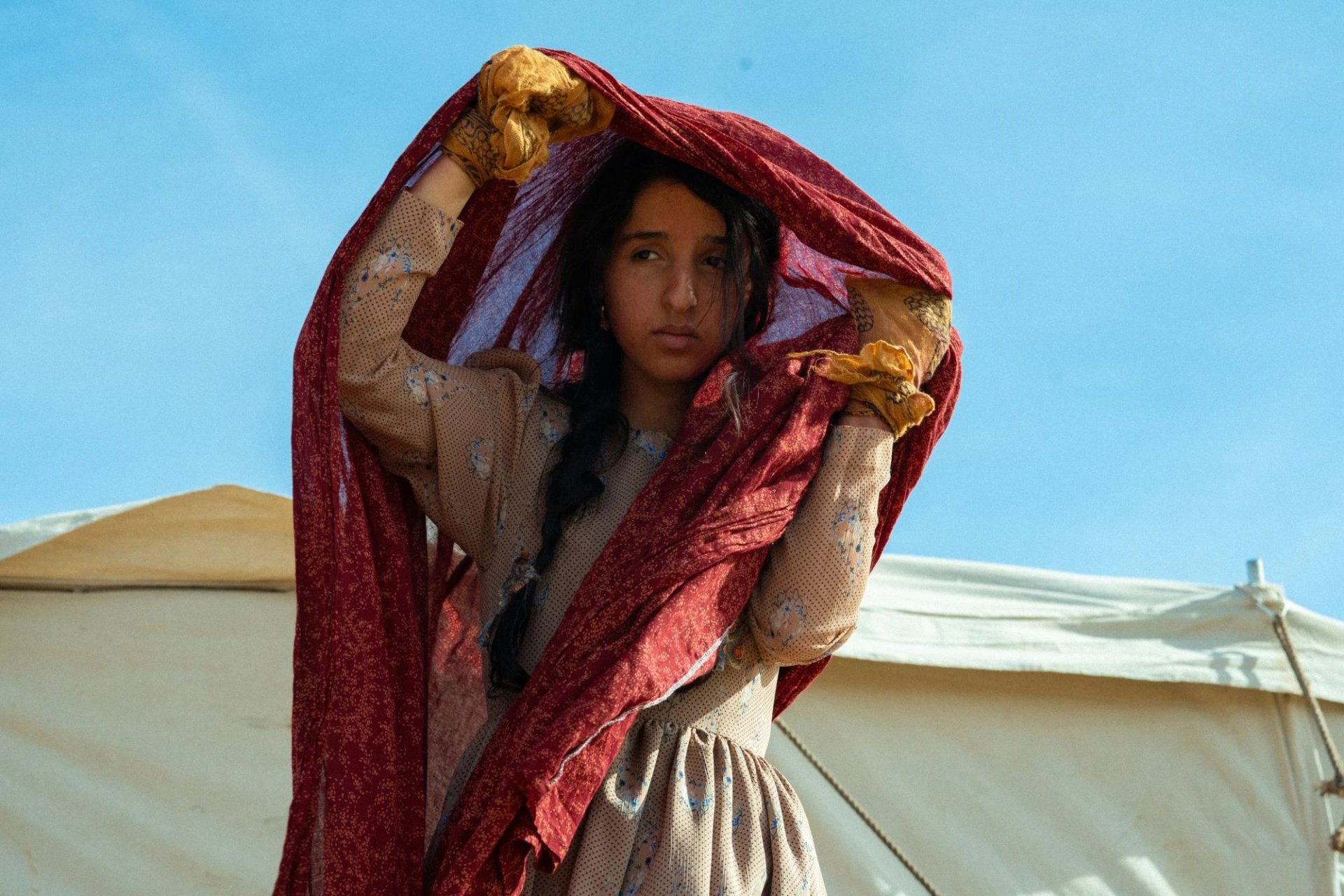
Fatima Al Nimr: Rababa Salma
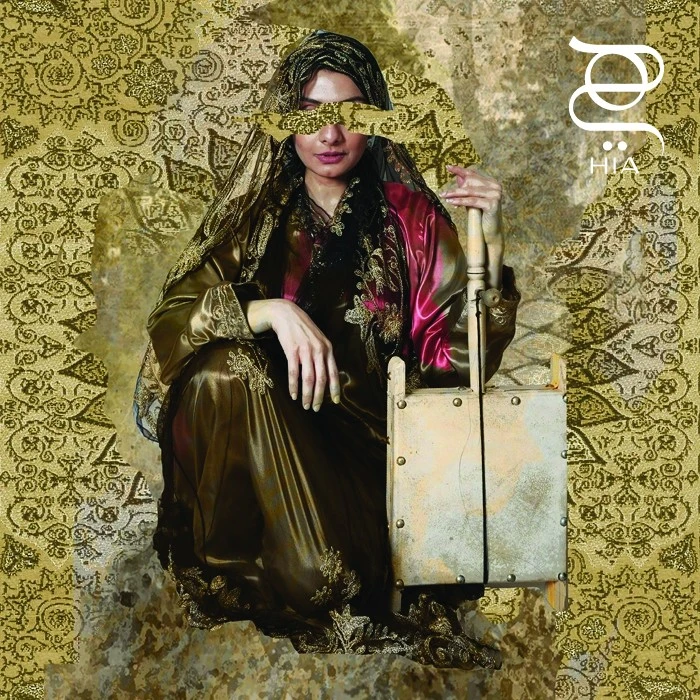
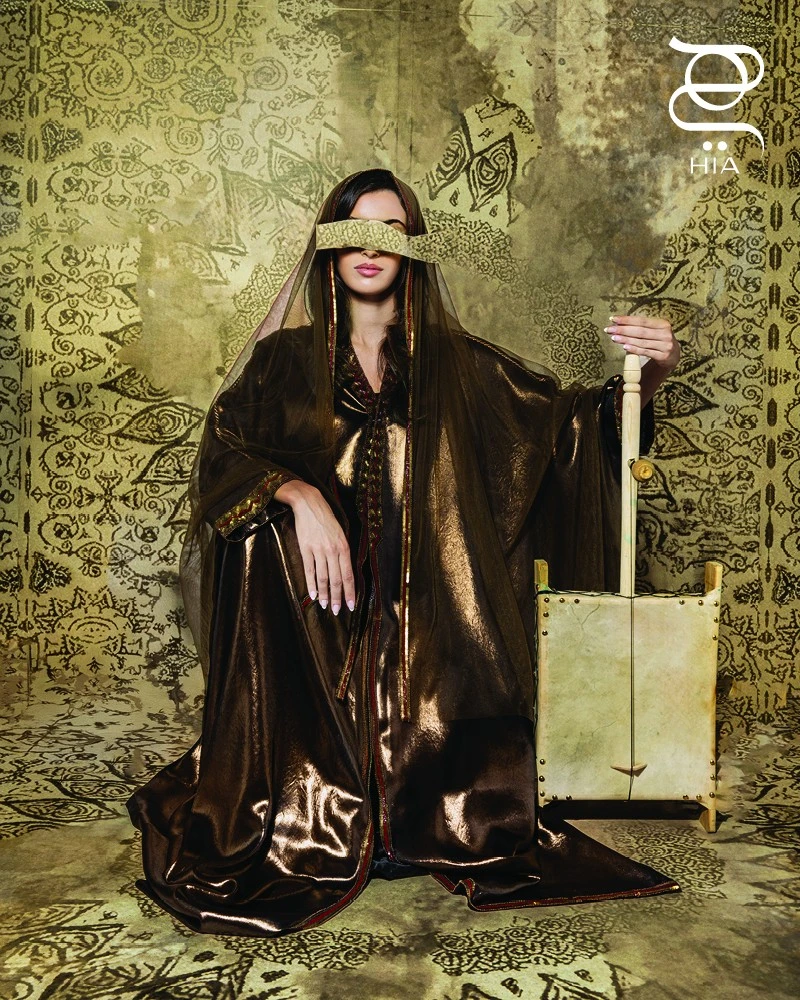
The artwork, "Salma's Rebab," was the fruit of years of documenting women's memories and voices. Fatima Al-Nimr explains, "I chose the character of Salma because she represents the woman who tells the story, who did not just listen, but also preserved the oral heritage and transmitted it across generations. The 'rebab' in this work is not just a musical instrument; it is a symbol of the living voice, a tool that transforms the individual story into an extended echo. Salma here embodies every woman who carries her cultural heritage and transforms her voice into an extension of others."
Observers of Al-Nimr's work find that the rababa may seem like an alien element, but when read visually, it transforms into a human language that can be understood by any society. She says, "What enables this work to transcend its local nature is its honesty in stemming from its roots. The rababa may seem like a local instrument tied to a particular environment, but its symbolism is much broader: here, it transforms into the voice of a woman carrying the story. This idea is not confined to a single culture; it is fundamentally human."
When her works found their way into international museums and auctions, she felt that art had transformed from a personal experience into a shared identity. She says, "From the moment I acquired the work, it was no longer just a personal experience, but rather part of a shared visual identity, adding to the collective narrative and placing my responsibility as a Saudi artist within a global visual context. This requires me to be more aware of every piece I produce subsequently, because it is no longer mine alone, but rather part of global visual history."
Credits
Prepared by: Mashael Aldakheel - Rahaf Alqunaibet
Creative Direction and Costumes: Jeff Aoun
Photography: Abeer Ahmed
Fashion Styling: Ninorta Malke
Main Producer: Kawther Alrimawi
Makeup: Haneen Khoj
Hair Styling: Reem Abdallah
Production Company: Purple Brain Fashion
Coordinator Assistant: Rana Domian
Camera Assistant: Mohannad Turki
Models: Amira Al Zuhair - Bader Kabbani - Snow Ghost - Salem Artist: Amnah Mahdali
Producer: Purple Brain: Mohammed Kusaibati
Production Designer: Razan Abu Sadeh Art
Direction: Dania Bayoumi
Technical Assistant: Ahmed Magdy Abdeldaem
Production Assistant: Salem Dawod Gama