


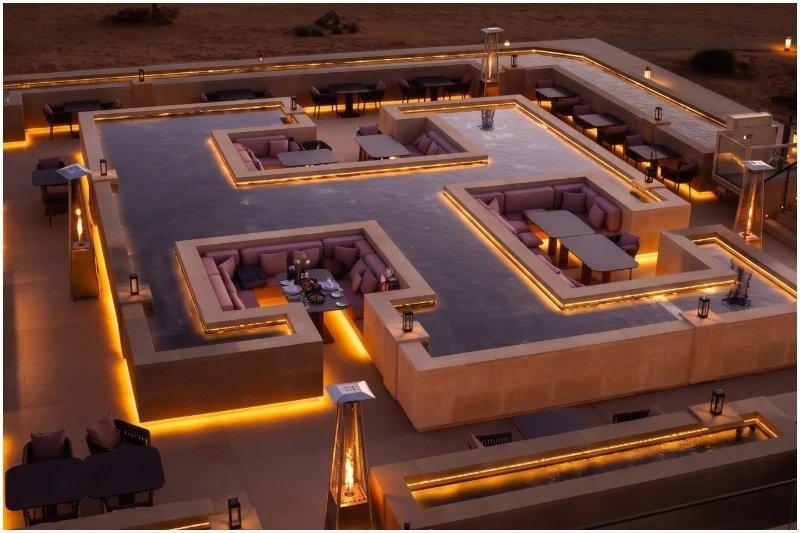
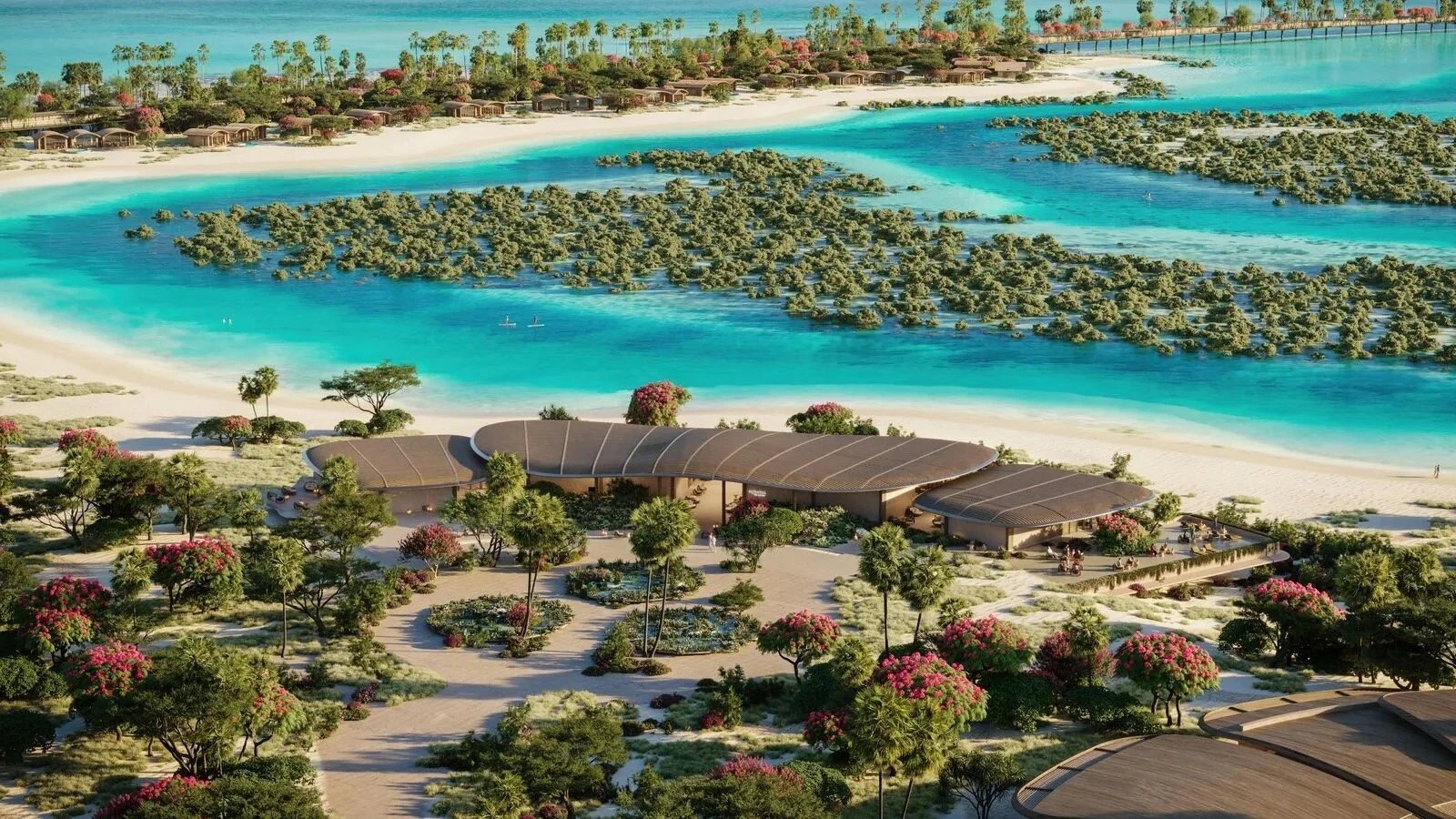
Venture to Saudi’s side of the Red Sea, where inviting waters meet rich marine life and a coastline shaped by natural beauty.
Here, Red Sea Global (RSG) is crafting a delicate balance between preserving the region’s ecosystems and inviting mindful exploration. From coral reefs to mangrove forests, every effort is about creating a sustainable synergy – protecting this unique environment while redefining what responsible travel can mean.
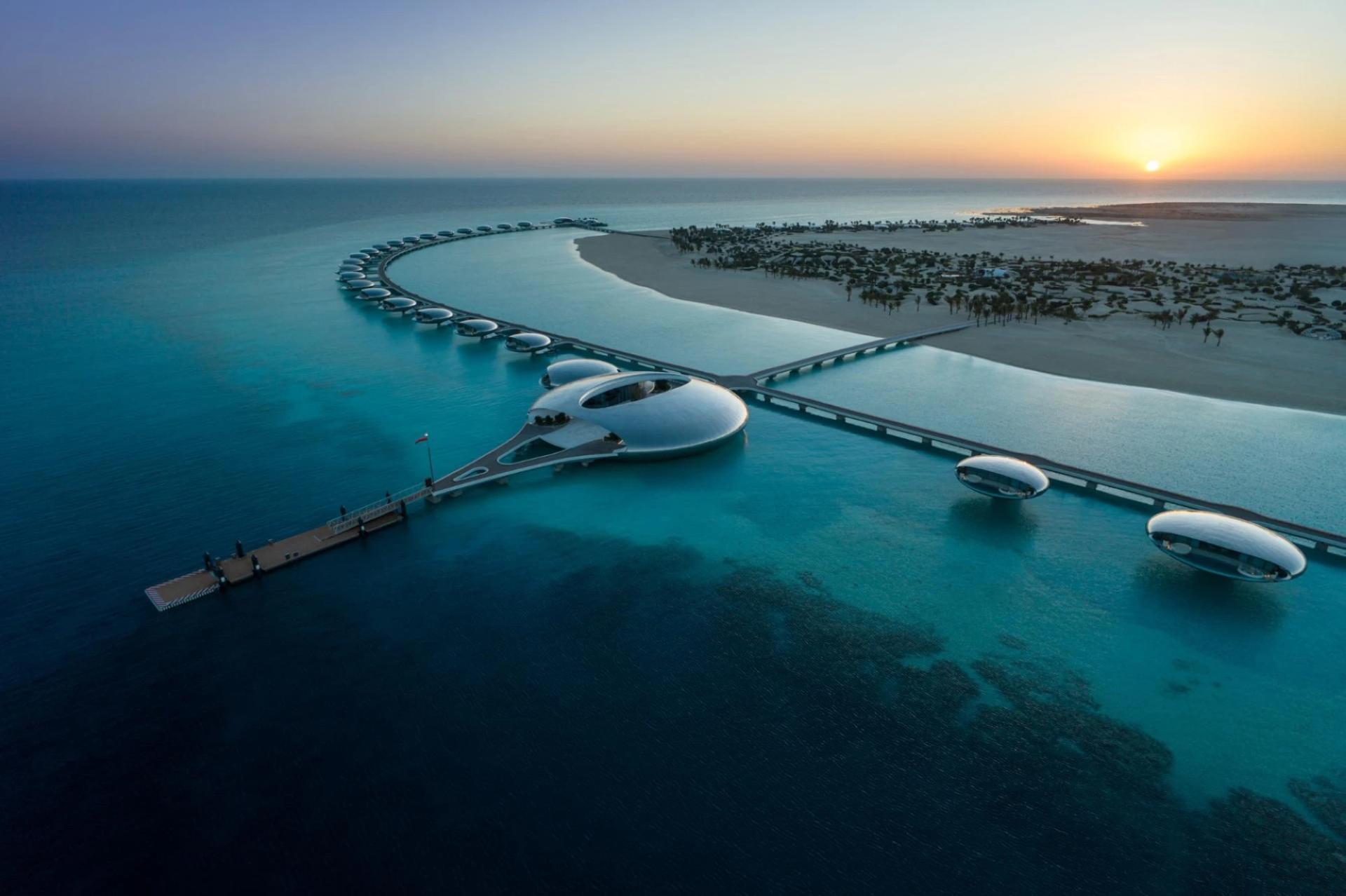
One of its newest destinations is Shebara Resort, a 7km haven reflecting the Kingdom’s sustainability goals, relying on eco-friendly practices to support its 73 overwater and beachfront villas, restaurants, sports facilities, and staff quarters.
The Green Realisations
“This luxury and truly one-of-a-kind resort embodies our commitment to innovative design and sustainable tourism,” explains John Pagano, RSG’s Group CEO, in the resort’s announcement notes.
“We’ve got our own solar farm, with all of our solar panels that feed into the transformers, and in turn power is brought into the resort,” says Carla Puverel, the general manager of Shebara. Listed in RSG’s 2023 Sustainability Report are the 760,500 PV panels, which make up their solar farms and contribute to renewable energy. Shebara has a dedicated microgrid to power the resort by sunlight, day and night; and the solar farm has 11,256 PV panels with 6 MWp/ 5MWac installed capacity.
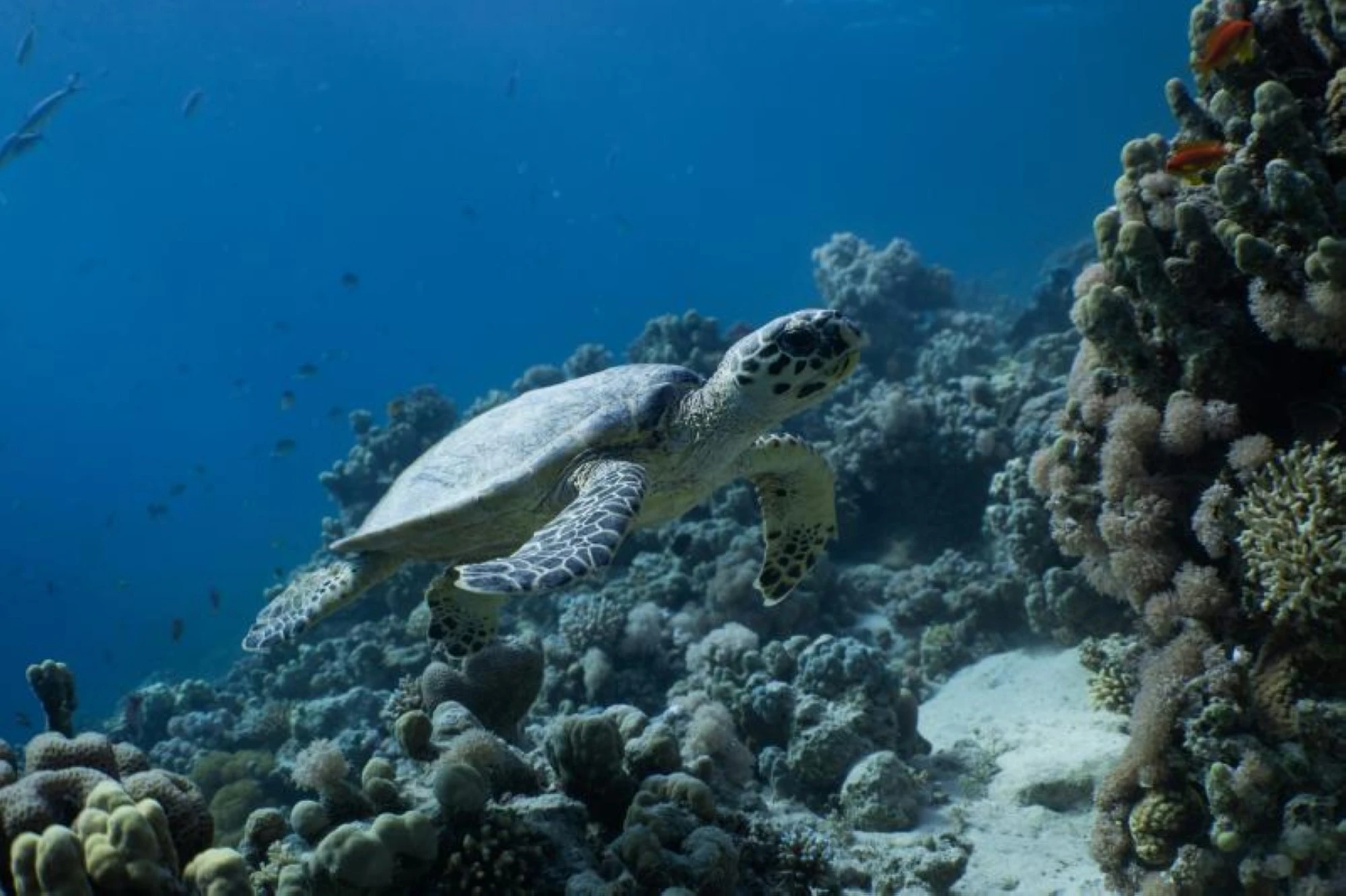
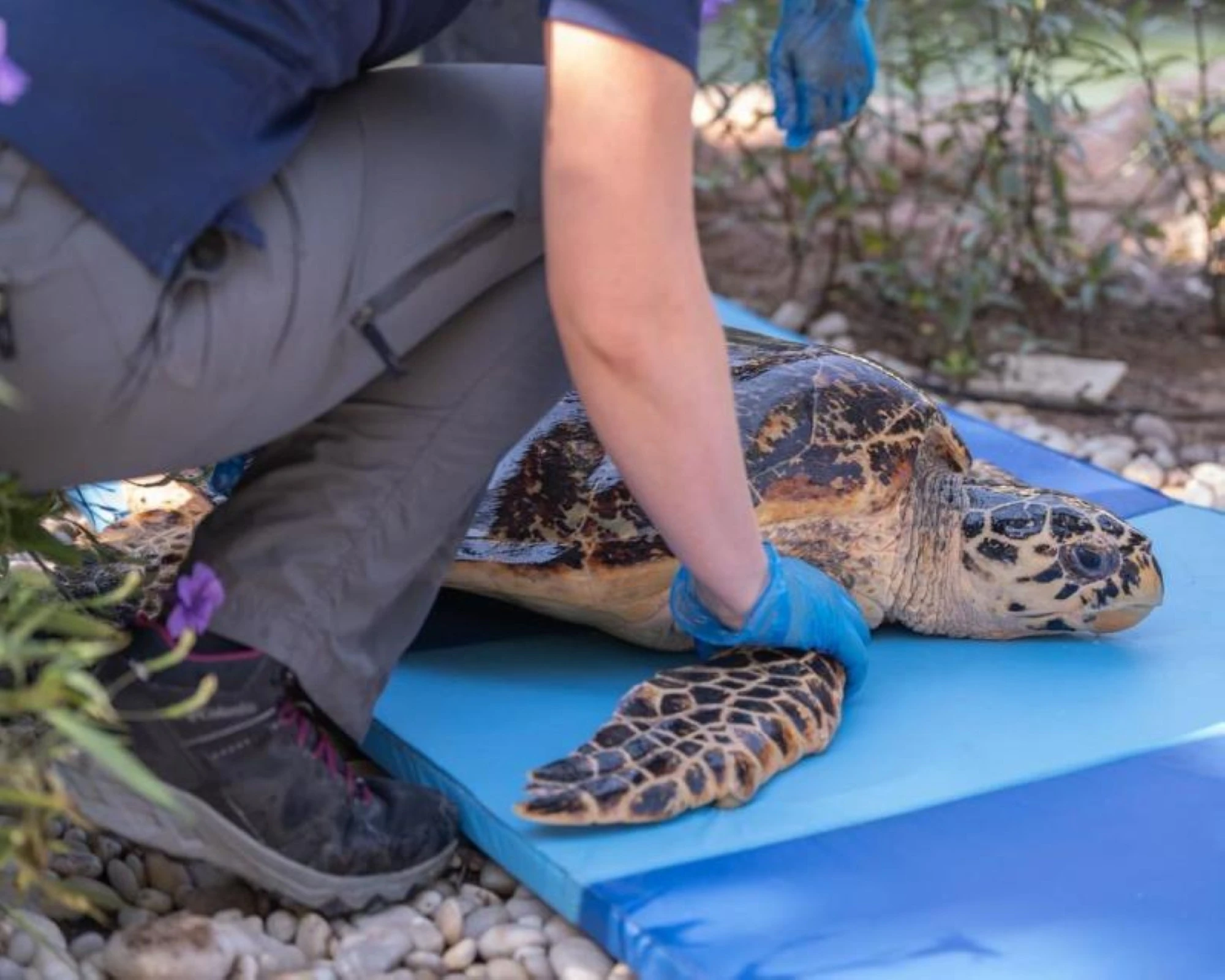
“We do our own work with turtles. The employees are excited about a mama turtle that laid her eggs recently, and they’re looking forward to the hatching,” the general manager says. This is a nod to preserving the natural habitat of the Red Sea region, making sure that native wildlife is present and protected. “We also do reverse osmosis with water and our own sewage plants. Our water is recycled so everything that has been used gets cleaned again twice and then goes into the irrigation.”
You Might Also Like: Shebara launches reservations for Red Sea villas with exclusive opening offers
Puverel adds they’re looking at hydroponic farming. Quite simply, this is water-based farming. It’s a beneficial way to water plants in a place like Saudi, with its vast desert-scapes. Because Shebara is in the desert, growing vegetation hydroponically would be an eco-friendly and easy solution. If and when Shebara turns to this type of technology, lettuce, micro-greens, herbs, and vegetables for the resort would be watered this way.
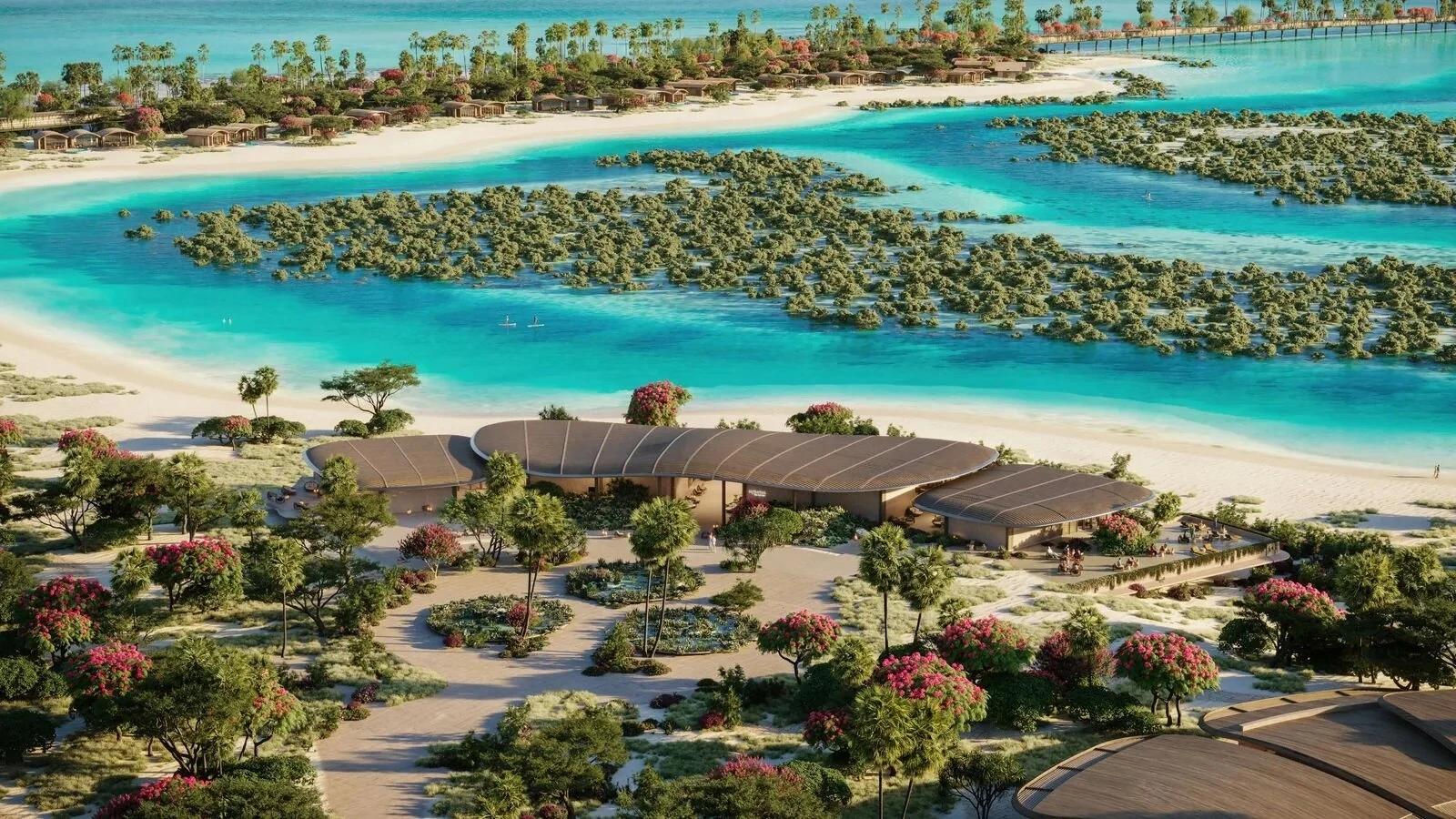
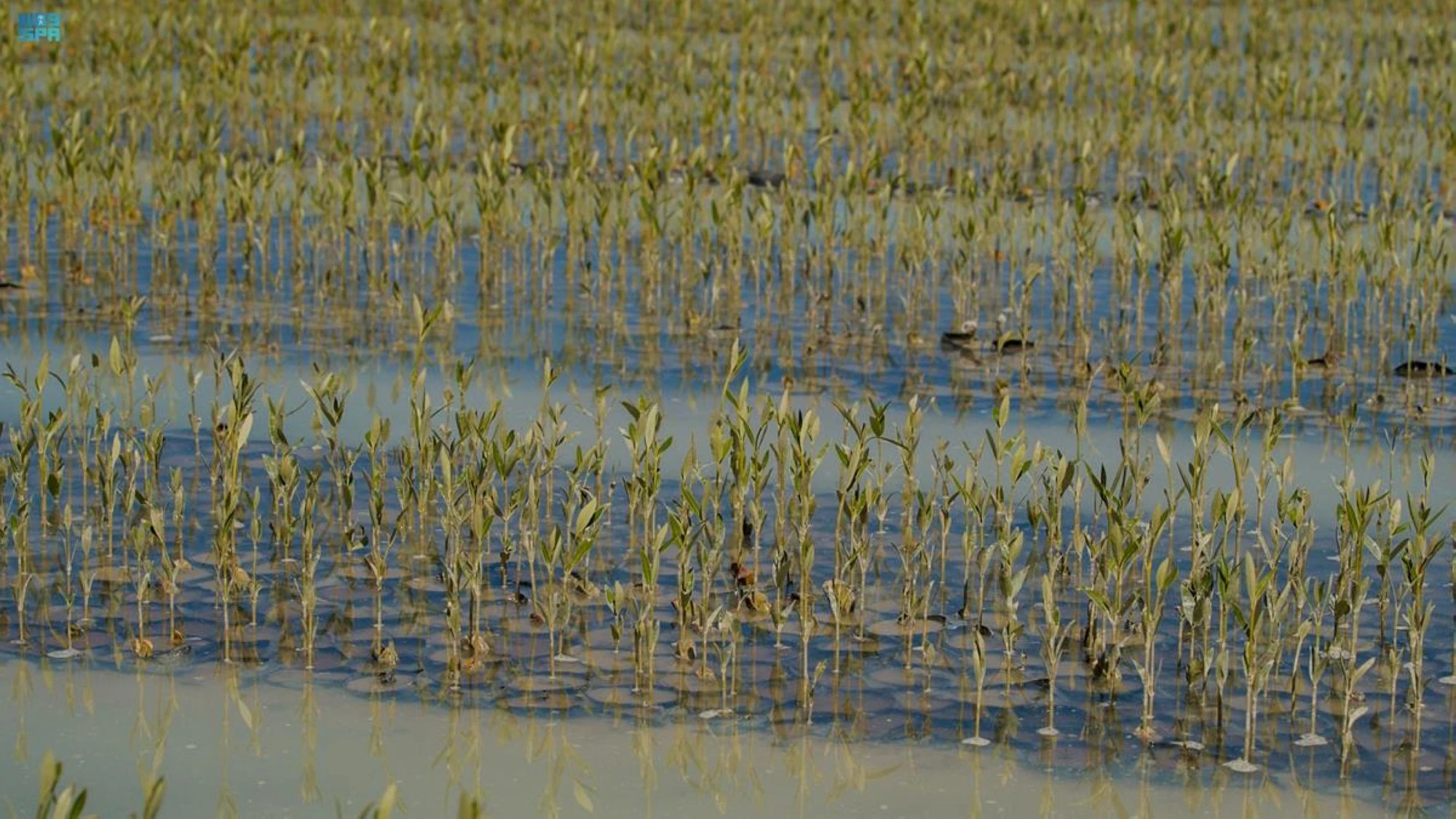
In total, under RSG, 600,000 mangrove seedlings have been planted, which gives life to the marine ecosystem. At Shebara, they involve guests in contributing to enhancing the resort’s biodiversity by allowing them to partake in planting mangroves. Another aspect of Shebara is its coral reef preservation. They have a marine biologist on site that works between Shebara and The St. Regis Red Sea Resort.
A Specialist’s View
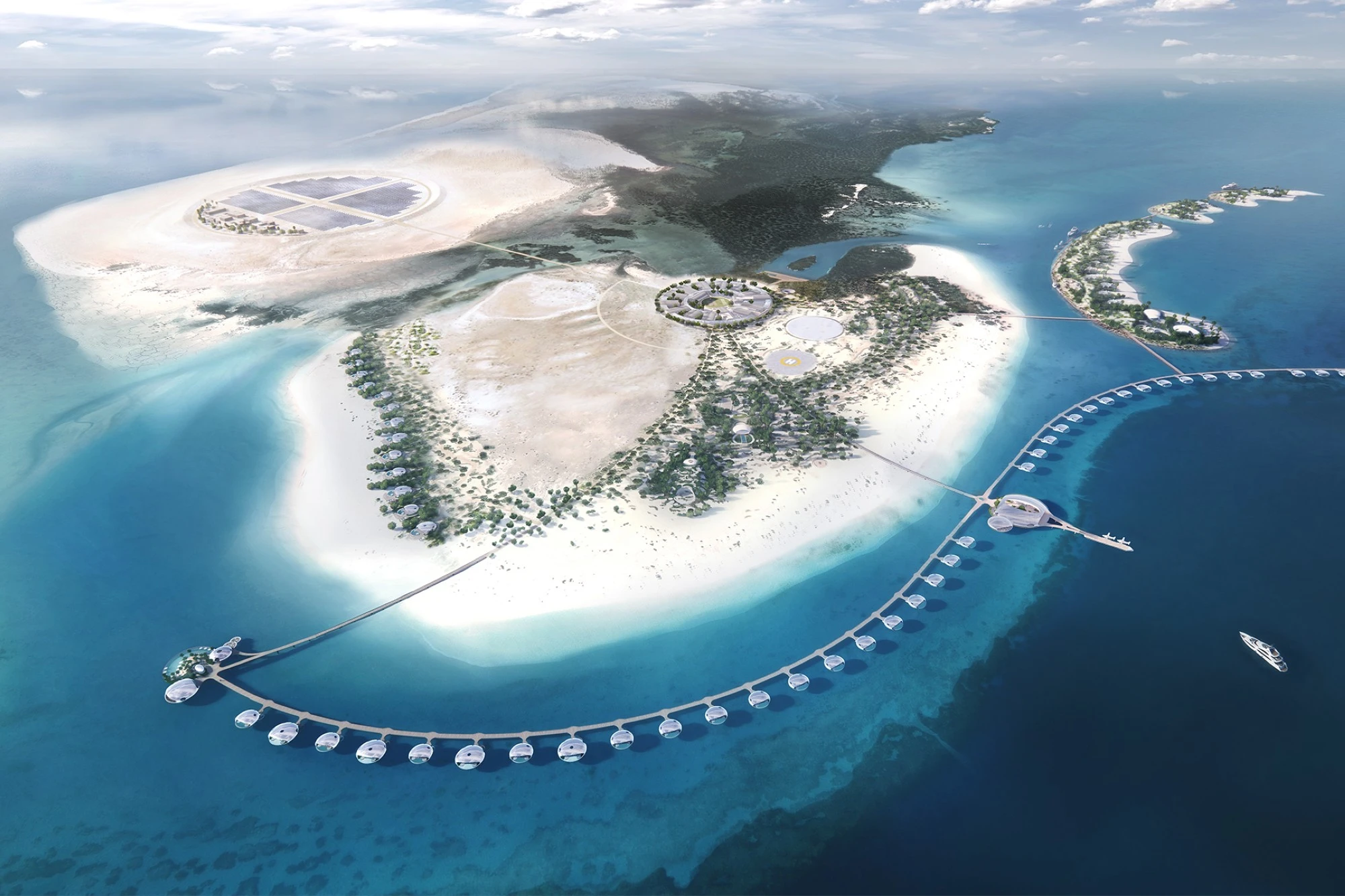

Reynhold Gelera, the resident marine biologist and dive instructor at Shebara’s diving centre, brings extensive experience in leading marine conservation projects with a strong emphasis on sustainability.
Drawing on his previous work and his observations in Saudi, Gelera has collaborated closely with local fishermen to protect natural ecosystems. Through initiatives such as teaching fishermen sustainable diving techniques and responsible fish management practices, he has helped preserve marine biodiversity while fostering alternative livelihoods for the community.
In addition to his work at Shebara, Gelera has spearheaded coral restoration projects in Fiji and the Maldives, focusing on combating the impacts of climate change and supporting the tourism industry. “When we talk about sustainability, the environment is always tied to social aspects,” the biological oceanography expert explains. “We have to work together because a healthy environment requires people to actively take care of it. Take coral reefs, for instance, they must be protected and allowed to recover. By regulating our consumption and adopting sustainable practices, we can create a balanced coexistence where humans play a responsible role within the food chain. It’s about working together with the environment to achieve long-term harmony.”

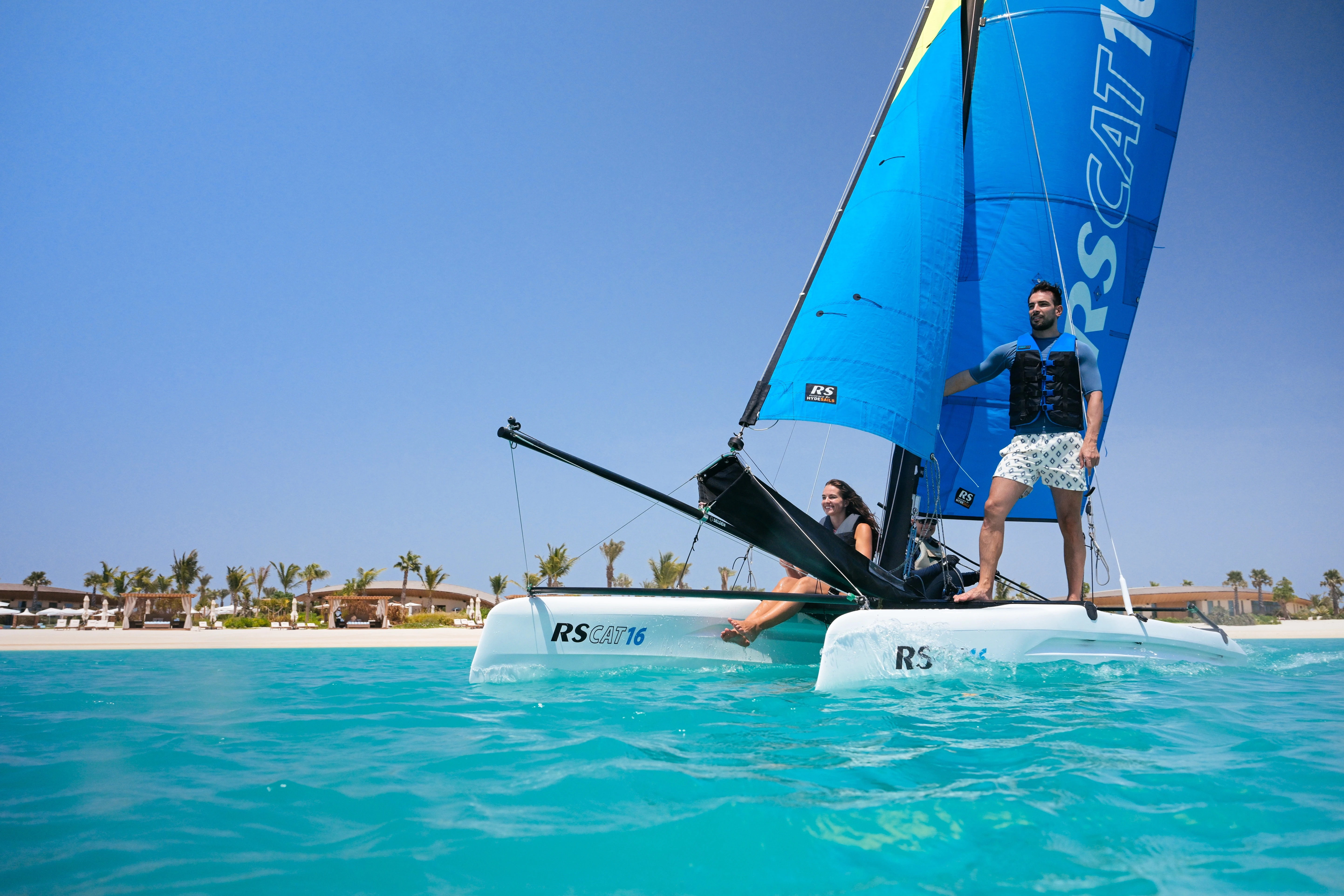
A stunning destination, Shebara is among the first of many resorts shaping the future of The Red Sea. By 2030, with 50 hotels spanning island and inland sites, this ambitious vision will redefine Saudi’s relationship with its natural heritage. RSG aims to stand as a steward of this delicate ecosystem, proving that thoughtful development and biodiversity can coexist.
At Shebara, every effort invites travellers to witness a rare harmony, where luxury meets a deeper respect for the world around us.