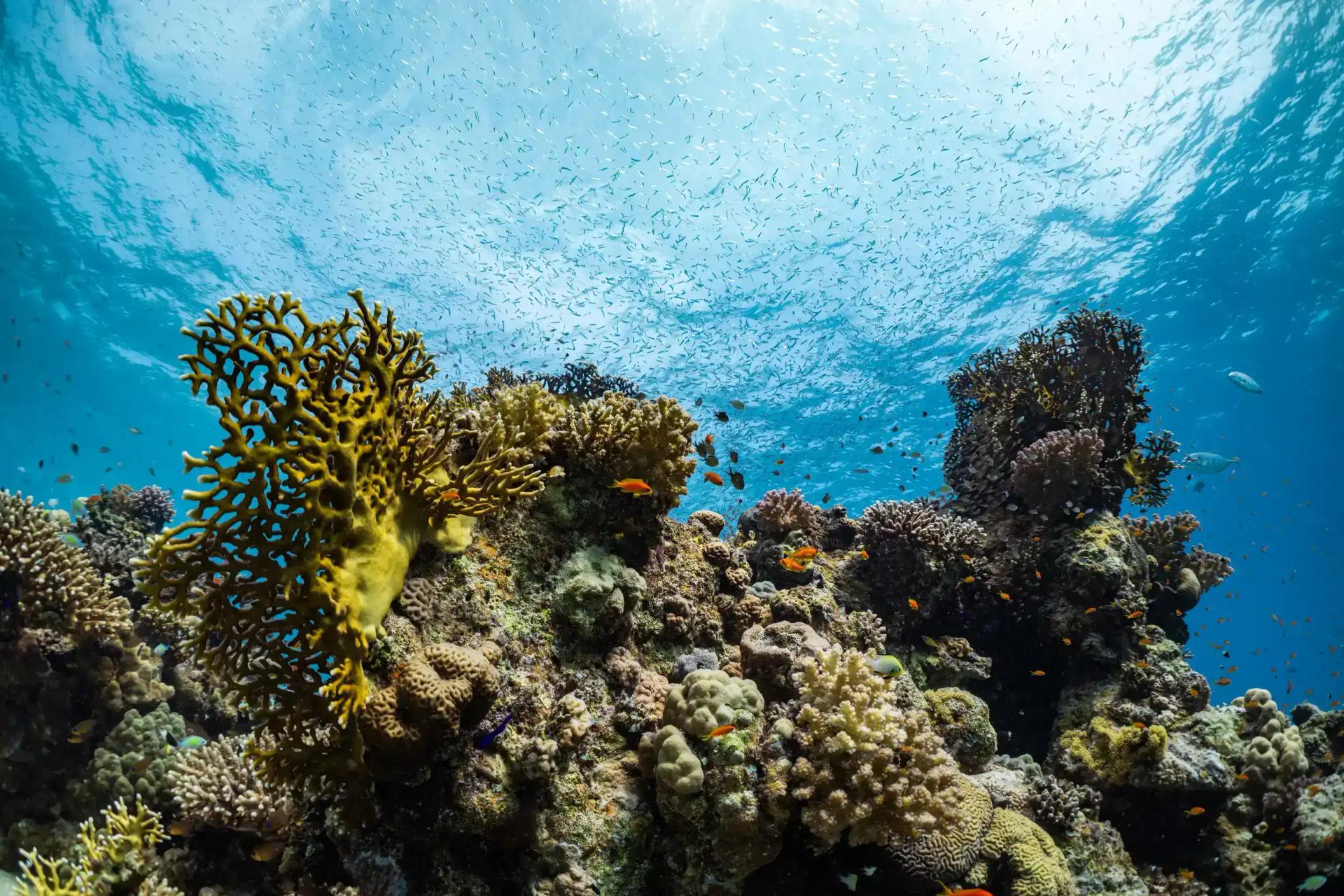
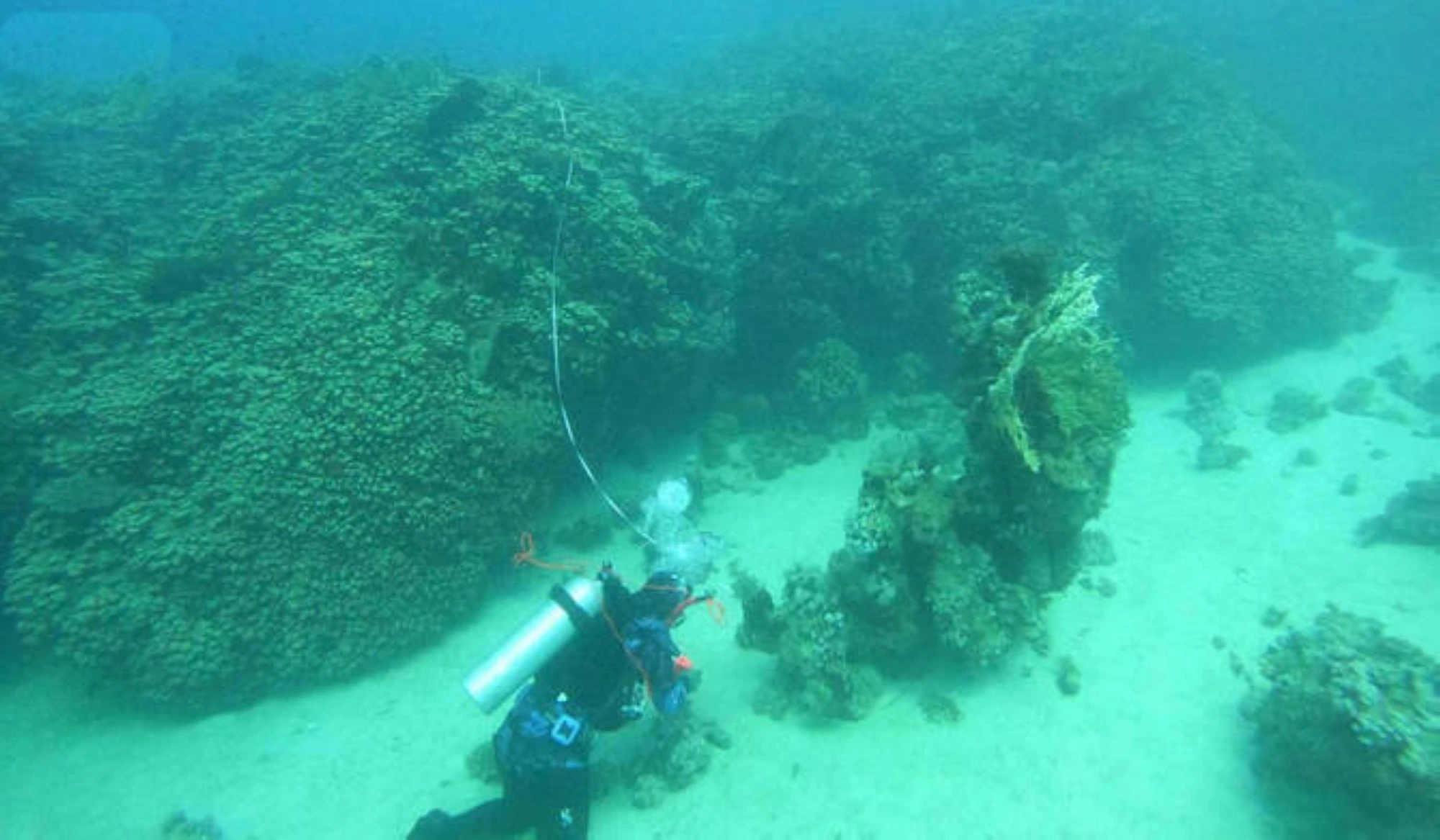
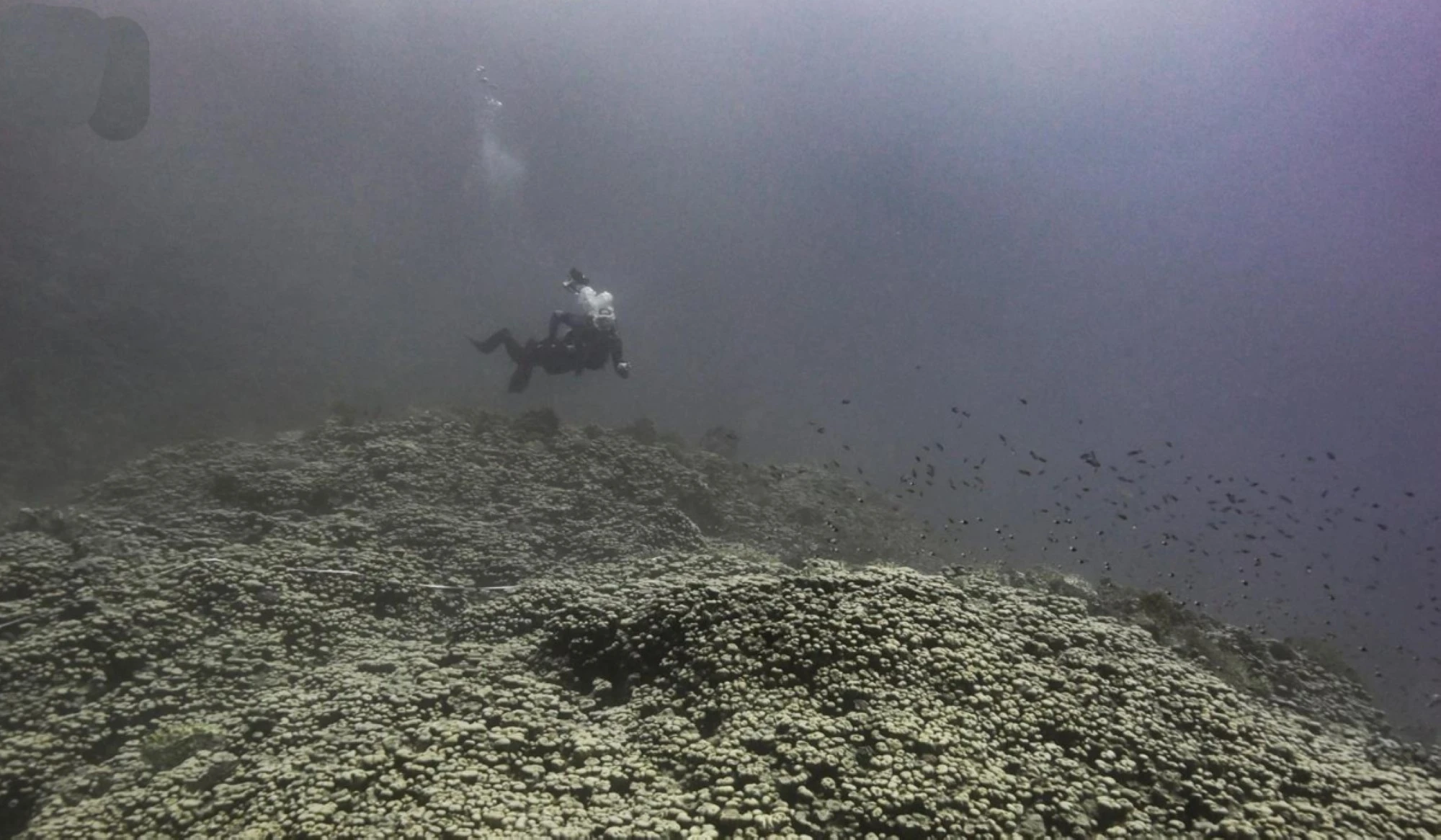
A vast coral colony, estimated to be up to 800 years old, has been discovered off Saudi Arabia’s northwestern coast, near the ultra-luxury AMAALA resort on the Red Sea.
Believed to be one of the largest standalone coral structures of its kind, the Pavona coral colony may soon be open to visitors—carefully, and with the environment in mind. It has been no secret that the developers and hoteliers of the growing Red Sea region have prioritised sustainability, promoted environmental awareness and protection, and encouraged eco-tourism, and this remarkable new find aligns perfectly with their vision.
You Might Also Like: Nammos Resort AMAALA will bring Greek luxury to Saudi Arabia's Red Sea
Unlike expansive reefs made up of numerous colonies, this discovery is a single, self-contained formation. Researchers say it rivals the world’s largest known individual coral colony in the Pacific, which spans 32 by 34 meters and rises 5.5 meters high. Red Sea Global, the developer behind AMAALA, emphasises that the coral will be accessible in a “secure and environmentally responsible” way, ensuring the preservation of the ecosystem while showcasing its natural beauty.
Early estimates suggest the colony could be between 400 and 800 years old, based on its size and photogrammetry modelling. The growth rate of this particular coral species in the Red Sea isn’t fully documented, so scientists from Red Sea Global and KAUST are still working to pin down its age.
You Might Also Like: How the Red Sea's development is shaping the future of regenerative tourism
Researchers believe this coral formation could offer vital insights into climate history and resilience. “These giant coral formations act as ‘time capsules,’ preserving critical data on past climate conditions,” Ahmad Al-Ansary, head of environmental protection and regeneration at Red Sea Global, told Arab News.
Red Sea coral ecosystems are among the most resilient in the world, naturally adapted to higher temperatures and salinity—conditions that are threatening coral reefs elsewhere. The discovery is part of the “Map the Giants” project, which aims to record all coral colonies over five metres in size. This is the second major find from the initiative in recent months.
Ronda Sokka, a marine scientist at Red Sea Global and co-discoverer of the colony, called it “a natural treasure,” highlighting its hardiness in extreme conditions. With more exploration and mapping underway, the Red Sea could prove to be one of the most important—and surprising—coral strongholds on Earth.