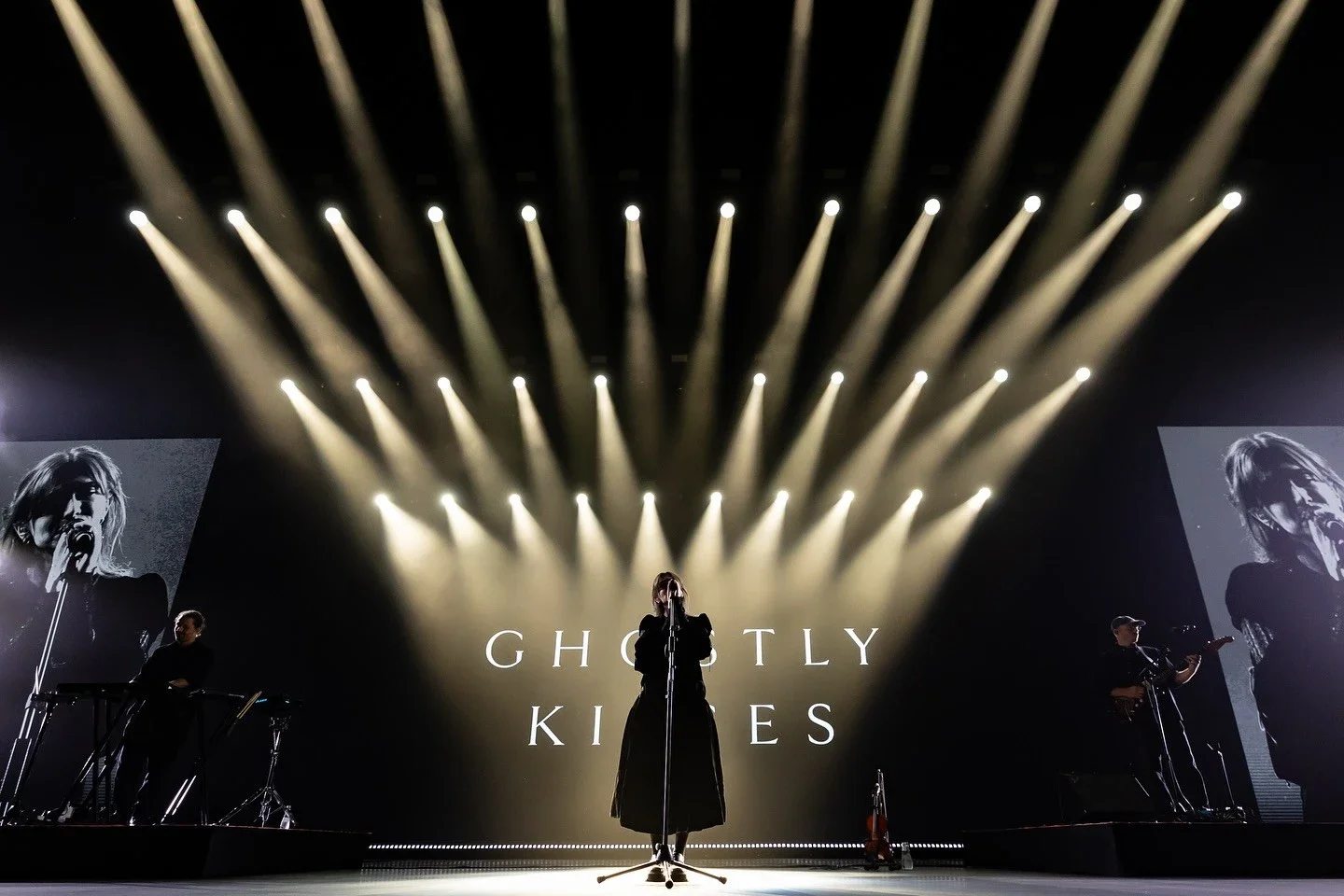
Zainab Abo Hussain stands in front of her tapestries at World Art Dubai, explaining how she stitches together memory, myth, and the quiet rituals of Saudi girlhood into intricate textile works that feel as intimate as they are visually striking.
Based between Tarout Island and the broader Gulf creative circuit, Abo Hussain draws inspiration from the deeply personal and hyperlocal: her grandmother’s stories, the basil that grows wild near her childhood home, and the soft traditions passed from mother to daughter. Her work is a sensory archive of these memories—dyed with henna, imprinted with local leaves, and coloured with natural pigments extracted from her island home.
“I remember when I was little,” she says, recalling quiet afternoons with her grandmother. “We’d comb our hair, collect the strands, and she’d wrap them in a little pouch. Then we’d tuck them into the branches of the palm trees that filled the island.” The act, both mundane and magical, came with a promise: if you left your hair there, it would grow longer. “My grandma passed away,” she adds softly, “but I still remember those stories.”
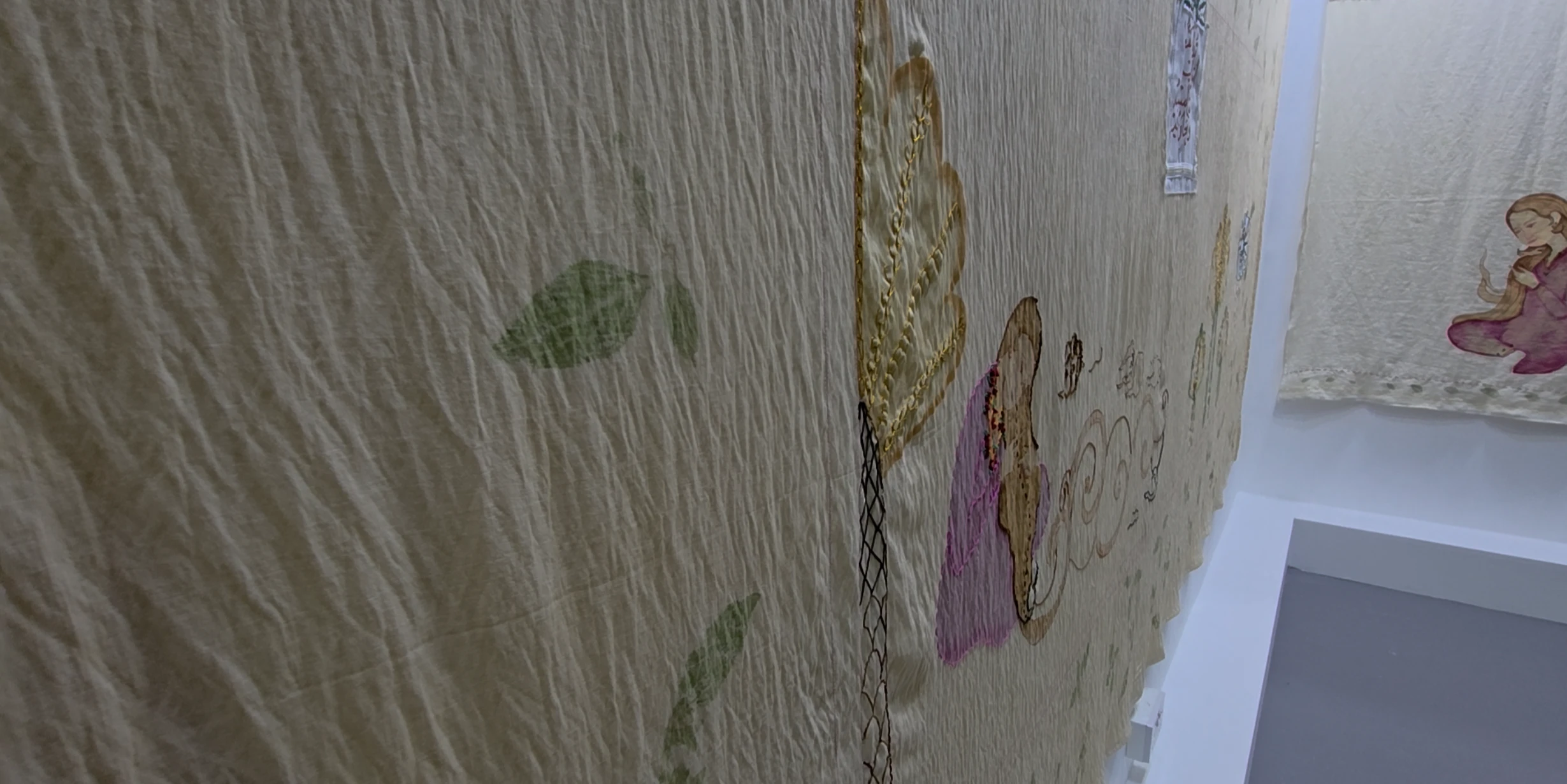
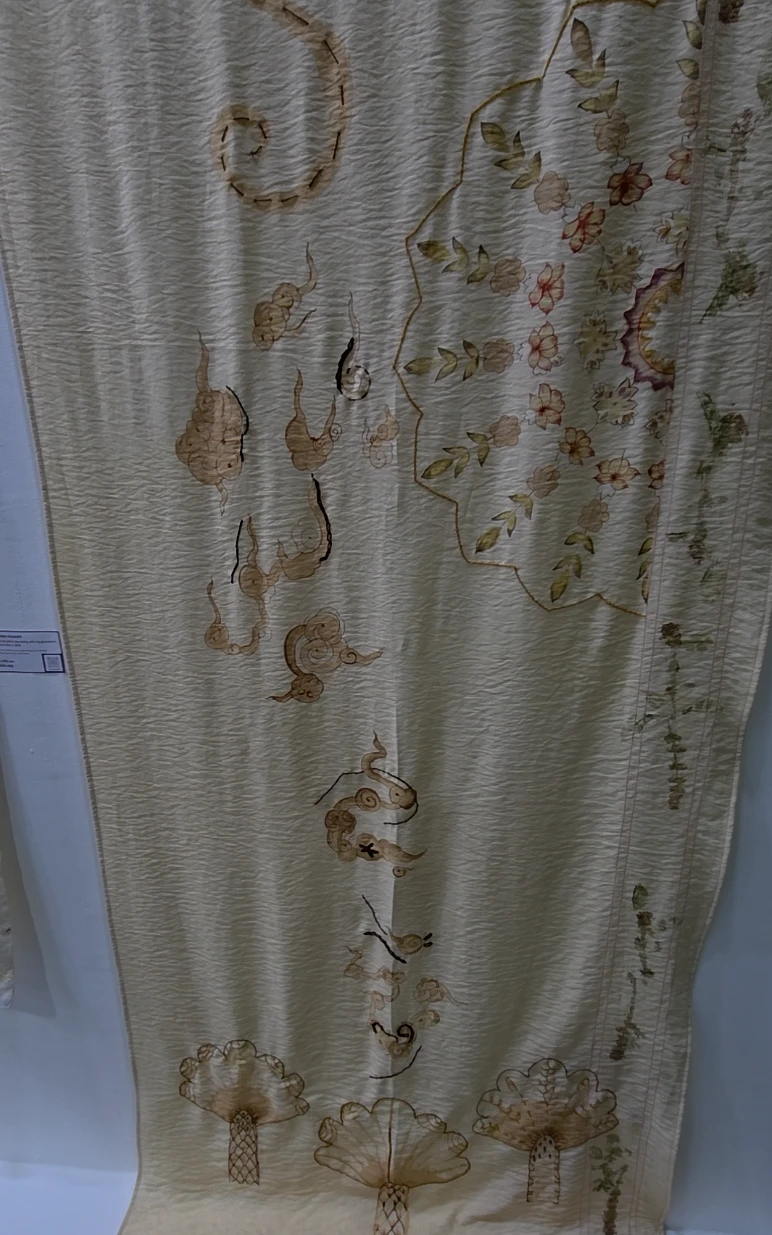
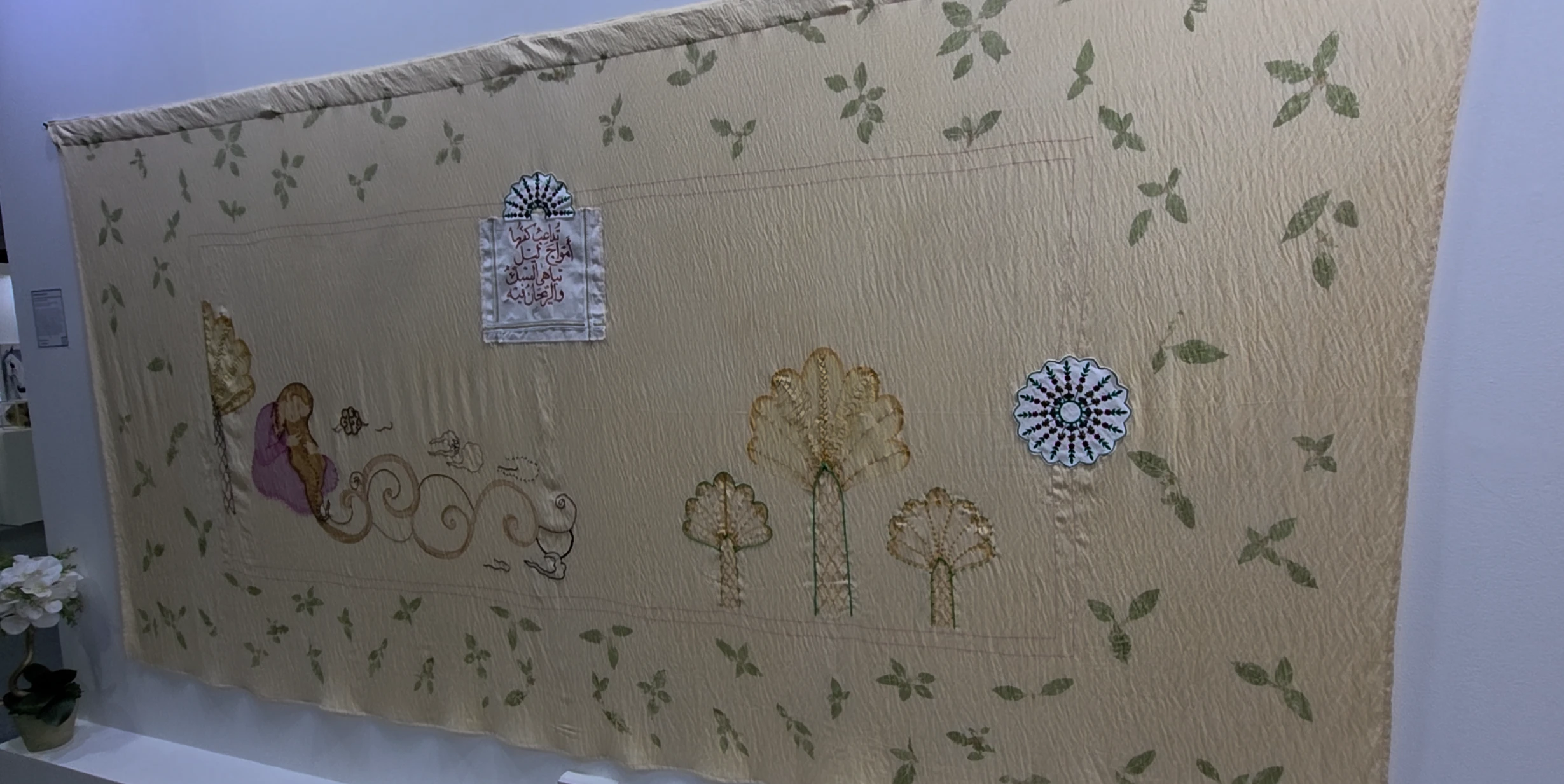
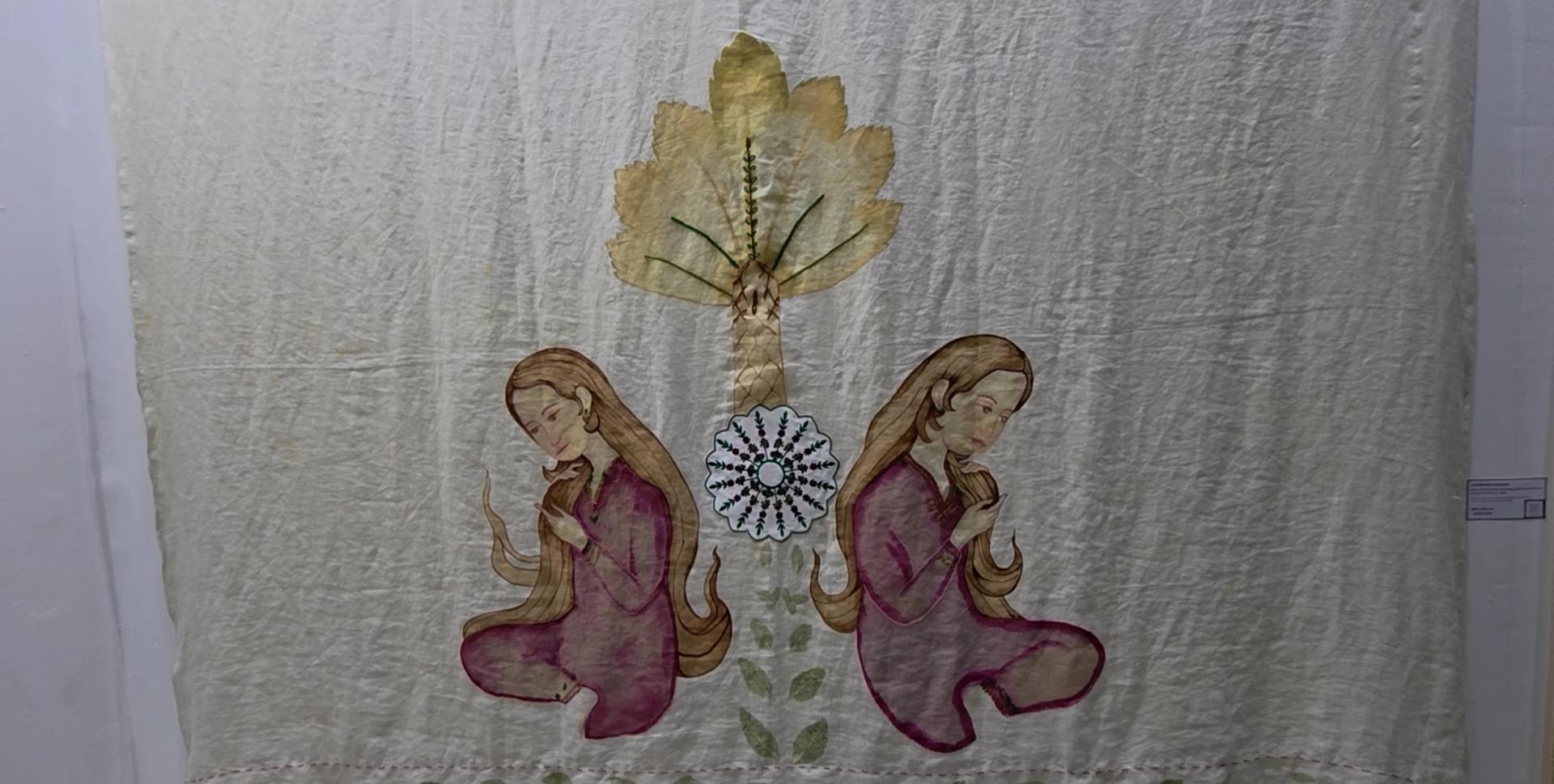
That memory (and the palm tree itself) form the emotional and symbolic core of her recent work. For Abo Hussain, the tree is more than a recurring motif. “The palm tree, our auntie,” she writes in her artist statement, “stands as a powerful emblem of motherhood, femininity and home in Saudi Arabia.” In her tapestries, this maternal presence is layered through earth-toned fabrics dyed with henna and basil, stitched together with silk paints, ecoprinting, and delicate needlework.
The result is a textile practice that feels equal parts ritual and revelation. These are more than decorative wall pieces—they’re visual essays on how women carry, transform, and preserve heritage through the materials at hand. And every detail is intentional. “Even the green leaves,” she notes, pointing to parts of her ecoprinted tapestry, “are from the basil flowers we used to see all around our area.”
Abo Hussain is part of a growing wave of artists in the Kingdom reimagining what Saudi art can look and feel like, pushing beyond oil and canvas into more tactile, everyday materials. Her work stands out for its craftsmanship as well as its deep emotional pull, its quiet meditation on memory, and the inherited stories that shape us long after they’re spoken.