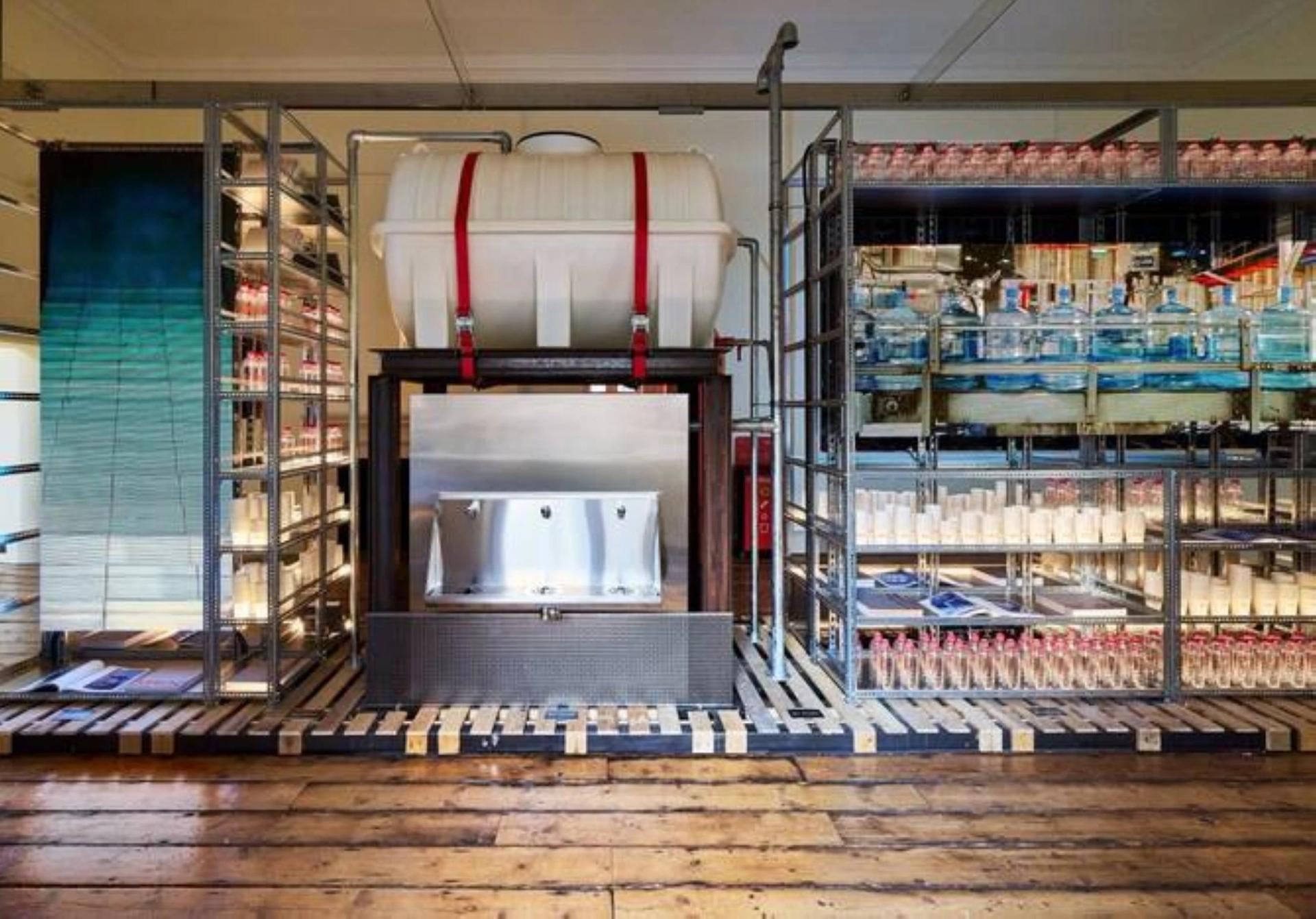
At the 2025 London Design Biennale, Saudi Arabia’s pavilion takes a reflective, essential approach — quite literally. Titled “Good Water,” the exhibition explores water as a shared resource, a cultural gesture, and a symbol of care. The centerpiece? A contemporary interpretation of the sabeel, a traditional public drinking fountain found outside mosques and across urban spaces in the Gulf.
The installation, commissioned by Saudi Arabia’s Architecture and Design Commission, is the work of a multidisciplinary collective led by Dur Kattan, alongside Alaa Tarabzouni, Aziz Jamal, and Fahad bin Naif. Together, they unpack the significance of free water in Saudi history and culture — from the sacred zamzam well to the Kingdom’s present-day status as the largest producer of desalinated water in the world.
But this isn’t just about utility. The team behind Good Water is urging viewers to think deeper: about generosity, about infrastructure, and about who actually pays for so-called “free” resources.
The pavilion plays with light, reflection, and material to highlight the tension between giving and gatekeeping — offering a nuanced take on this year’s Biennale theme, “Surface Reflections.”
Rather than presenting water as a commodity to be consumed, the Saudi team reframes it as a sacred right — one grounded in ethics, ecology, and communal value. Good Water doesn’t just ask viewers to look — it asks them to consider their place in a shared ecosystem, where even the smallest gestures, like offering water to a stranger, carry weight.