
As one of the most significant cities in Islam, Medina (known locally as Madinah) boasts some of the most important religious buildings in the world. While millions of pilgrims are drawn to the city’s mosques to follow in the footsteps of the Prophet Muhammad (PBUH), visitors will also be enchanted by Medina’s history and architecture – many of the buildings offering a masterclass in Ottoman and Islamic design.
The most important building in Madinah – the Prophet’s Mosque – is not open to non-Muslims, but they can take in the stunning exterior and are also welcome at many other historic buildings in the city.
1. Al-Masjid an-Nabawi
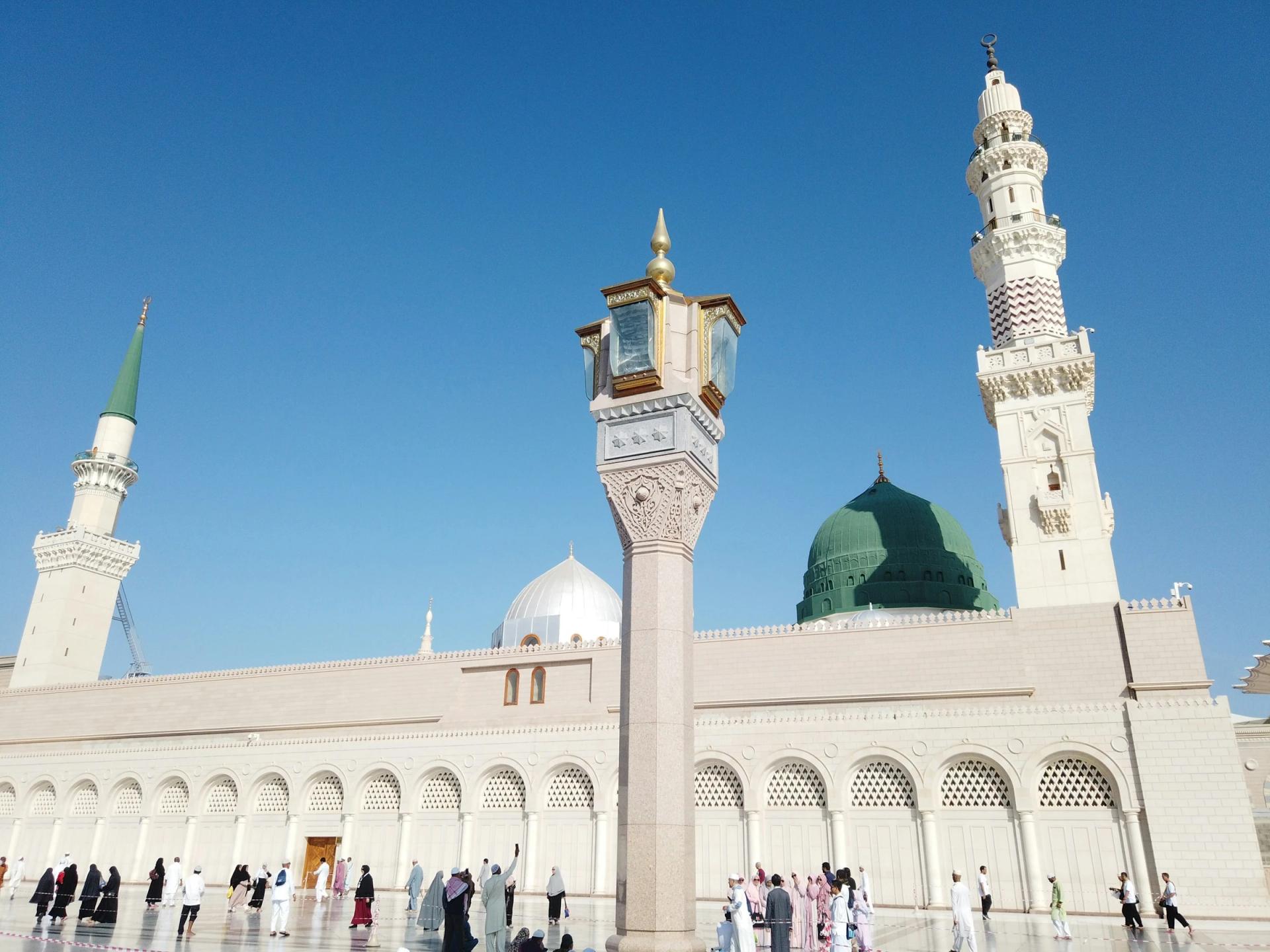
One of the most significant buildings in Islam, and one of the most recognisable in Medina, Al-Masjid an-Nabawi (The Prophet's Mosque) draws tens of millions of pilgrims and tourists every year. From small groups to larger citywide sightseeing tours, there are plenty of ways to take in the splendour of this incredible sight, but however you see it, give yourself at least 2-3 hours to take it all in. Even the outside of the mosque is noteworthy – the Medina Haram Piazza shading umbrellas were set up to protect worshippers from the sun but are an architectural feat in themselves.
The history of the mosque dates back over 1400 years, when it was first constructed with mudbrick and Prophet Muhammad became the mosque’s first imam. Since then, the building has been reconstructed and expanded to include the world-renowned green dome, striking minarets and marble structure that surrounds the older Ottoman design. The minarets look particularly beautiful when lit up at night.
2. Hejaz Railway Museum
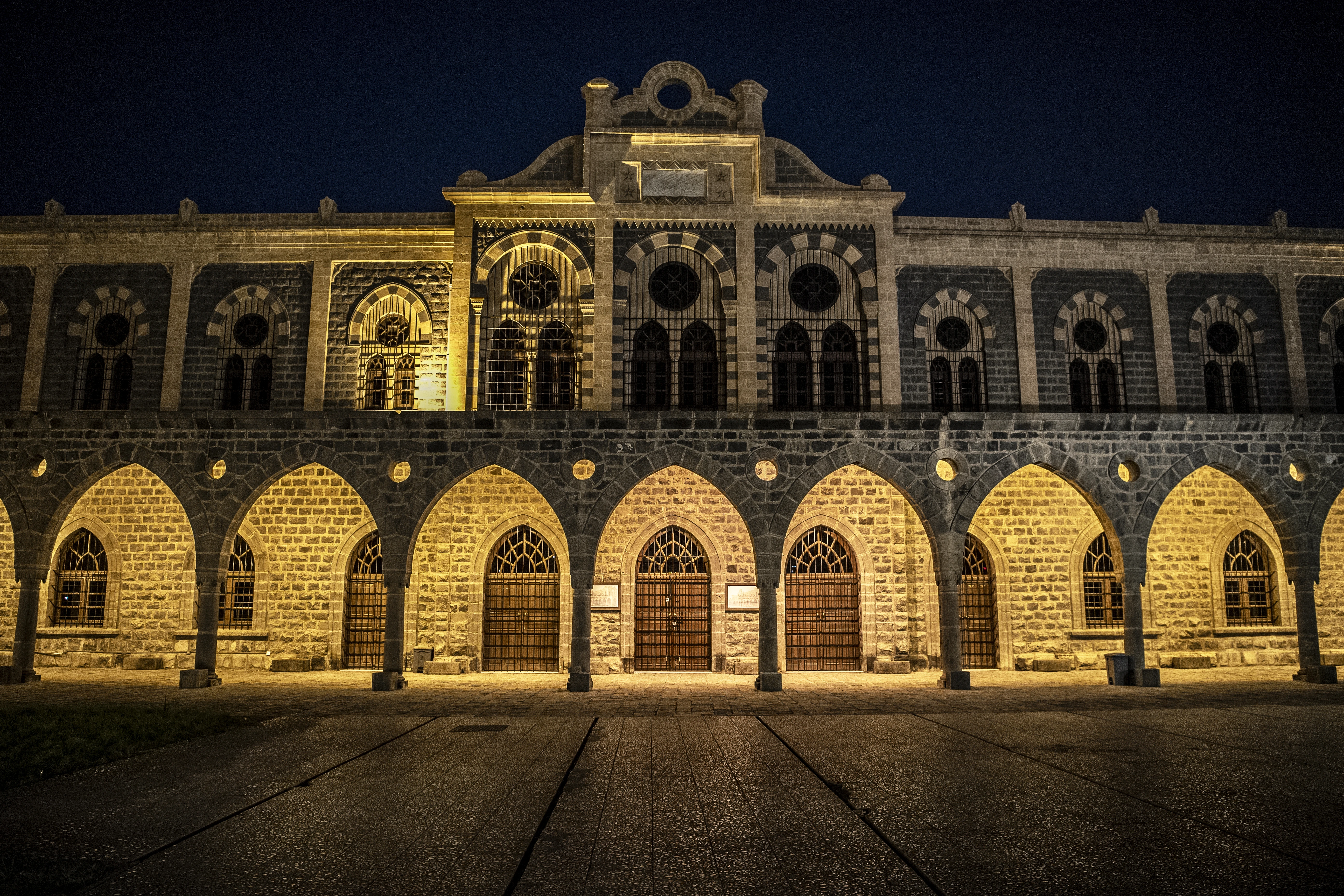
A railway museum doesn’t immediately scream ‘beautiful building’, but the Hejaz museum – opened in 2006 – is worth a visit for the architecture alone. The original building was constructed in the Ottoman era and was recently renovated and converted into a museum.
On the site, you’ll find classic trains and old abandoned train tracks, as well as the history of the Hejaz Railway’s construction and life in Medina.
Spend some time looking through the 19 galleries showcasing the railway’s history, but make sure you leave time to appreciate the building itself. Fronted with striking arches, the two-storey brick structure also contains ceramic tiles, dishes and other artefacts. Give yourself a few hours to explore (if possible, visit just before sunset so you can appreciate the building lit up in the evening too).
3. Masjid Quba
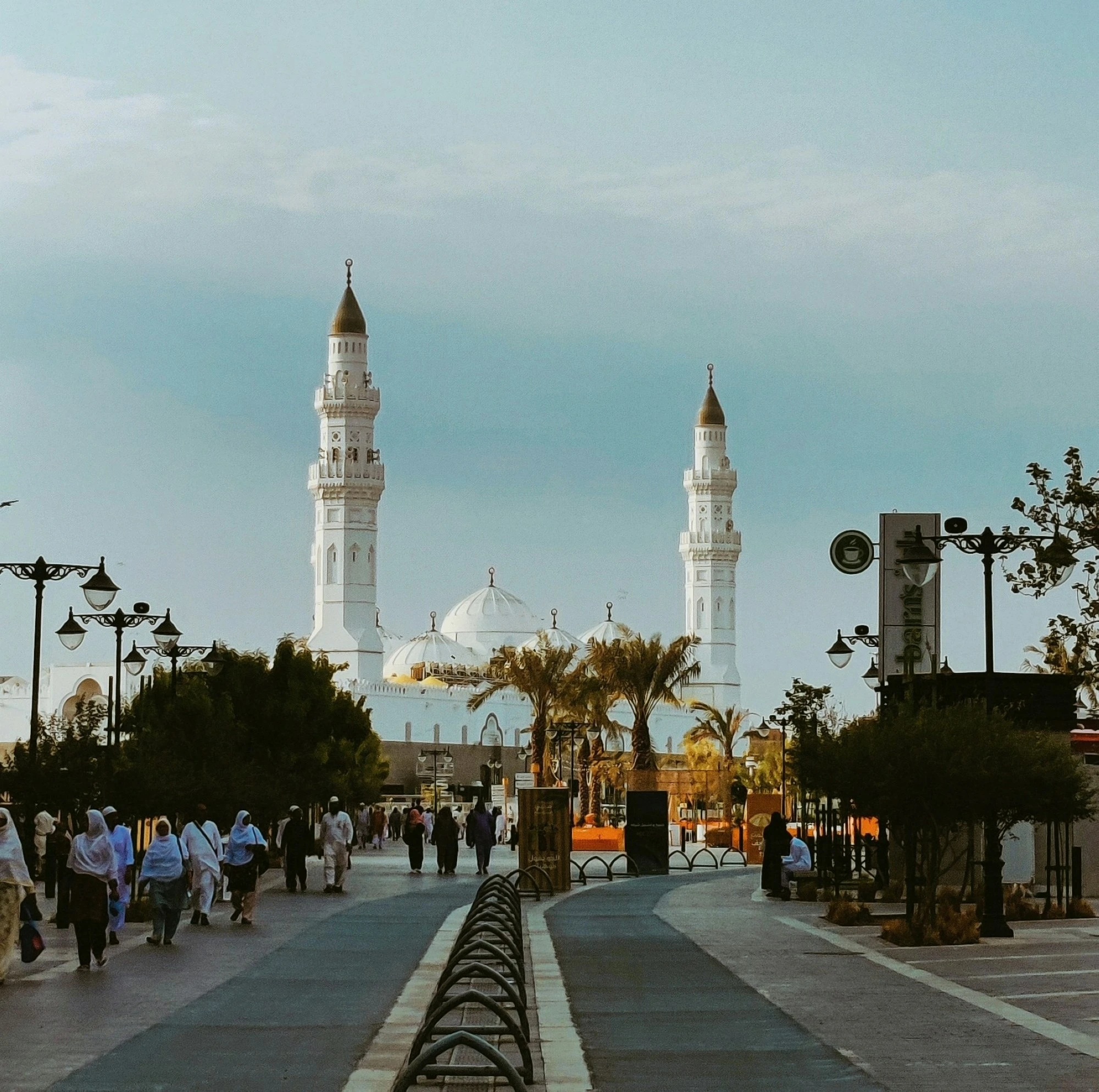
The imposing white facade of Quba Mosque is an iconic Medina landmark, as well as a hugely significant mosque in Islam – it is believed to be the first mosque ever built and is linked to Prophet Muhammad’s journey from Makkah to Medina.
The original structure of the mosque has, naturally, been developed and renovated over time – extended to include a library and make the prayer hall larger – while over the years the architecture has been added to by the Umayyads and Ottomans.
The beautiful four minarets were later additions to the building, added during a reconstruction in 1986, along with 56 mini domes around the edges of the structure.
4.The Seven Mosques
Technically now a group of six mosques, with one previously demolished, the complex nonetheless retains the moniker ‘Seven Mosques’ and the site is free to visit and open to all. While none of the buildings have the architectural – or religious – significance of the Prophet’s Mosque or Masjid Quba, the mountain backdrop against the stark white complex makes for a stunning scene.
The complex includes the teeny tiny brick-built Abu Bakr As-Siddiq Mosque, as well as the Ottoman-era Fatimah Az-Zahra Mosque. You can take in all of the mosques in one visit, but allow enough time to tour the whole complex and remember to dress respectfully (as with all mosques).
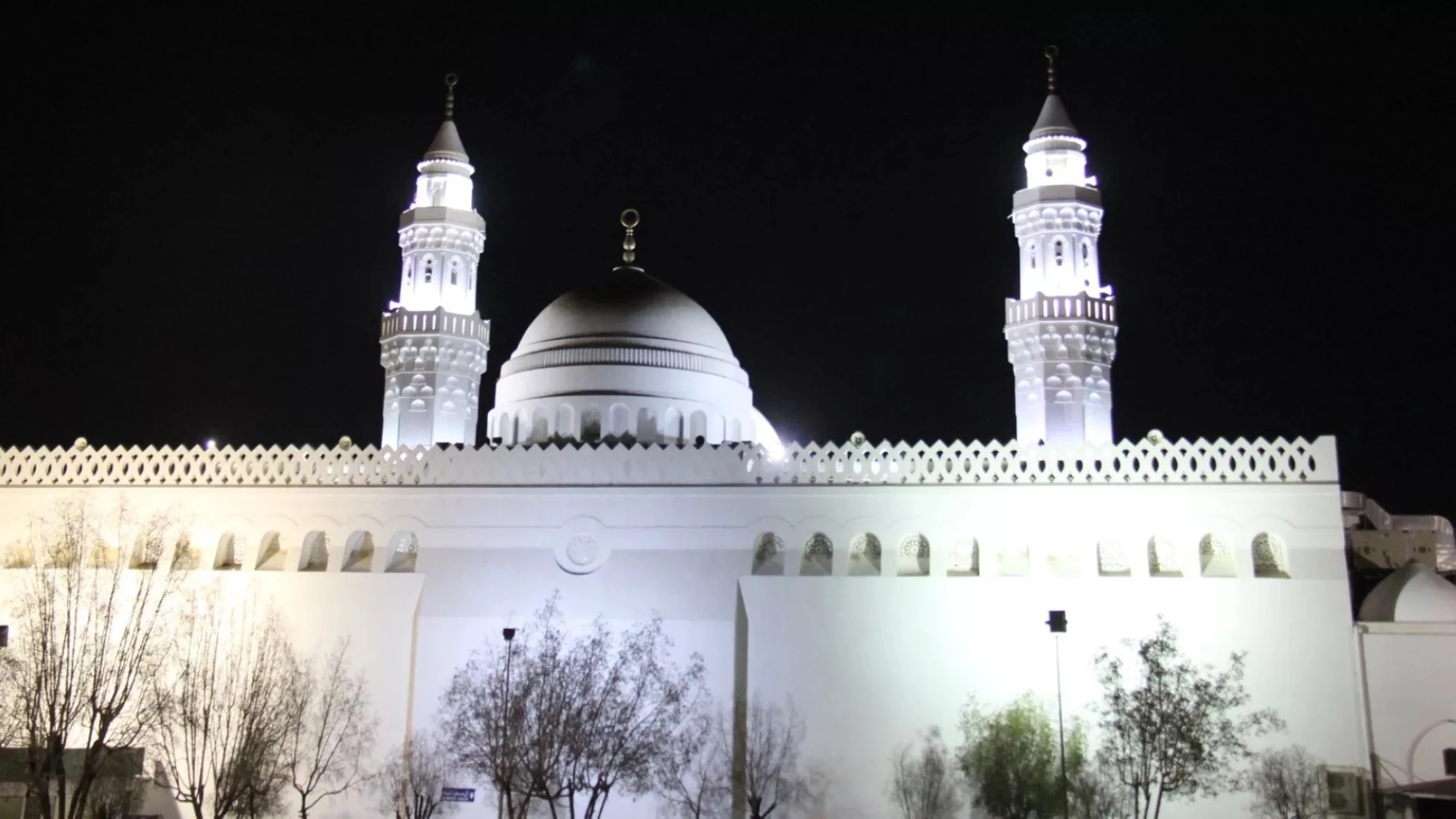
5. Masjid Al Qiblatayn
Masjid Al Qiblatayn, which translates as the Mosque of the two Qiblas, is another important site in Islam, as the place where the Prophet Muhammad was told to change the direction of prayer from Jerusalem to Makkah. The unique mosque was originally constructed with two mihrabs (a niche in the wall that points to the direction of the qibla – hence the name of the mosque), however when it was rebuilt in 1988, the mihrab pointing in the direction of Jerusalem was removed.
The masjid has a traditional exterior, but inside there is a modern mix, including ornate golden chandeliers and decorated arches.