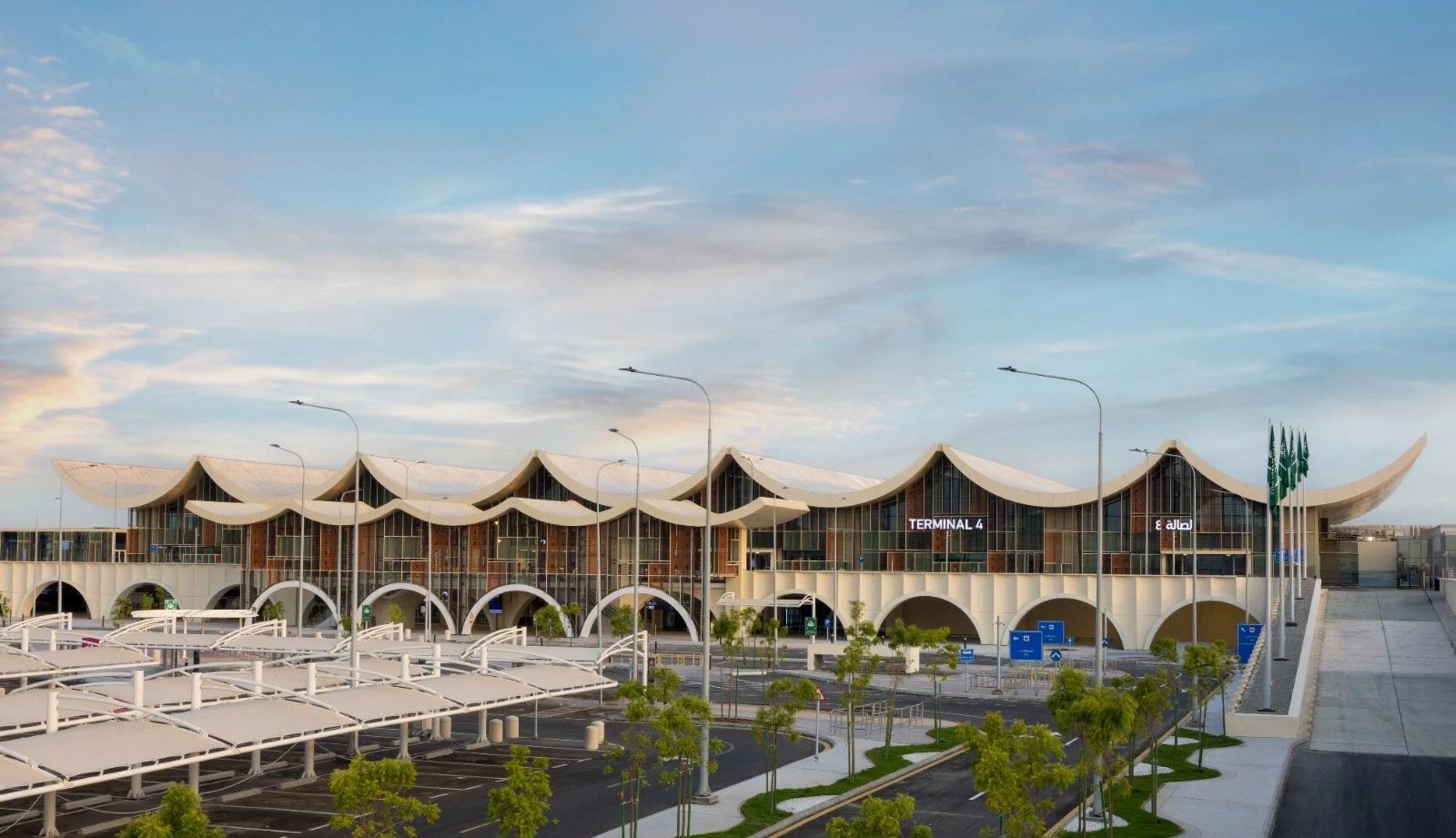


Dubai is a thoroughly modern city with robust transport infrastructure that would match – and indeed, exceed – many global cities, with the added benefit that much of it is less than a decade old. For anyone with experience of the London Underground, Dubai’s Metro will feel like a different world.
Taxis are ubiquitous, well-regulated and affordable, although travelling everywhere by taxi will add up. The advent of ride-sharing apps has made the whole process even more simple. It is possible to get a clean, competent taxi ride at any time and from anywhere in the city (within reason) during the day and night.
It is worth noting that while Dubai’s interior is superlatively well connected, if you want to get off the beaten track, by far the best way to travel is by car. By contrast, if you are planning to spend your entire break in Dubai, you absolutely do not need a car: indeed, the traffic and parking issues will make life far more difficult than it needs to be.

Take a taxi
You will never struggle to find a taxi in Dubai and they are required by law to be metered. Most drivers will speak a little bit of English, but many are fluent given the ubiquity of drivers from the Indian subcontinent where English is widely spoken. Be aware that taxi prices can add up because of the distances often involved (for example, Deira to Dubai Marina), but for short hops they are cheap and convenient.
Ride-hailing apps like Uber and local rival Careem are also everywhere in Dubai. You can use your card to pay for taxis in Dubai, although some taxis in Abu Dhabi require you to use the PayBy app, which will need to be downloaded. It is always a good idea to keep some cash for emergencies.

Stretch your budget by taking the bus
Of all the emirates, Dubai has the best functioning bus service, but unless you’re really short of cash it is better to use buses for intercity travel (for example to Abu Dhabi) rather than for short hops, which are better done via taxi or metro.
That said, Dubai’s buses have made strides in recent years and now run from 4am to 1am, and 24 hours on at least one line (C01) that serves the central business district. You will need a Nol or Hafilat (meaning bus in Arabic) card, both of which can be pre-loaded.
For intercity travel: E buses – E100, E101, and E102 – connect major bus stations in Dubai (Al Ghubaiba and Ibn Battuta) to the Abu Dhabi Central Bus Station. From Sharjah to Dubai is more complicated, especially if you’re arriving at Sharjah Airport. You will need to take a bus from the airport to Al Jubail Bus Terminal in Sharjah and then another bus to Dubai.
Ride the Dubai Metro like everyone else
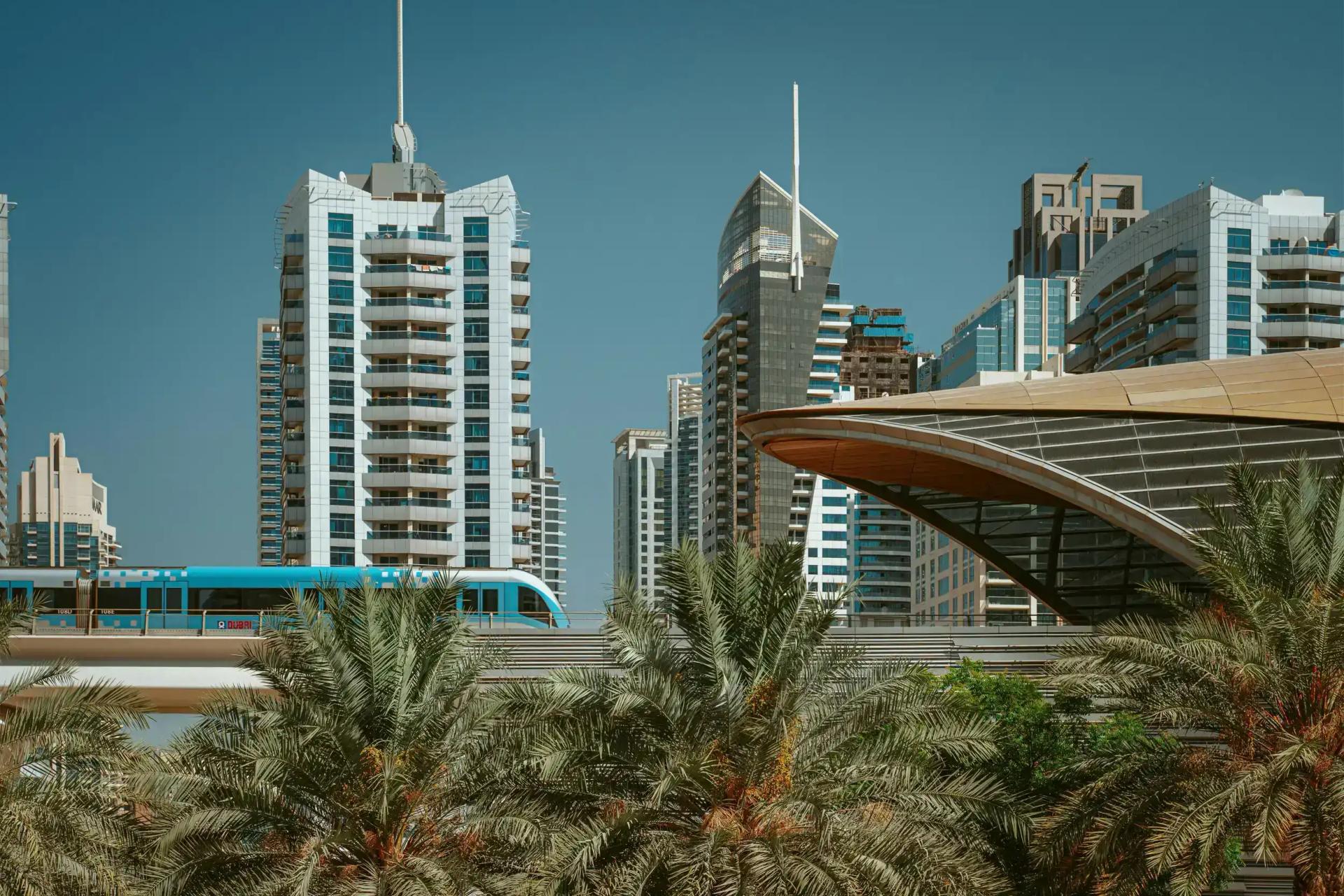
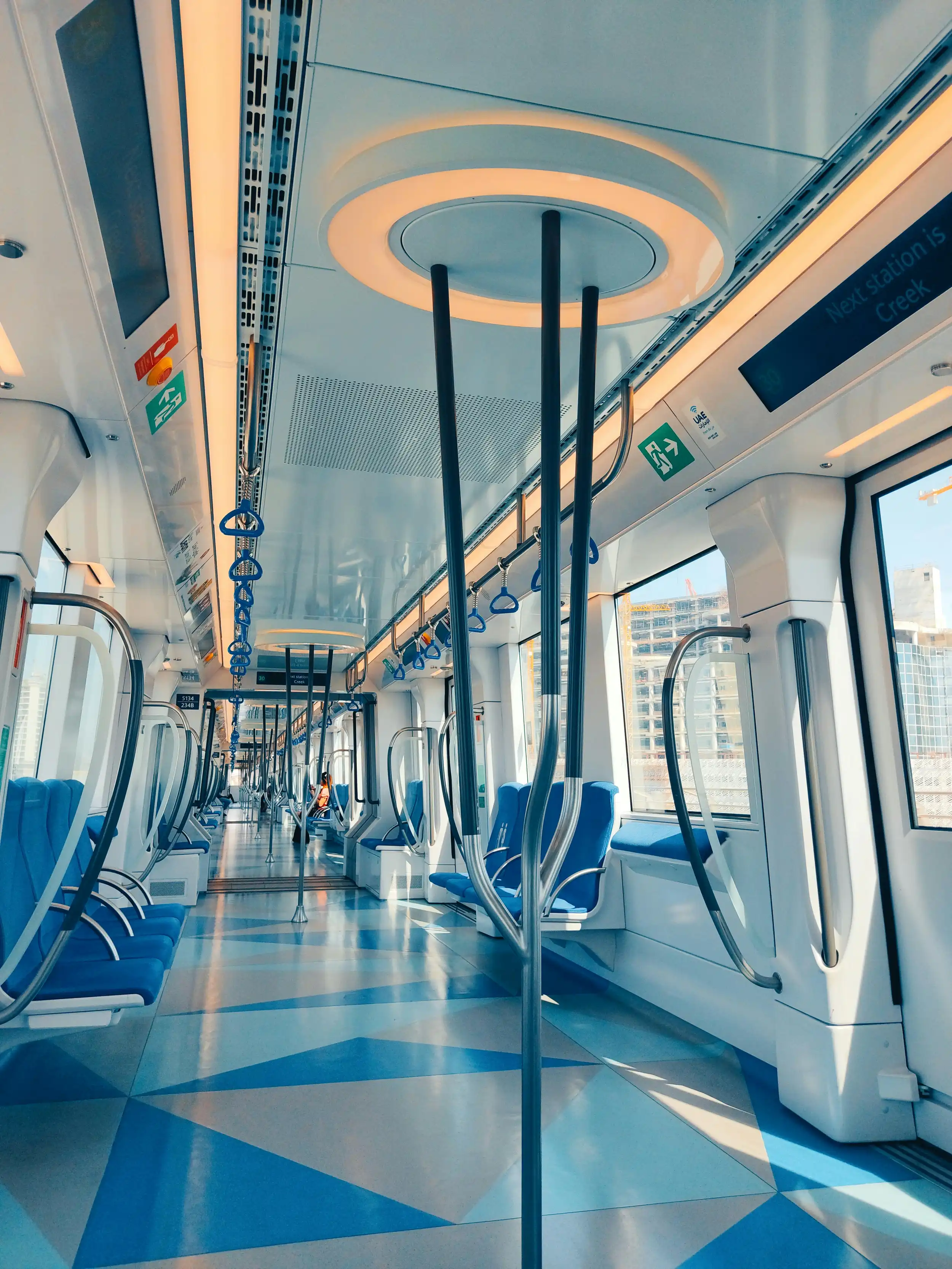
Dubai has a top-of-the-range driverless metro that has the added benefit of being above ground, meaning it provides fantastic views of the city both day and night. In total, Dubai Metro covers 74.6 km across 47 stations and 2 lines (Red & Green). It serves both airport terminals, and runs from 5am to midnight, Monday to Thursday, and from 5am to 1am on Fridays. On Saturdays, the stations are open from 5am to midnight, and on Sundays, they open at 8am and remain open until midnight.
Trips cost AED 3 to AED 7.50 with a Silver NOL card and AED 4 to AED 8.50 with a Red NOL card. For multi-zone travel or longer trips, fares can be higher and Gold Class fares are more expensive but you get a nicer carriage and more chance of a seat. The Metro is also interconnected with Dubai Mall and Mall of the Emirates, meaning that in the hotter months it provides an air conditioned thoroughfare straight to the shops.
Rent a car (if you dare)
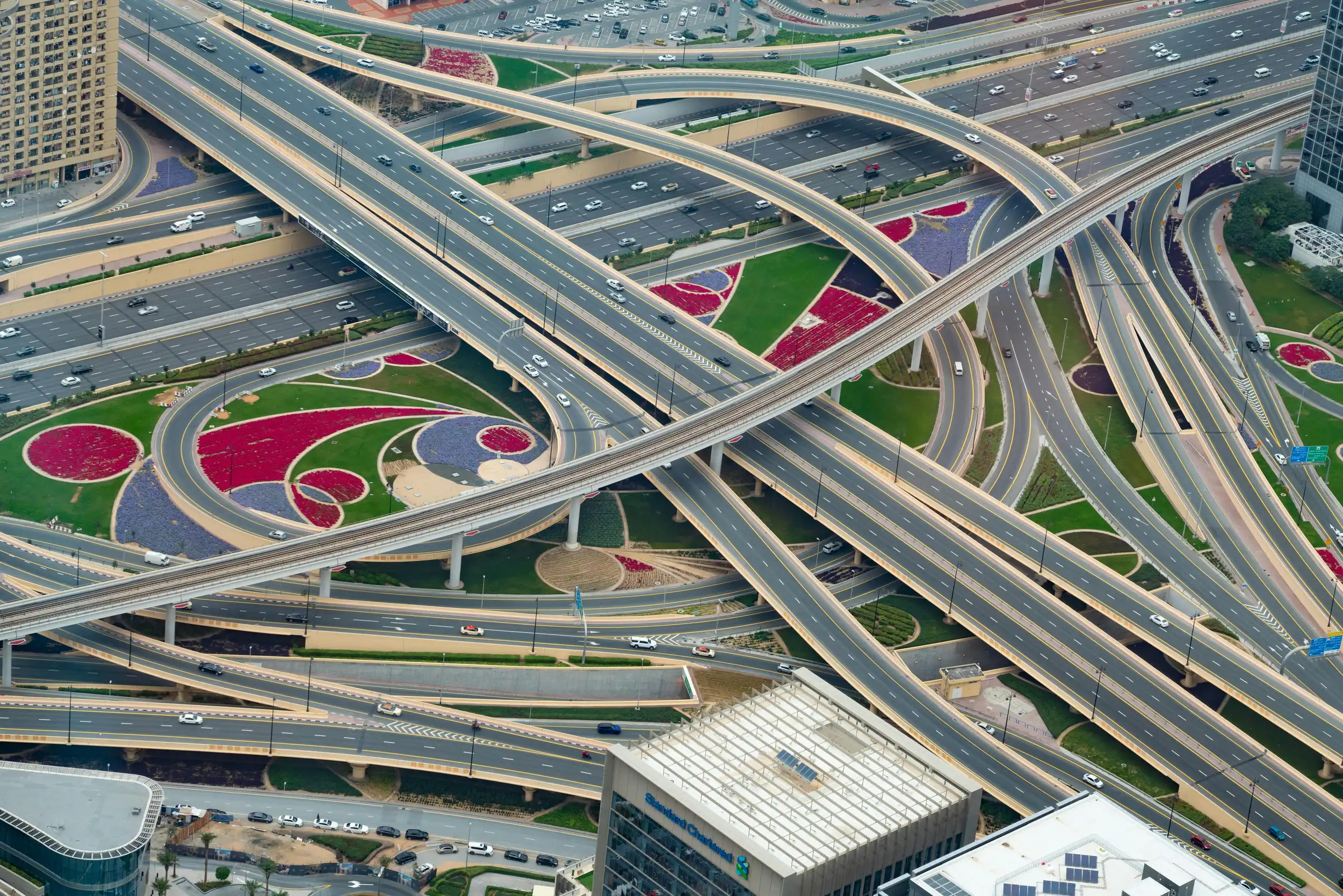
Dubai’s rulers have strived to reduce emiratis reliance on cars, but cheap fuel and an incredibly modern road network – plus the added convenience – means that automobiles are still the most popular way to get around. As well as the cost of fuel, other innovations like valet parking, which elsewhere is often considered a luxury, is cheap and ubiquitous in Dubai.
That said, if you are planning to spend your entire stay in Dubai then it is not advisable to drive – you simply don’t need to, and parking will become a constant and unrelenting struggle. Equally, for those unfamiliar with driving in the Arab world, the stress of duking it out on Sheikh Zayed Road’s 6-8 frenetic lanes can be a significant challenge.
Be aware that while you will regularly see egregious violations of speed limits and general traffic rules, speed cameras are ubiquitous and fines exceedingly high. Drivers would be advised not to drive assertively but defensively, unless they want to face an enormous bill.
Accessible transportation in the UAE
Dubai Metro is very modern and, as such, accessible for people who may need elevators. All stations have escalators. Although the newer buses have ramps, in the northern emirates it may be more difficult for people with disabilities. Dubai’s ‘People of Determination’ scheme – the phrase replaces the term ‘disabled’ – has committed to providing wheelchair-accessible taxis and public transport, as well as accessible services and facilities, including parking, restrooms and ramps.