

The Kingdom of Saudi Arabia has an ancient legacy of cultural innovation and has been a crossroads for an entire world of travellers and merchants across millennia. Its history is an intrinsic part of the development of human civilisation, from science and mathematics to art and creativity. Until recently, only Saudis had the luxury of exploring the ancient sites dotted around the Kingdom that bear witness to this incredible legacy, but the recent opening of the Gulf nation to global visitors has changed that. Start planning your trip now with our guide to the top cultural sites in Saudi Arabia that you cannot afford to skip.
1. AlUla
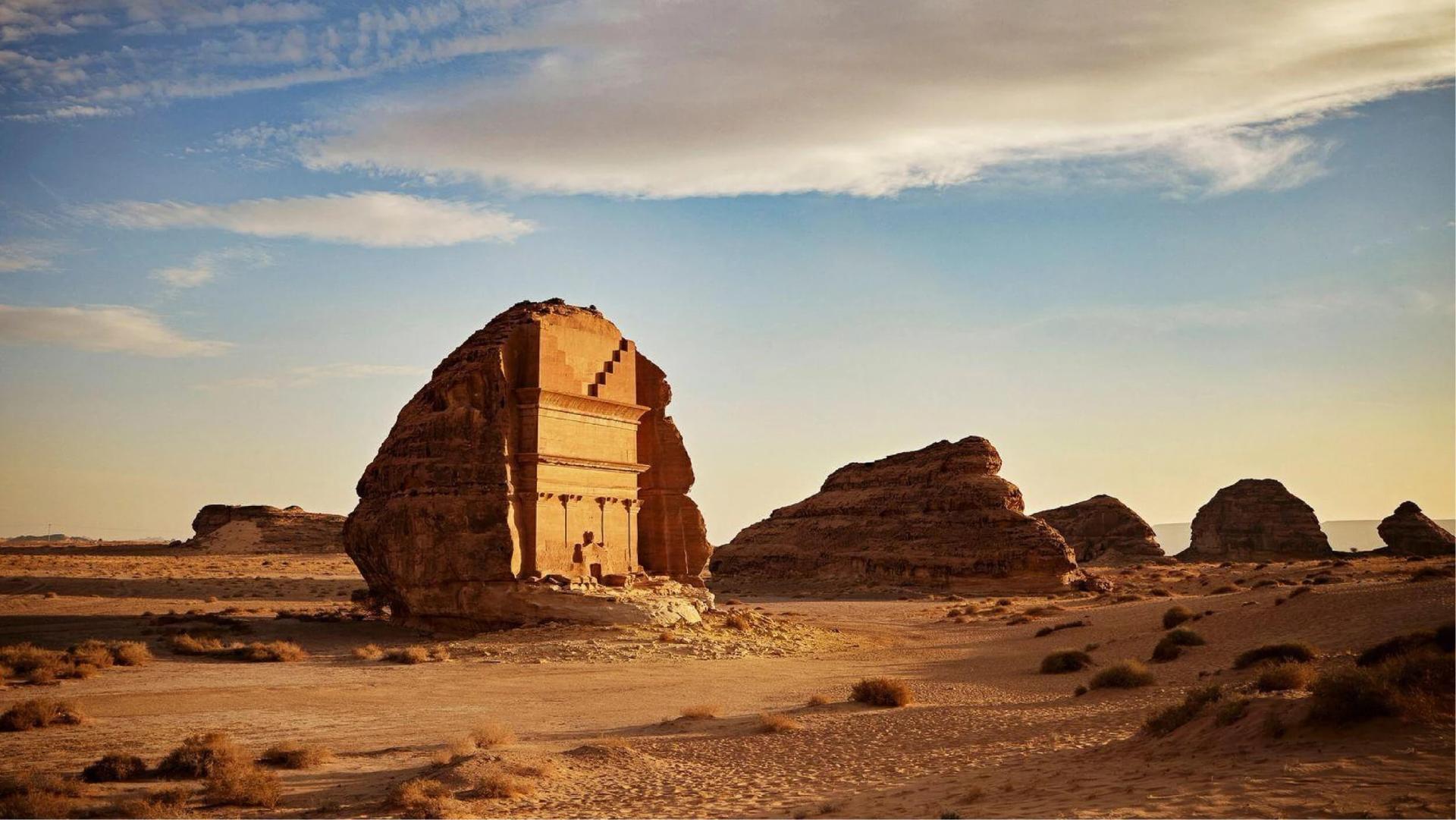
At the top of everyone’s list when planning a visit to Saudi Arabia has to be AlUla. This ancient desert region dates back over 200,000 years of human history and is home to breathtaking natural landscapes, including an expansive desert, a natural oasis, and magnificent rock formations. There's also a multitude of ancient tombs, dwellings, and ruins of past civilisations and kingdoms — like the Dadanites and Lihyanites — that used to occupy the area during ancient times.
In line with Vision 2030 and under the Royal Commission of AlUla, the region has grown beyond a place of extraordinary discovery and has transformed into a key destination for contemporary art and culture, hosting numerous major exhibitions and festivals that attract global audiences.
2. Diriyah
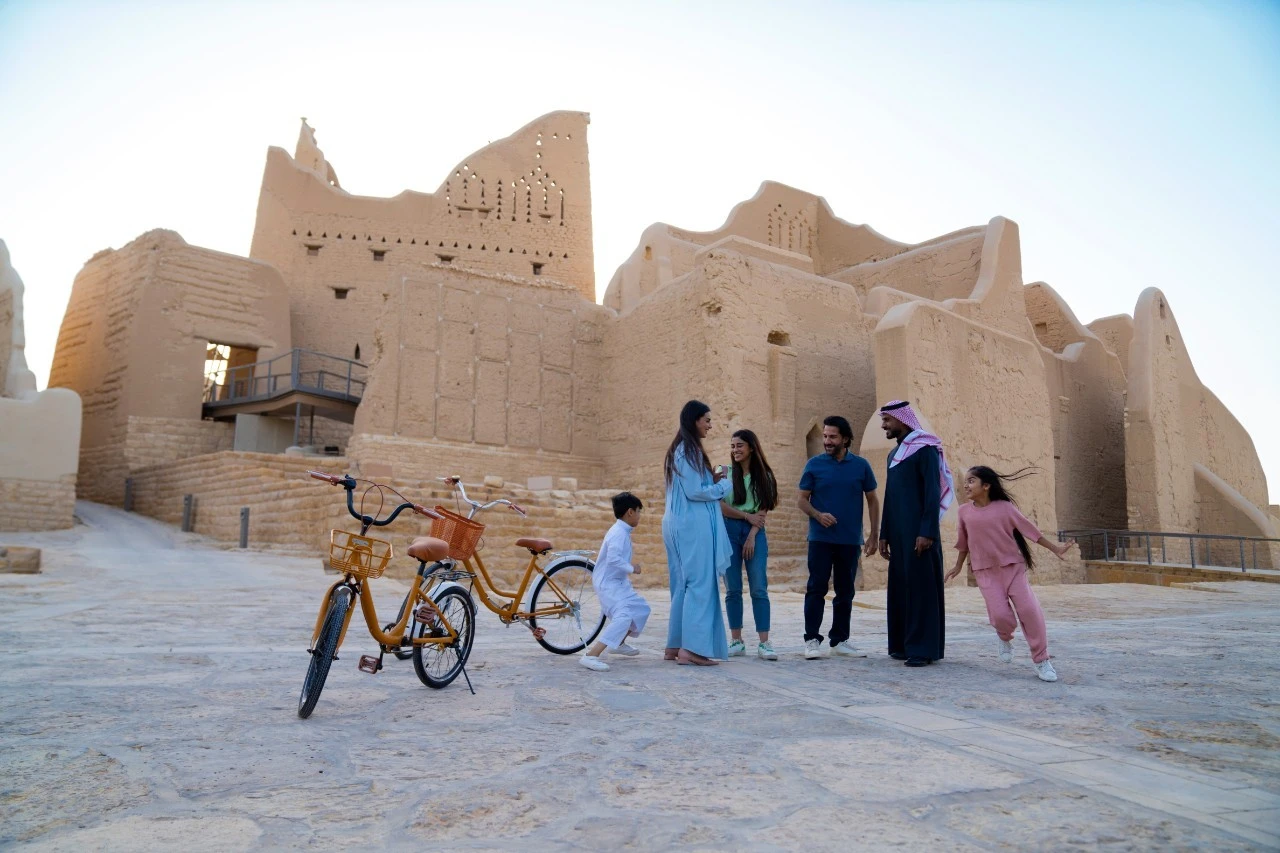
The birthplace of the first Saudi state, the ancient town of Diriyah, is located on the northwestern outskirts of the Kingdom’s capital of Riyadh. It is renowned for its traditional mud-brick architecture, particularly that found at At-Turaif, once the seat of the Al Saud ruling family and the country’s first capital, founded in 1727. Diriyah reopened to the public alongside the revitalized Bujairi Terrace, which features a maze of cafes, homegrown and international restaurants, and boutique stores, as well as cultural sites like the Diriyah Museum. Running between At-Turaif and Bujairi, and definitely worth a visit, is Wadi Hanifah, a valley that is home to lush vegetation, date palms, and beautiful scenery.
3. Al Balad
An ideal place to journey back in time is the historic Old Town of Jeddah, which is a UNESCO World Heritage Site, Al Balad. Founded during the 7th century, Al Balad is known today for being the heart of Jeddah, with its winding streets and multistoried, mud-brick, and stone buildings home to heritage and culture, cafes and shops. Popular spots include the Historical Nights Heritage Cafe, a cute rooftop location that offers magical views of the city’s skyline. In terms of heritage sites and museums, Al Balad is home to many, such as Bait Salloum, known for housing a collection of old items and furnishings designed in traditional Hijazi style. There is also Bait Nassif, built in the late 1800s, once the residence of King Abdulaziz Al Saud, and today a museum and cultural center.
4. Hijaz Railway
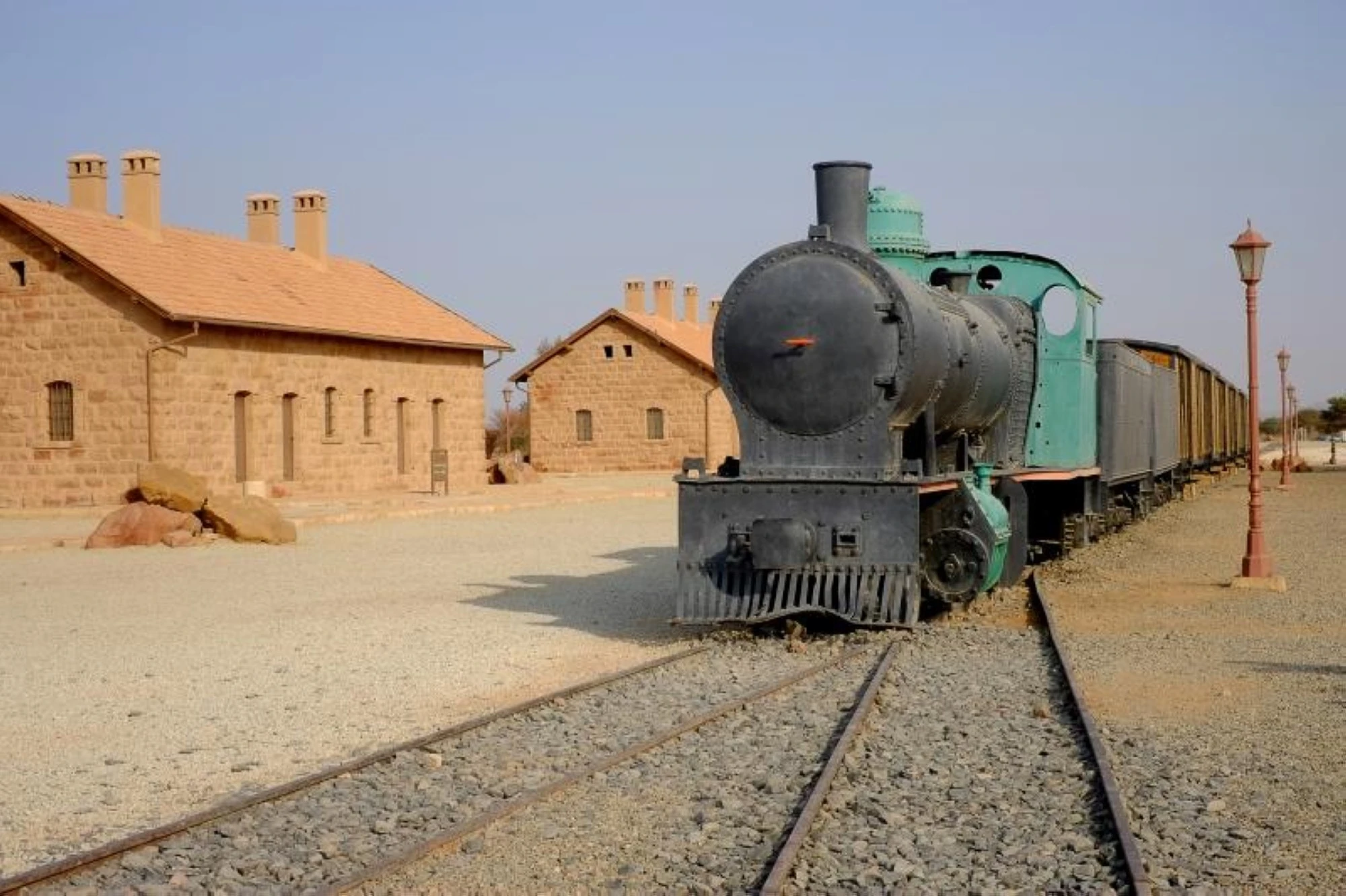
The remains of the historic Hijaz railway, which once carried Muslim pilgrims from Damascus in Syria to the holy city of Madinah, can be found in both Madinah and Tabuk. Started in 1900 and stretching 1600km from Damascus to Madinah by 1908, planned works to extend the line further to Makkah were never completed. During World War II, parts of the line were attacked by British archaeologist, army officer and writer T.E. Lawrence and his Arab allies. By 1918, the railway, seen by many as the epitome of great dreams to connect the Arab world, was destroyed. By 1920, it was largely abandoned, but remnants of that dream remain and can be viewed by those who visit.
5. Najran
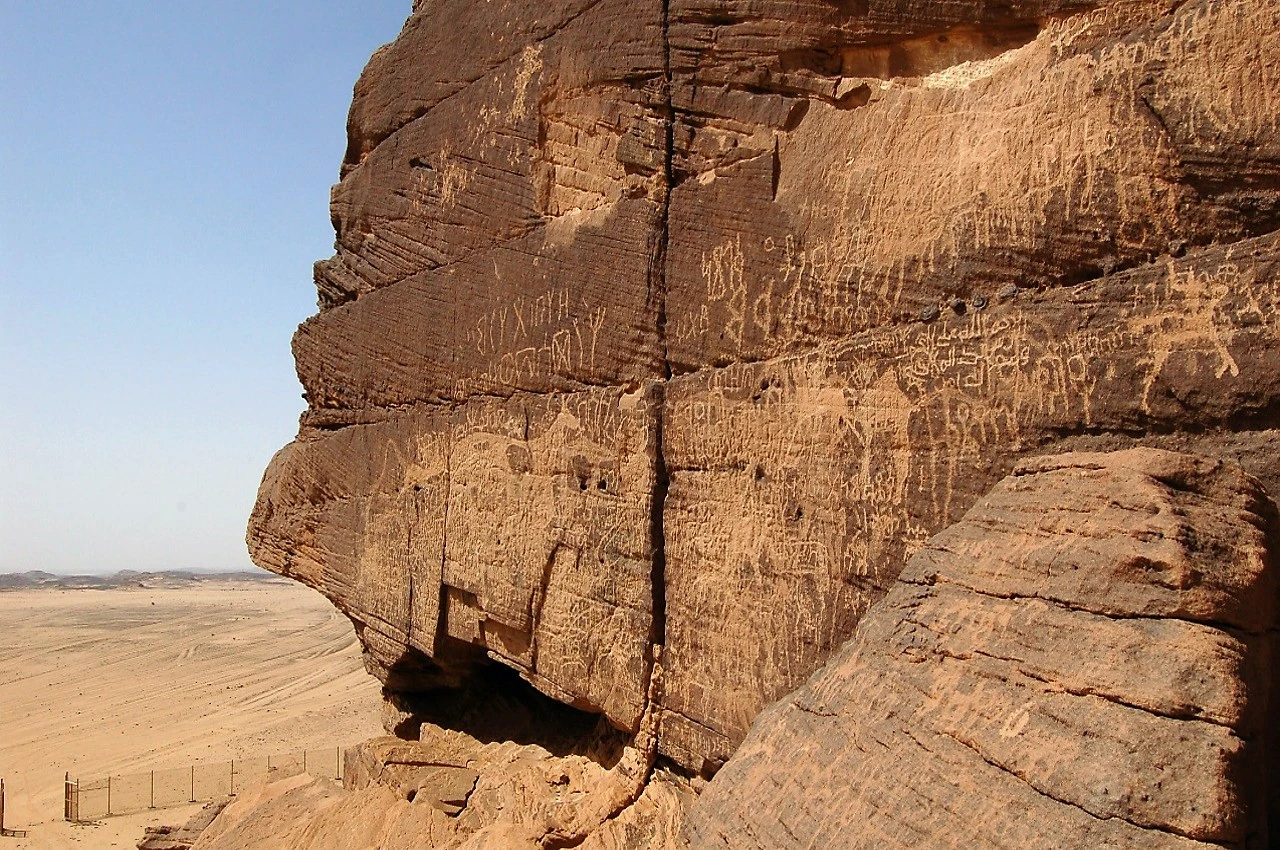
The historic city of Najran, located in the Aseer region in the southwestern part of Saudi Arabia near its border with Yemen, is famous for its archaeological significance. Home to Neolithic settlements that date back to around 5500 BCE, there are also ancient frescoes around Jebel Al Qarah that feature details of people fighting and performing rituals, as well as drawings of animals. Of note is Al-Okhdood, mentioned in the Holy Qur'an and said to have been founded around the 7th century BCE. It is one of the most important archaeological sites of the region, and is also where the frankincense trade route passed from Yemen on its way to Makkah, Madinah, Palestine, Syria, the Arabian Gulf, and Mesopotamia.
6. Thee Ain Heritage Village
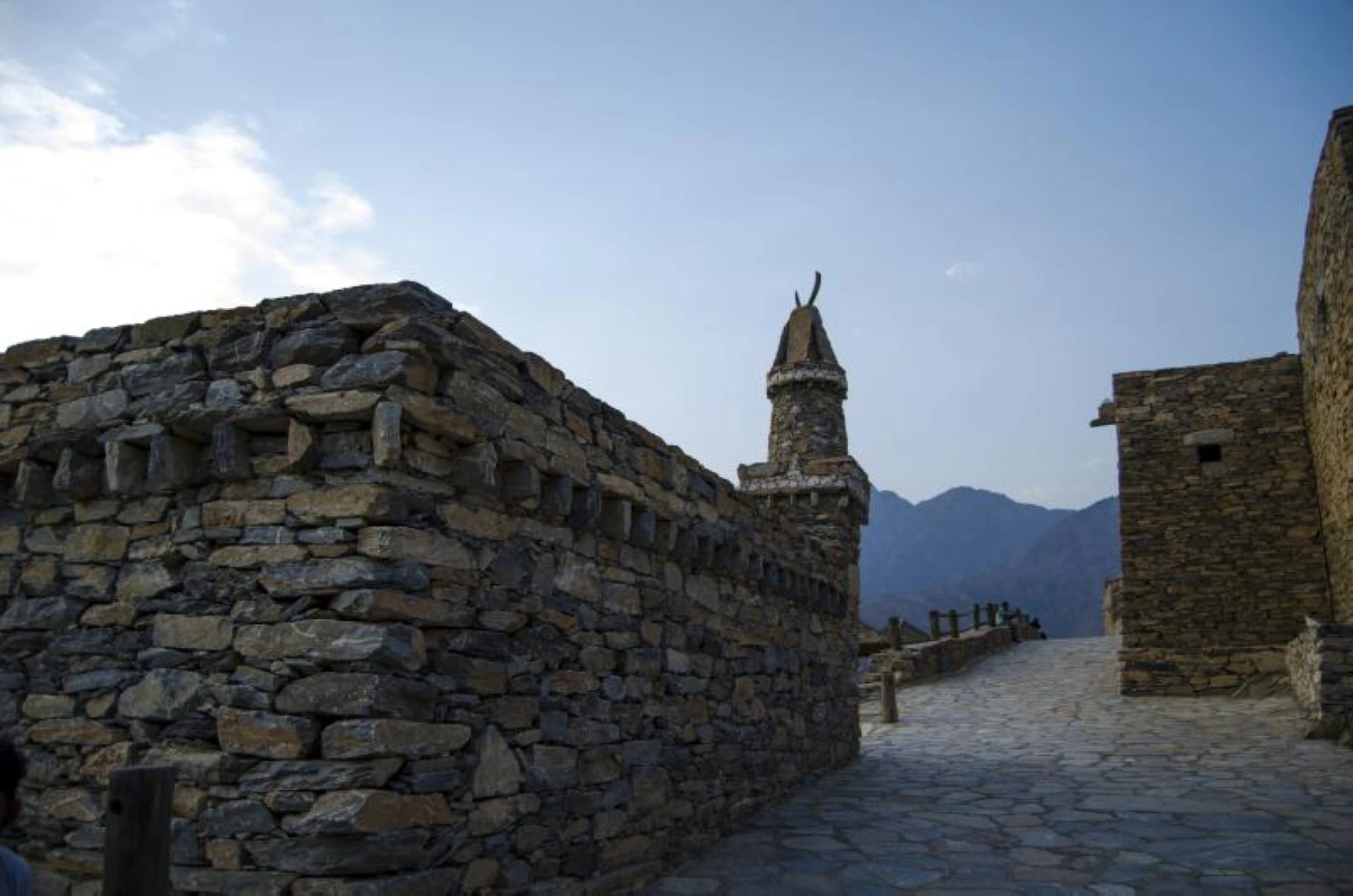
Viewed from afar, the village of Thee Ain in the Al Baha region seems to rise prominently from the earth. Dating to the 8th century CE and built atop a white stone mountain, it features approximately 49 dwellings and one mosque that were built using mud and polished stones. A jewel in Al Baha, the village was built near a permanent water source, a spring from which it took its name, and which flows from the nearby mountains into several reservoirs and ponds. It's an important stop during any visit to the region, and it bore witness to numerous battles before the Kingdom’s unification by King Abdulaziz al-Saud.
7. Al Muftaha Village
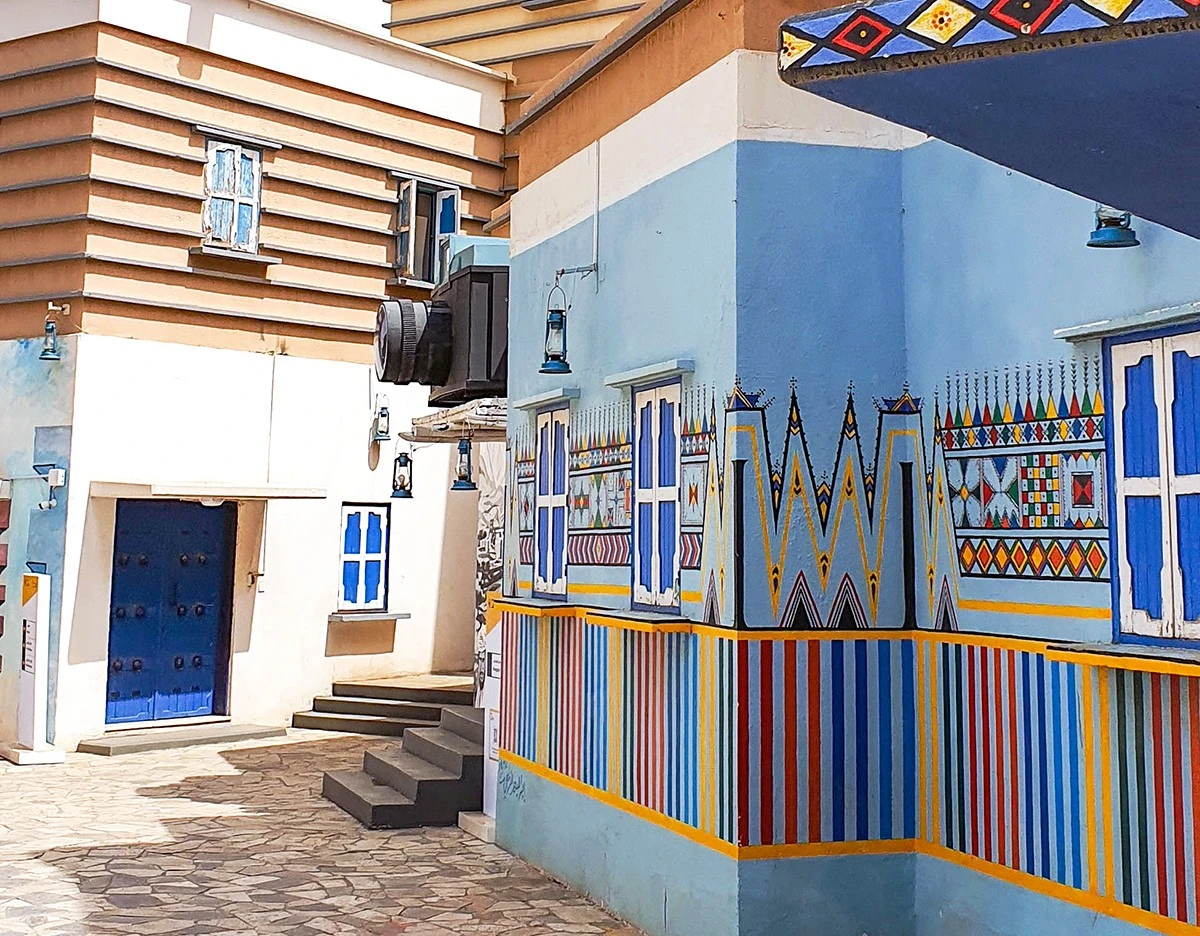
The historic Al Muftaha Village in Saudi’s Abha region is home to an artistic community founded by Prince Khalid in 1989 to promote the arts in the Kingdom. It has now become a popular attraction for both tourists and aspiring artists in Saudi Arabia, comprising artists’ studios, exhibition spaces, and workshop and lecture areas. Its architecture is notable and inspired by the local heritage of Aseer — primarily made of mudstone with colourful, geometric painted patterns. The village is also home to the King Fahd Cultural Center, Al Muftaha Theatre, Archaeological Center, and Media Centre. Some of the Kingdom’s best-known artists, such as Ahmed Mater and Abdulnasser Gharem, first began their work in Al Muftaha Village.
8. Yanbu
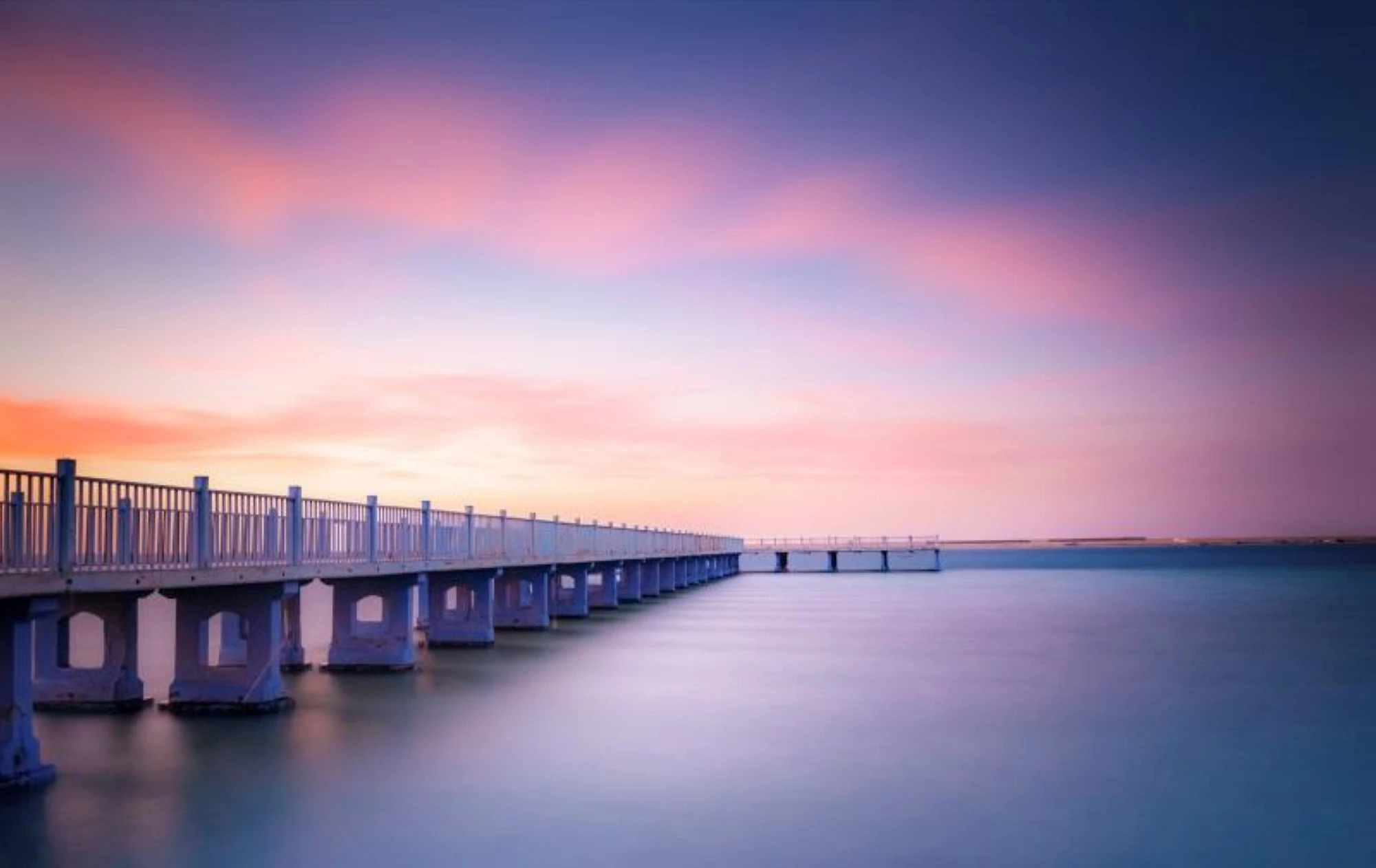
Located along the Red Sea in the western part of the country, the port city of Yanbu is known not only for its picturesque landscape and coral reefs perfect for diving, but also for its modern and ancient heritage. As one of the oldest ports on the Red Sea, Yanbu’s history dates back at least 2,500 years, when it served as a strategic trading post on the ancient spice and incense route from Yemen to Egypt and then on to the Mediterranean. While it has long served as a historic place for commerce and business, Yanbu is now becoming a tourist hub. There are a few spots to check out, such as the recently restored home of T.E. Lawrence, who was charmed by Yanbu and lived there between 1915 and 1916 in a traditional Hijazi building.
9. Tayma
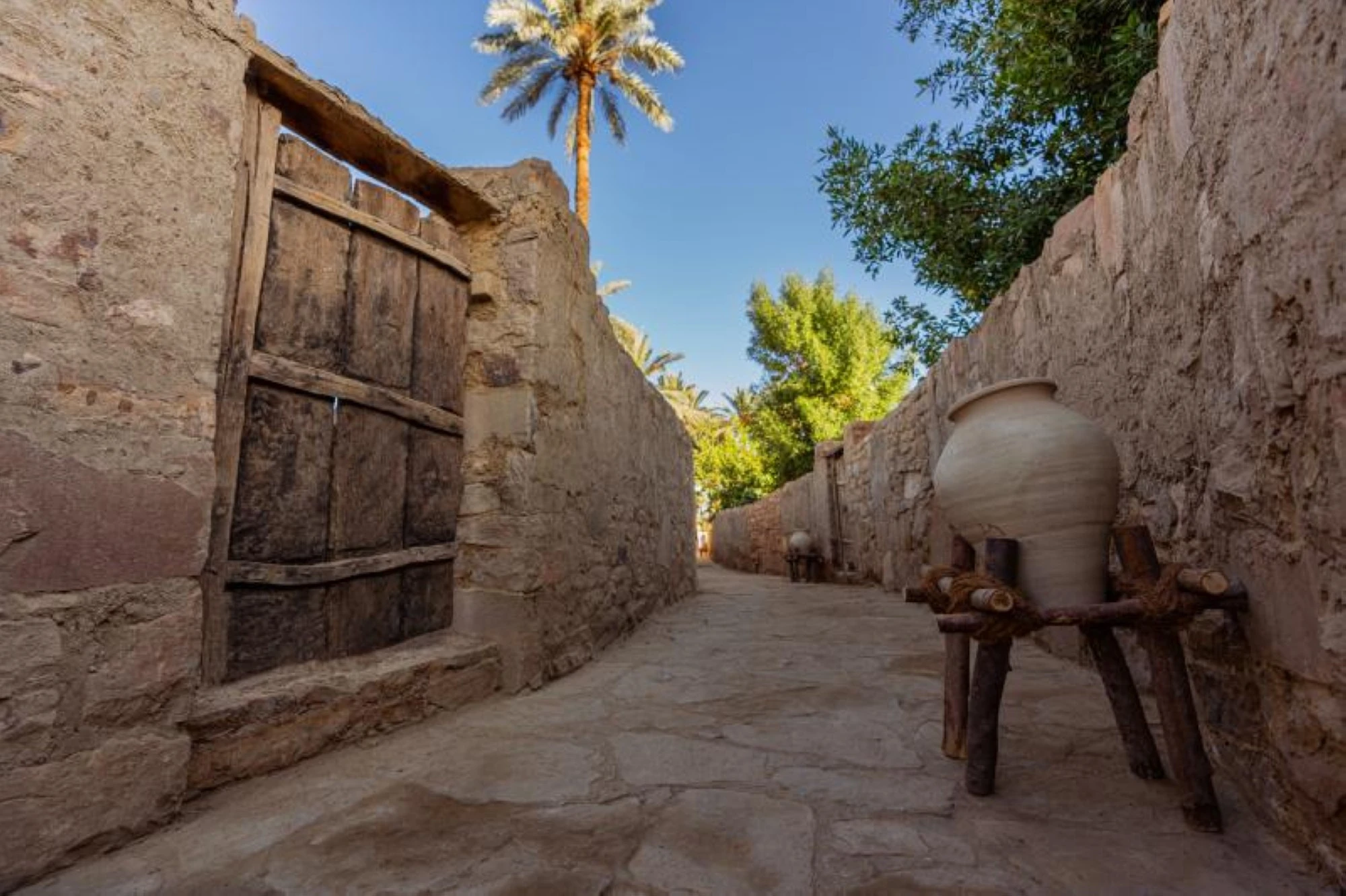
Recently opened to visitors as part of the Ancient Kingdoms Festival, the historic ancient oasis of Tayma, located in northwestern Saudi Arabia in the province of Tabuk, is renowned as the oldest human settlement discovered thus far in the Kingdom. It is believed to have been inhabited first during the Bronze Age and is home today to numerous ancient artefacts and current excavation sites, including ancient Egyptian inscriptions of Ramses III and tablets with ancient Aramaic inscriptions. Most fascinating perhaps is that the last Neo-Babylonian Emperor, Nabonidus, spent years in Tayma for reasons still unknown.
10. Al Hofuf
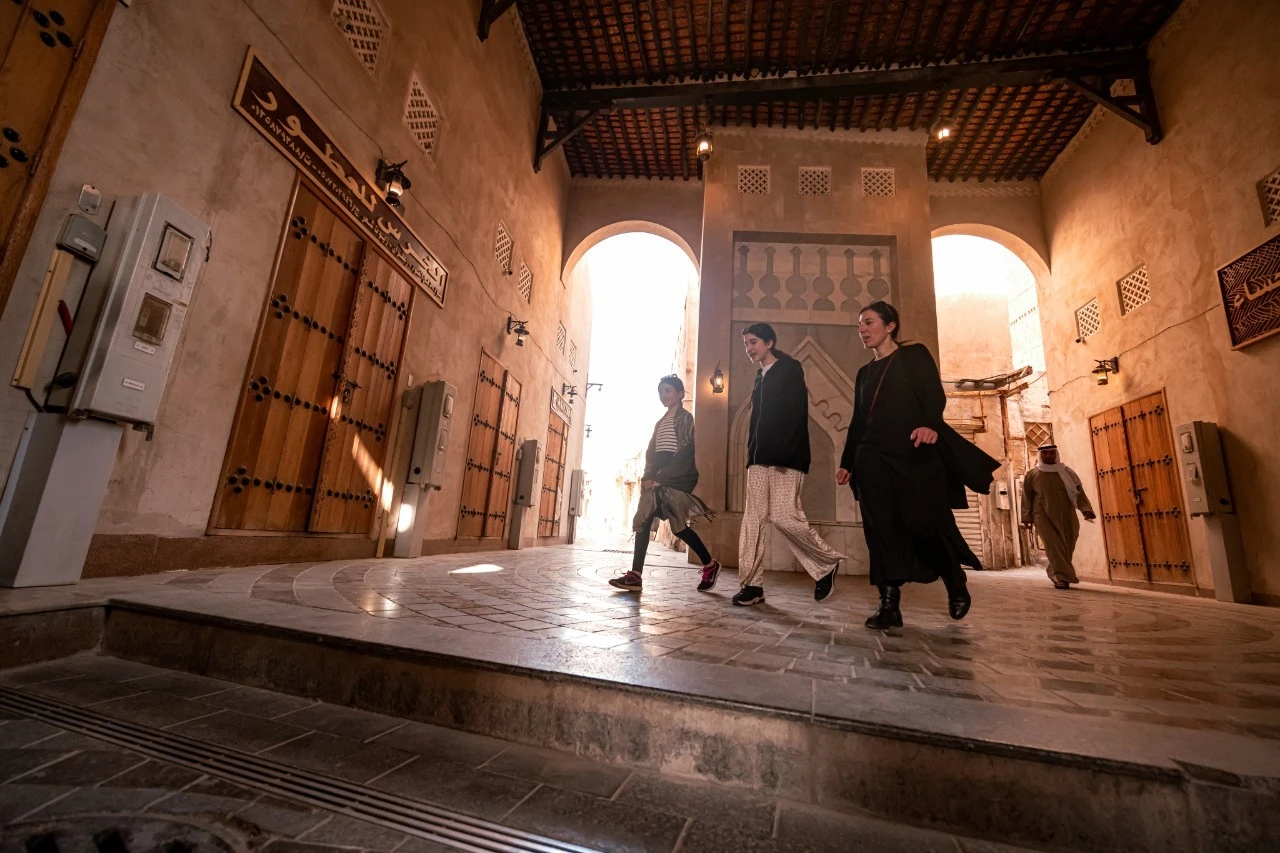
Located in the Eastern Province of Saudi, the ancient oasis town of Hofuf is captivating due to its lush landscape and ancient remains. Although the urban centre of the Al Ahsa region, Hofuf is also known as having the largest oasis in the world, as well as being home to Jebel Al Qarah, a mass of limestones that overlook the surrounding landscape of palm trees. This gathering of stones creates a surreal sight where visitors can journey inside a deep cave created by erosion, which is cool in summer.
Amid the narrow corridors, rays of sunlight shine through. Other sites in Hofuf include the Al Qaisariah Souq in Al-Koot historical center, with its Ottoman-style buildings; Ibrahim Palace, which houses a white mosque whose dome and minaret rise above its walls and is believed to have been built by Al-Jabreen, a ruler of Al Ahsa during the 15th century; and Al-Mullah House, built in 1203 by the Governor of Al Ahsa, Sheikh Abdulrahman Al-Mullah, boasting an elegant mix of Ottoman and Arabian architectural and design styles