

If there’s a litmus test for the experience of being a solo female traveller in a new country, it’s arriving at the airport at 4am with no ride booked and no Uber in sight. It’s the kind of moment that can be nerve-wracking anywhere. Would I find a taxi easily? Would I be able to communicate? And, as a woman travelling alone, would I feel safe?
Fortunately for me, this was Abha International Airport, and I was about to get a crash course in Saudi hospitality. My qualms disappeared as a woman kindly showed me the taxi desk, where two young gents switched to their best English and found me a car within minutes.
Before I knew it, I was out into the refreshingly cool Aseer air and then into a taxi, speeding through smooth, tree-lined roads towards Abha’s city centre, ready to begin my Saudi adventure.
First impressions: lush landscapes and evolving traditions
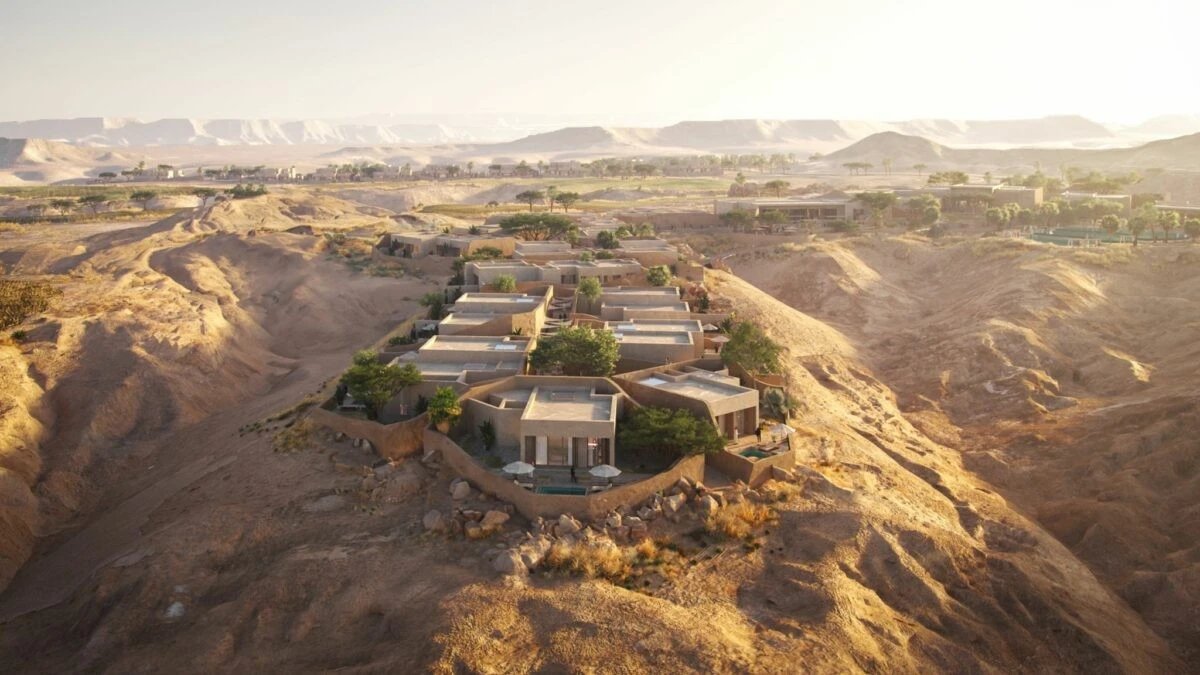
I was here to experience tourism in Aseer (also known as "Asir"), a mountainous region that Saudis have long holidayed in as it is startlingly green, beautiful, and has the coolest climes in the Kingdom (I later found that Saudis tend to go misty-eyed whenever you mention the mountains here).
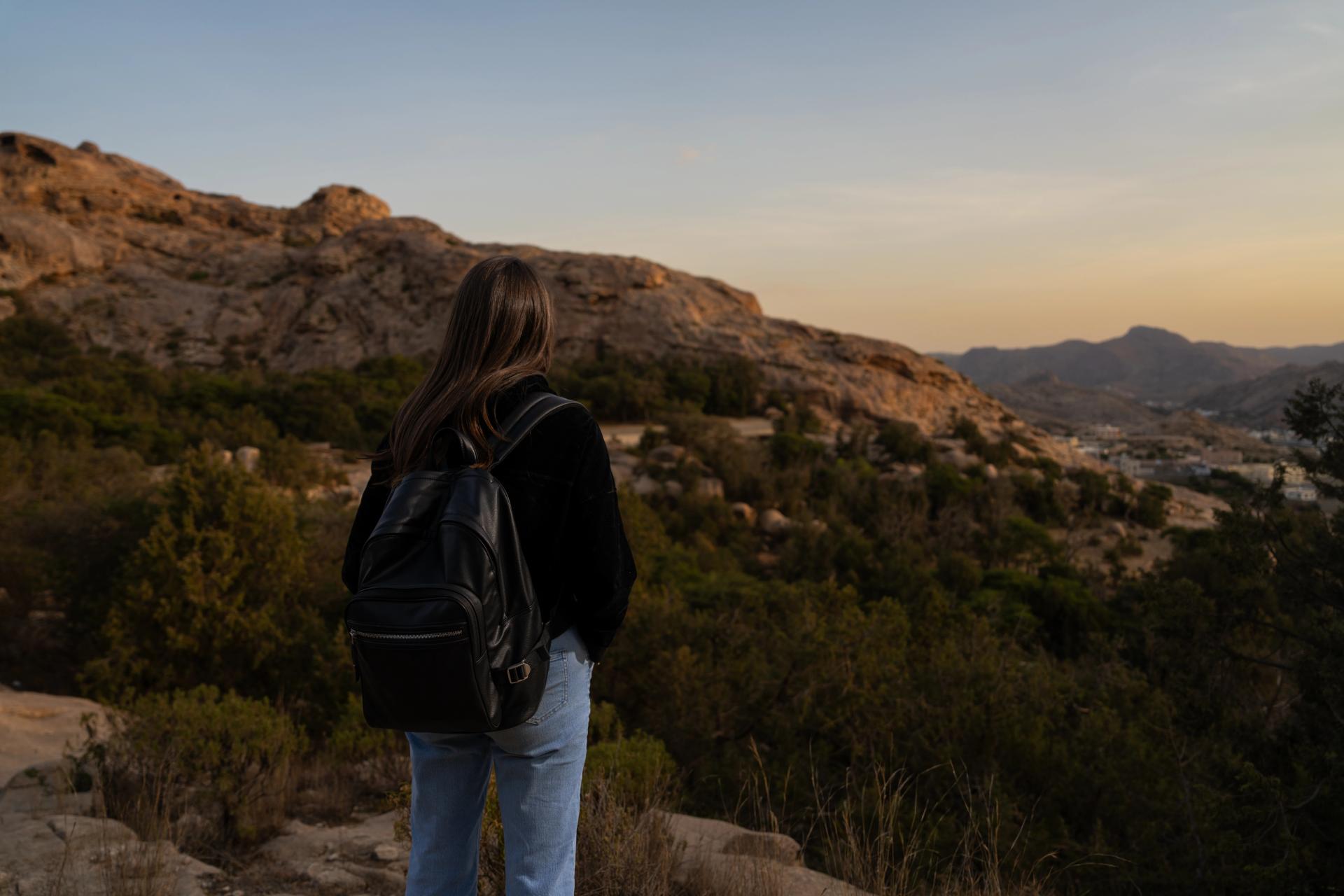
I’d also heard about the country’s fast evolving tourism landscape and was keen to experience it firsthand as a solo female traveller – especially in Aseer, a region known for its deep-rooted traditions and verdant nature. Abayas and headscarves are optional in Saudi nowadays, so I had just packed my usual jeans, shirts and a few long dresses – clothes that respected the culture while allowing me to feel like myself.
Exploring generations of history
My next stop was the Abu Sarrah Palaces. The same family had lived in these three imposing structures since the 1830s, and they were renovated to become a tourist attraction just five years ago. It was an honour for Abdulaziz Abu Sarrah, a sixth-generation descendant, who told me his own father remembers the palaces as they once were, to give me a tour. The sense of history was palpable as we explored the livestock floor (which still smells faintly of camels) and the women’s quarters, where beautiful antique perfume and kohl eyeliner bottles were laid out.
Most impressive of all was the carpeted majlis, with soft cushions lining the walls and low lanterns hanging from the ceiling. It was easy to imagine the magnificent room filled with the region’s leaders, drinking Saudi coffee and discussing the political issues of the day. The open-air walkway that connected two palaces had a balcony overlooking the fields below – Abdulaziz told me firmly that it was the best view in Aseer and it was hard to disagree.
You Might Also Like: Fifteen Years Later: From forgotten city to tourist hotspot, documenting my return to a very different Jeddah
Culinary connections and a taste of tradition
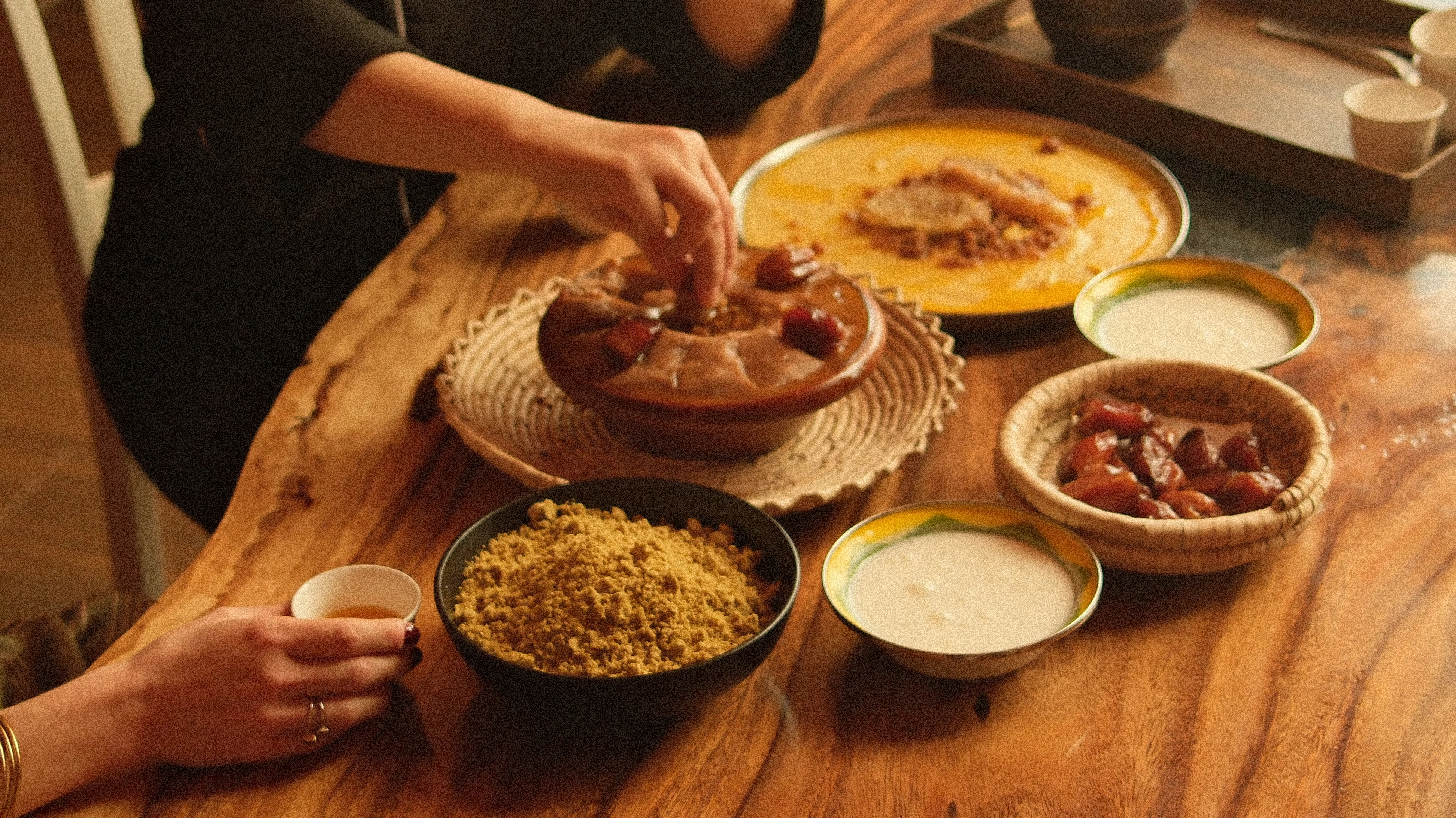
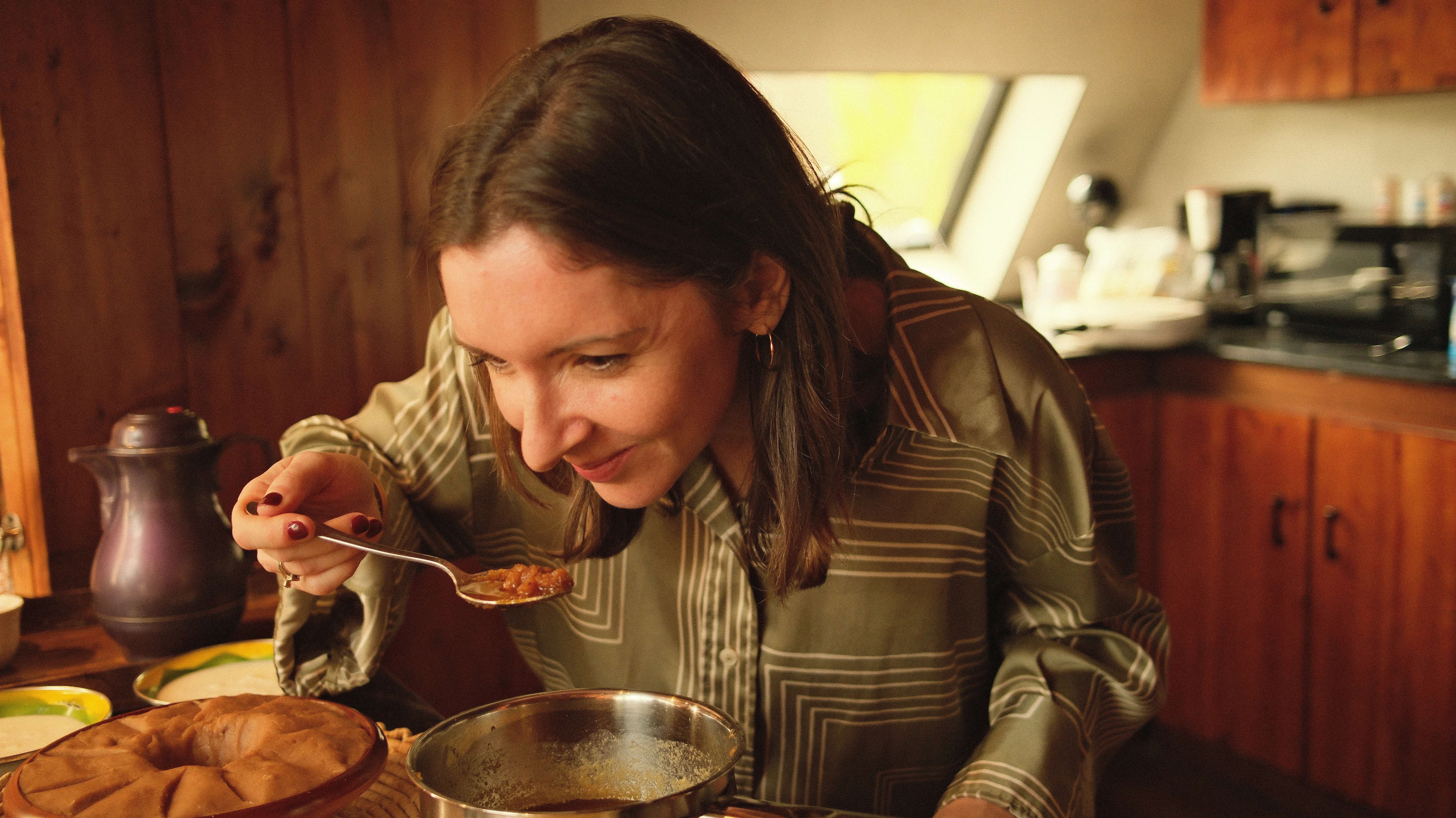
The following day, I headed to the village of Tabab to meet the renowned Chef Maha and try some authentic southern Saudi cuisine. We met at her cousin’s idyllic cottage, where cats lazed in the pretty gardens outside, as she prepared a classic southern breakfast for me. The dishes that emerged – jareesh and areeka – were works of art, drizzled in honey and dotted with juicy dates, reflecting the warm earthy colours of the region.
As we sat down to eat, she showed me the old-style way to share dishes and scoop them up with our fingers to savour the rich, smoky flavours. We talked about Saudi’s foodie culture, and I heard how calorie-dense many of the region’s dishes are, as in the past they were fuel for those who would spend long hours working the land.
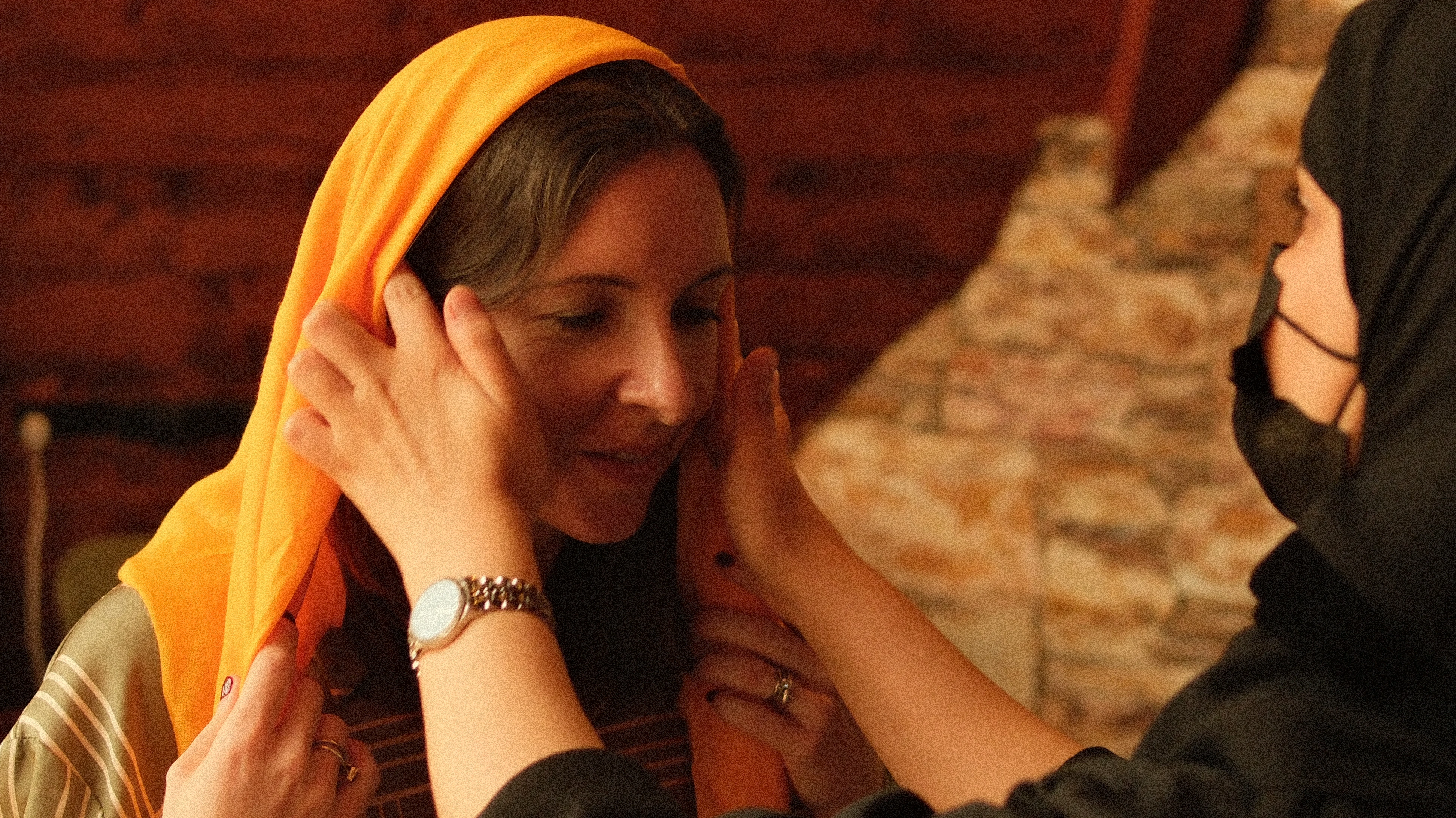
Before leaving, Chef Maha presented me with a surprise gift: a traditional Aseeri yellow scarf that had belonged to her mother. I was incredibly touched and loved wearing it later on my travels.
Hiking Saudi’s highest peak
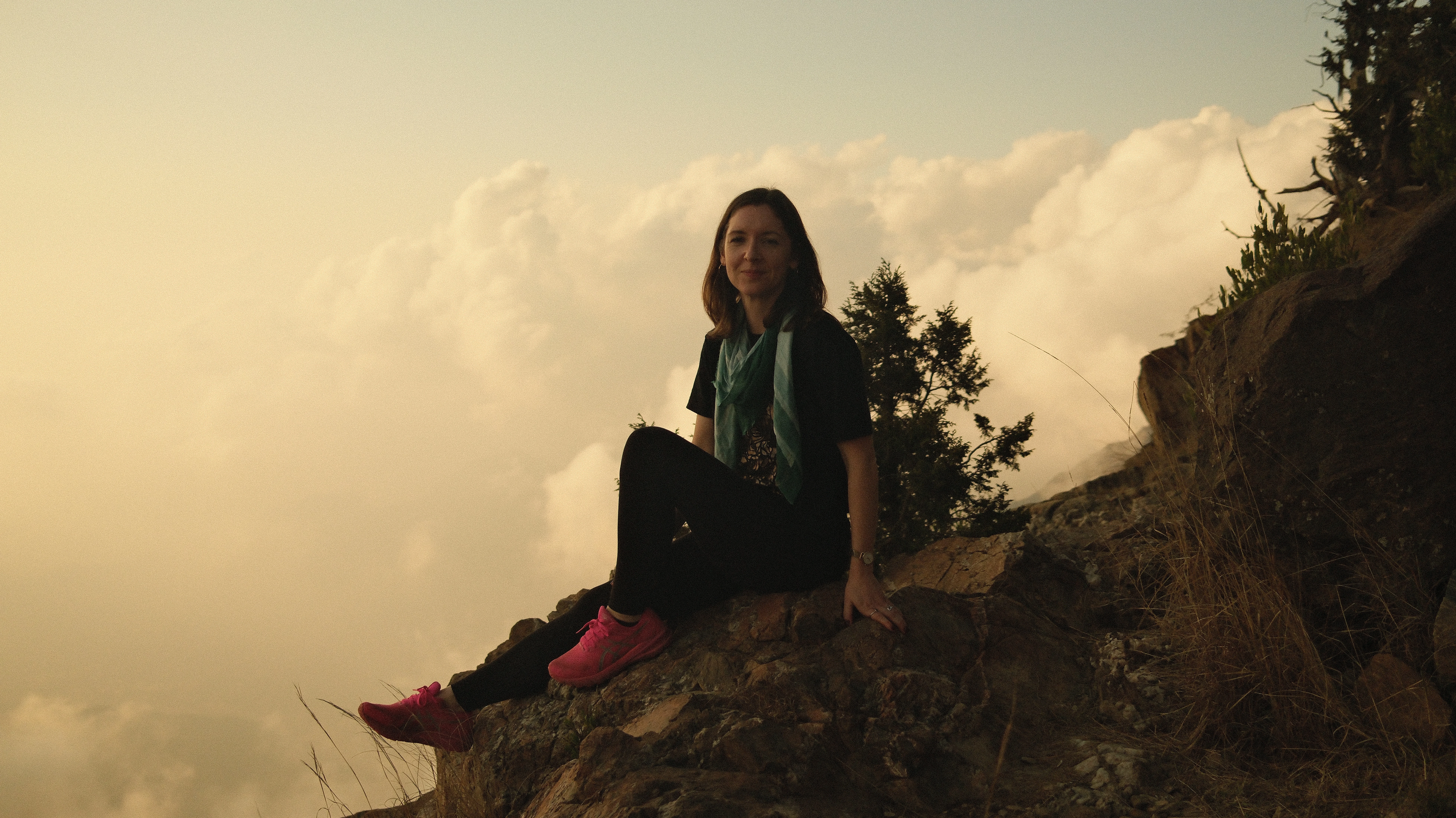
I had no plans to work the land, but I absolutely needed the hefty jareesh calorie boost for my afternoon plans –
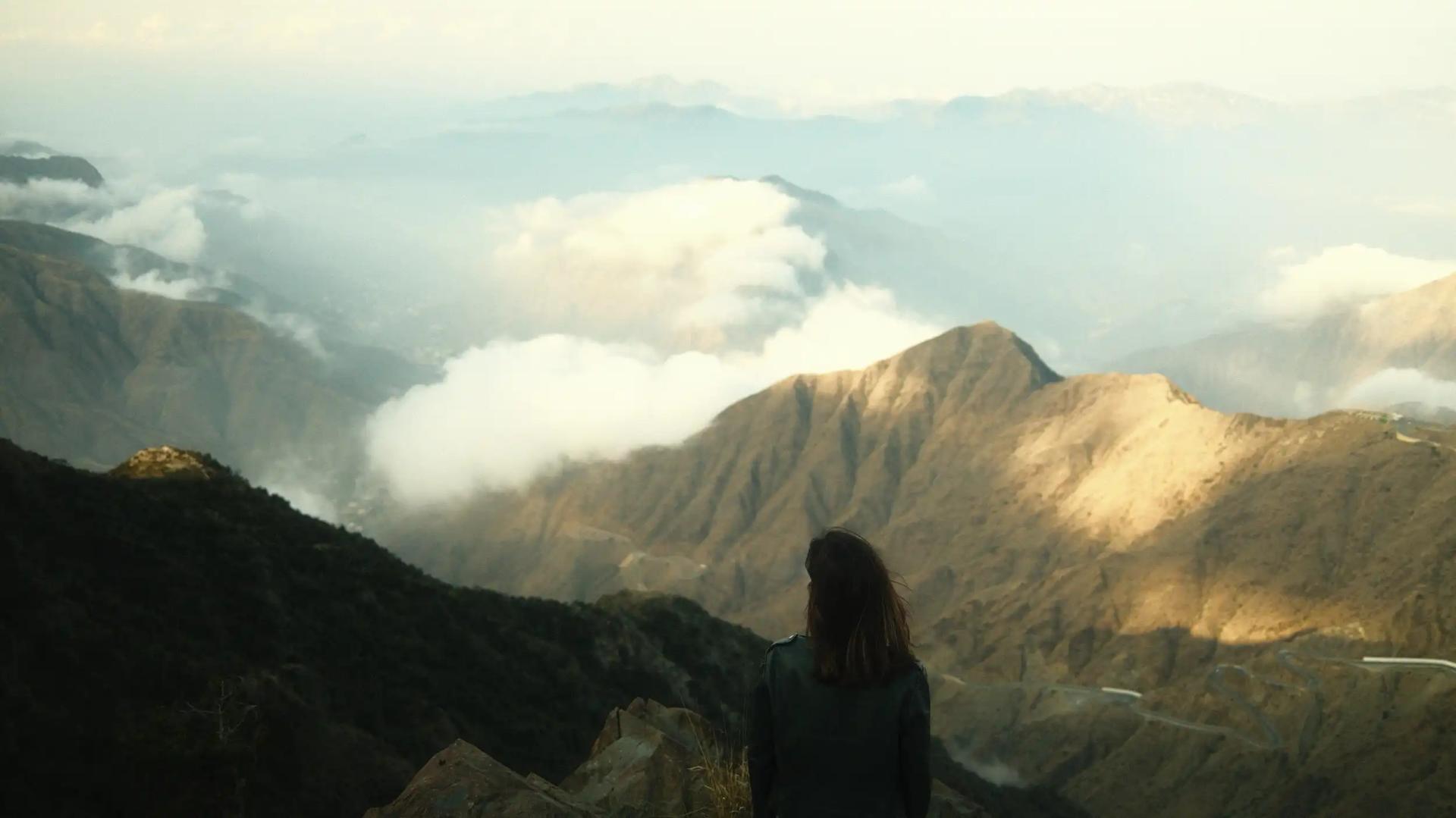
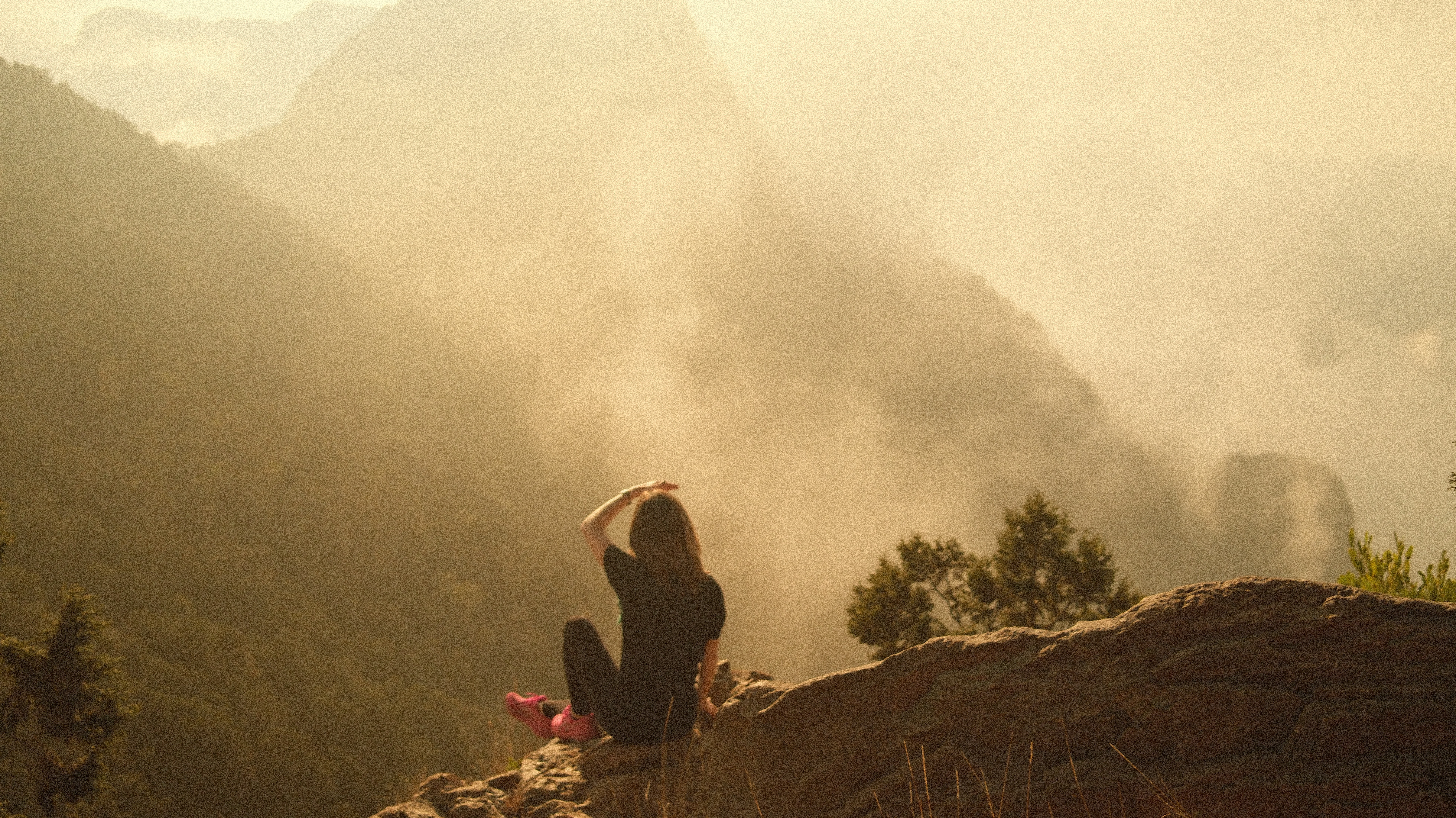
My guide Raed AlShehri brought me to the blissfully quiet Garun route on Mount Soudah, Saudi’s highest peak. Along the path, I only encountered a handful of hikers, who greeted me with a cheery “salam”. We continued onwards, scrambling over rocks and past gnarled arar trees under an intensely blue sky. Swirling clouds moved gently to reveal rugged mountain peaks, plummeting cliff faces, and green valleys. As the afternoon drew to a close, I sat on a flat rock, bathed my face in the magical golden light and watched the sun dip behind the mountains, breathing in the crisp, clean air and feeling on top of the world in every possible sense.
You Might Also Like: Travelling solo as a woman in Saudi Arabia: what to do & where to go
The art of Aseer
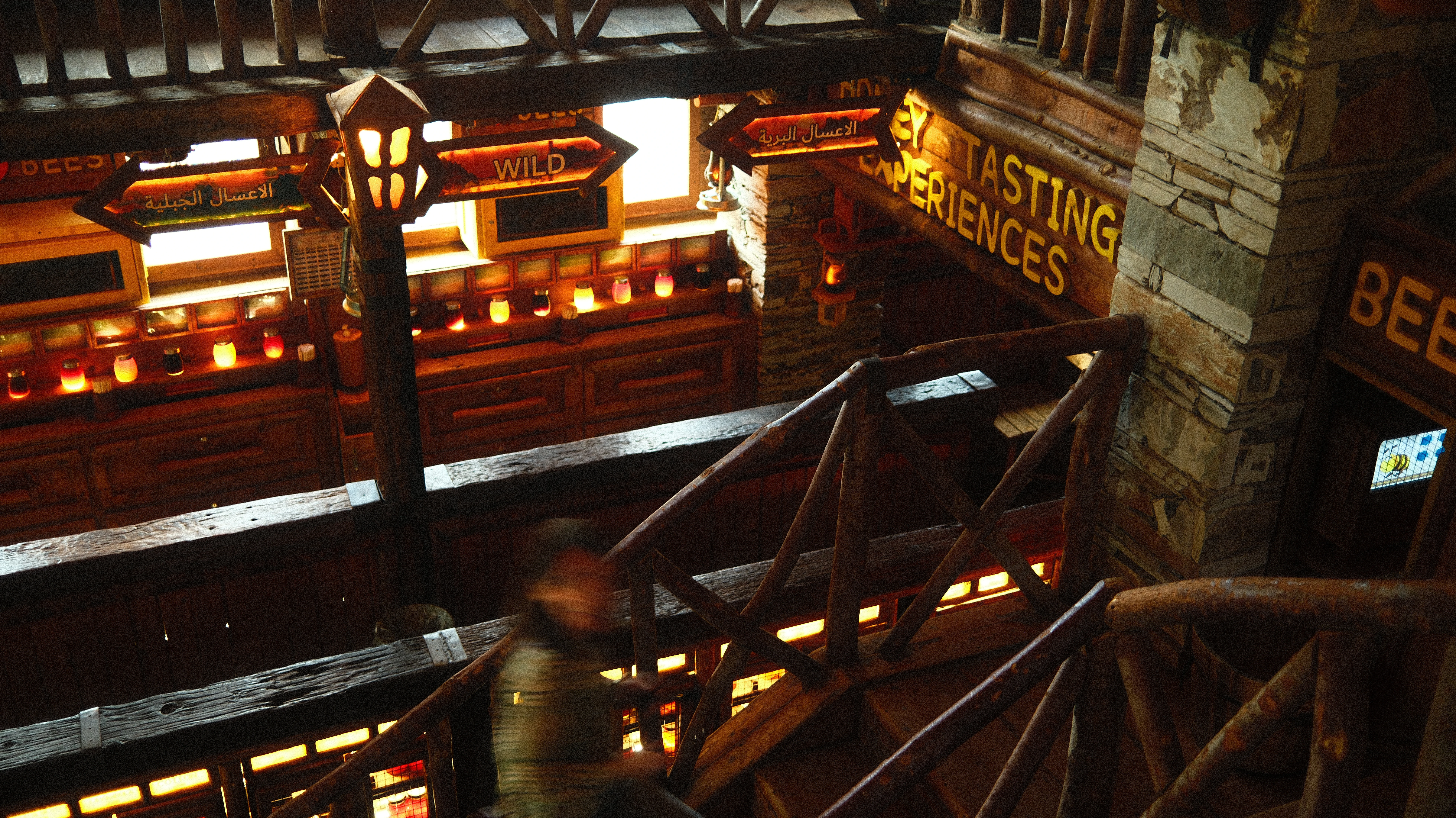
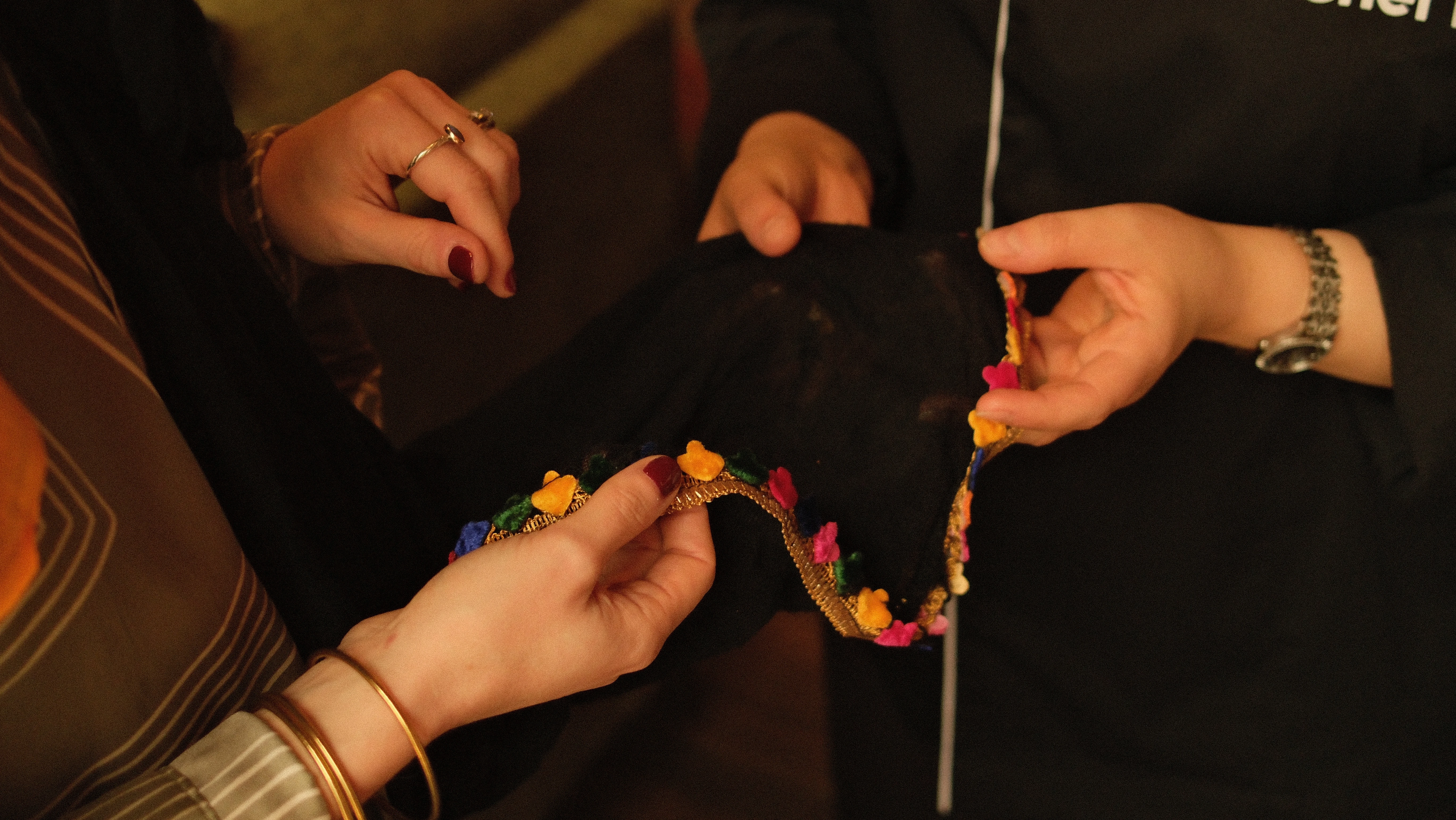
With only one day left, I was eager to understand the fascinating artwork I’d seen across Aseer. Bright geometric patterns had appeared like a motif everywhere I went, from the walls of Abu Sarrah to the door carvings in the Rijal Almaa village, and on tapestries, jugs, tableware and more throughout Abha. I headed to Abha’s Al-Qatt Al-Asiri Museum to learn as much as I could.
Al-Qatt Al-Asiri is a traditional, highly symbolic art form, painted exclusively by women to decorate their homes’ interiors. Originally, paints for the bold palette of red, green, yellow, blue, black and white were created from grinding up local flowers, rocks and grasses. Triangles represent women, I discovered, squares the completion of the Qur’an, and combs mean equality among people. The painting is done spontaneously – despite its phenomenal intricacy and symmetry, there’s no plan before you begin, and the results are stunning; a real testament to the creativity and ingenuity of the region’s women.
Reflection and connection
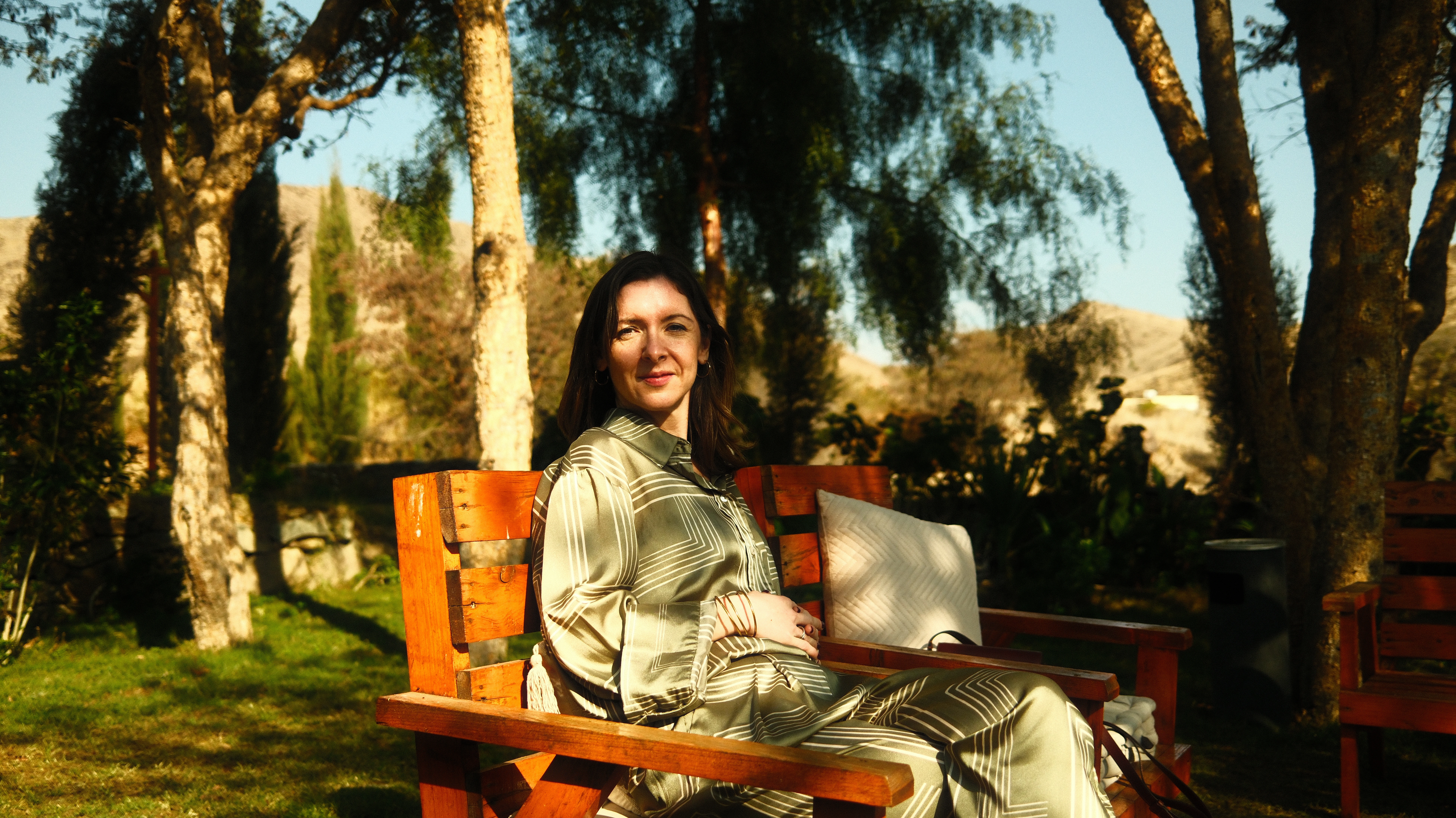
I left Abha that evening dazzled by everything I’d seen, and reflecting on how different the culture was to what I’d expected. Aseer’s traditions were evident in the way people dressed, with many women choosing to wear the niqab, for instance. Yet, throughout my trip, I felt entirely comfortable and respected for dressing in a way that balanced cultural sensitivity with my own style. Most of the women I met during my trip were well-travelled, sharing stories of their adventures abroad, a testament to Saudi’s increasingly global outlook.
I was also struck by how accommodating and kind people were to a European tourist. Staff had cleared the men-only gym at my hotel so I could work out in peace (I could definitely get used to that), a shopkeeper from Jizan had walked me to the falafel cafe I was searching for, and market stall holders gifted me hairbands, snacks, cups of coffee and prayer beads.
I felt privileged to have been so warmly welcomed in this beautiful part of the world and can’t wait to return.
All images by Raed AlShehri
Words by @helenelfer